Mandaviya Echoes Modi's Vision: Youth Are Viksit Bharat's Energy
Synopsis
Union Minister Mansukh Mandaviya amplified PM Modi's Viksit Bharat vision on 26 July 2026, quoting the Prime Minister's assertion that India's youth are the nation's greatest energy and its biggest development beneficiary, reinforcing the government's long-term demographic-dividend strategy ahead of 2047.
Key Takeaways
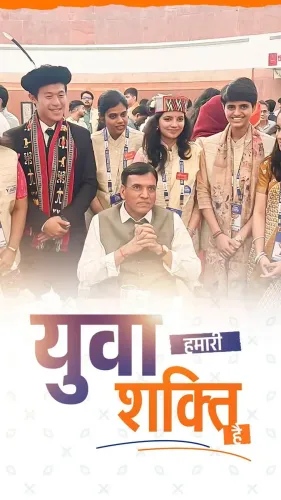
Union Minister Mansukh Mandaviya shared PM Narendra Modi 's quote on 26 July 2026 under the hashtag #Youth4ViksitBharat .
The quote frames India's youth as both the 'energy' and the 'greatest beneficiary' of the Viksit Bharat mission.
Viksit Bharat is the government's goal to make India a fully developed economy by 2047 , the centenary of Independence.
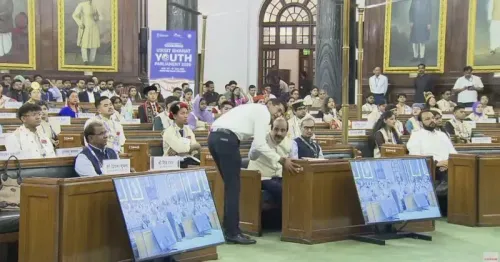
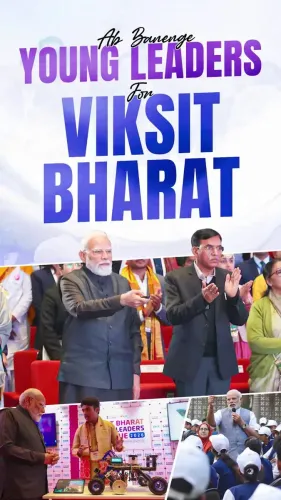
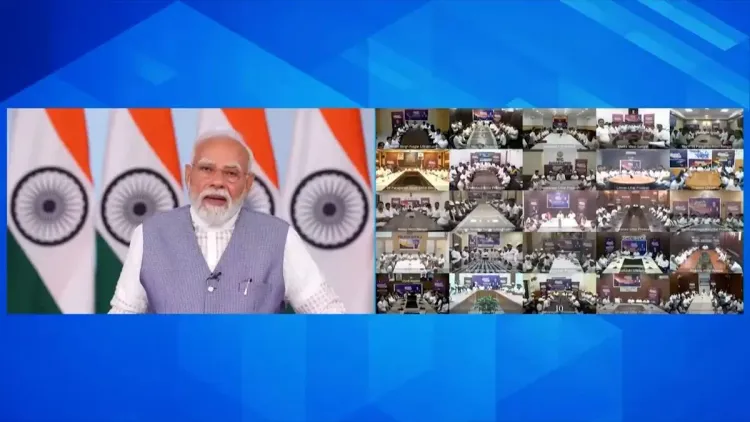
The post was accompanied by a video, indicating a link to a specific youth-focused event or address.
Flagship schemes including Skill India , National Education Policy , and Khelo India are positioned as instruments of this vision.
New youth skill or sports infrastructure announcements from Mandaviya's ministry are expected in the coming months.
Union Labour and Sports Minister Mansukh Mandaviya on Sunday, 26 July 2026 shared a quote attributed to Prime Minister Narendra Modi underlining that India's youth are both the driving energy and the primary beneficiaries of the Viksit Bharat mission, reinforcing a central pillar of the government's long-term development narrative.
Context
The post, shared under the hashtag #Youth4ViksitBharat, quotes PM Modi in Hindi: 'Aaj ka yuva Viksit Bharat ki urja bhi hai aur Viksit Bharat ka sabse bada labhaarthi bhi hai' — 'Today's youth are both the energy of a Developed India and its greatest beneficiary.' Mandaviya, who holds the Youth Affairs and Sports portfolio alongside Labour and Employment, regularly amplifies this framing as part of his ministry's outreach to young Indians.
The post accompanied a video, signalling it was likely tied to a specific youth-focused event or address, though the precise occasion was not stated in the post itself.
Policy Backdrop
Viksit Bharat — the government's vision to transform India into a fully developed economy by 2047, the centenary of Independence — has been the organising theme of PM Modi's policy addresses since at least 2023, featuring prominently in Independence Day speeches and dedicated youth conclaves.
The framing of youth as both contributors and beneficiaries is consistent with the NDA government's demographic-dividend strategy, which links India's young population to long-term economic and social progress. Flagship programmes such as Skill India, the National Education Policy, and Khelo India have all been positioned within this broader arc, targeting the 2020s–2040s window when India's working-age population is expected to peak.
Mandaviya's dual mandate — covering both labour markets and youth sports — makes him a key figure in translating this vision into ground-level policy, connecting employment readiness with physical and social development of young citizens.
Stakeholders and Impact
India's youth population — broadly those between 15 and 29 years — represents one of the largest demographic cohorts in the world, making the government's messaging on their role in national development both politically significant and economically consequential.
For young Indians, the Viksit Bharat framing carries direct implications: it shapes funding priorities in skill development, sports infrastructure, and employment generation. The Ministry of Youth Affairs and Sports, under Mandaviya, is expected to channel resources toward programmes that align with this vision, including sports infrastructure under Khelo India and vocational training pipelines.
Civil society groups and youth organisations have broadly welcomed the government's focus on youth empowerment, though advocates have also called for measurable targets and transparent progress benchmarks under the Viksit Bharat umbrella.
What's Next
Observers will watch for concrete announcements from the Ministry of Youth Affairs and Sports in the coming months, particularly around new skill development partnerships, sports infrastructure rollouts, or updates to youth-focused schemes that operationalise the Viksit Bharat goal.
Any parliamentary discussion on youth policy in the next session of Parliament is also likely to reference this framing, as the government seeks to build legislative and budgetary momentum behind its 2047 development target. The consistency of this messaging across senior ministers suggests a coordinated communication push ahead of key policy milestones.
Point of View
The minister signals coordinated messaging across the Cabinet rather than individual commentary. This pattern — senior ministers echoing the PM's framing on youth and development — reflects a disciplined communication strategy designed to keep the Viksit Bharat goal front-of-mind across multiple policy domains simultaneously. For Mandaviya specifically, it also reinforces his ministry's centrality to the government's 2047 vision, positioning Youth Affairs and Sports as strategic rather than ceremonial portfolios.
NationPress
26 Jul 2026
Frequently Asked Questions
What is Viksit Bharat and what does it mean for India's youth?
Viksit Bharat is Prime Minister Narendra Modi's vision to transform India into a fully developed economy by 2047, the centenary of Independence. For youth, it means they are positioned both as contributors — through their skills, energy, and productivity — and as the primary long-term beneficiaries of this development drive.
What did Mansukh Mandaviya post on 26 July 2026?
Mandaviya shared a quote attributed to PM Modi stating that today's youth are both the energy of Viksit Bharat and its greatest beneficiary, tagging it under the hashtag #Youth4ViksitBharat alongside a video.
What schemes does the government run for youth under the Viksit Bharat vision?
Key programmes include Skill India for vocational training, the National Education Policy for educational reform, and Khelo India for sports development and infrastructure. These are all framed as building blocks of the Viksit Bharat goal.
Who is Mansukh Mandaviya and what ministries does he head?
Mansukh Mandaviya is a senior BJP leader and Union Cabinet Minister holding the portfolios of Labour and Employment as well as Youth Affairs and Sports in the current NDA government.
What is the significance of India's youth demographic for the Viksit Bharat mission?
India has one of the world's largest youth populations, with the working-age cohort expected to peak in the 2020s to 2040s. The government's strategy hinges on harnessing this demographic dividend through education, skills, and employment to drive economic growth toward the 2047 target.