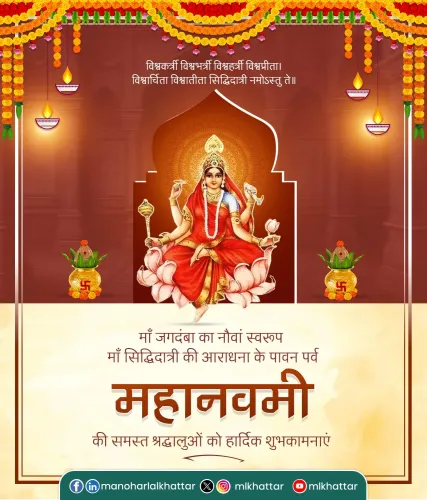
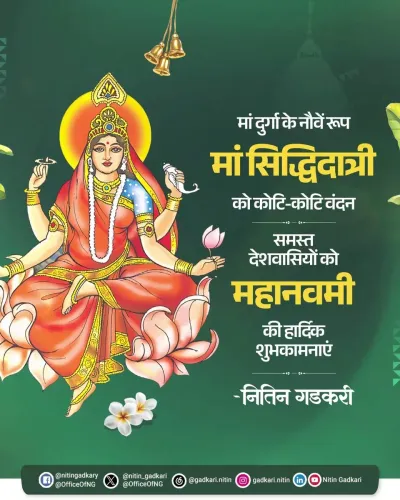
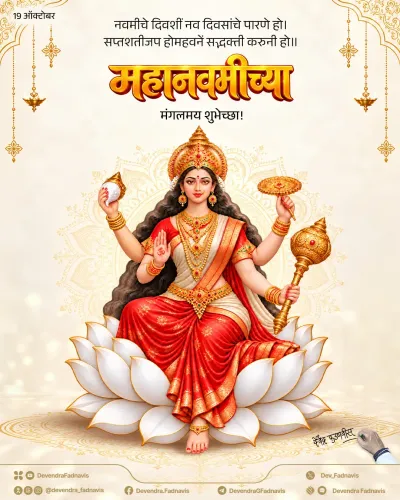
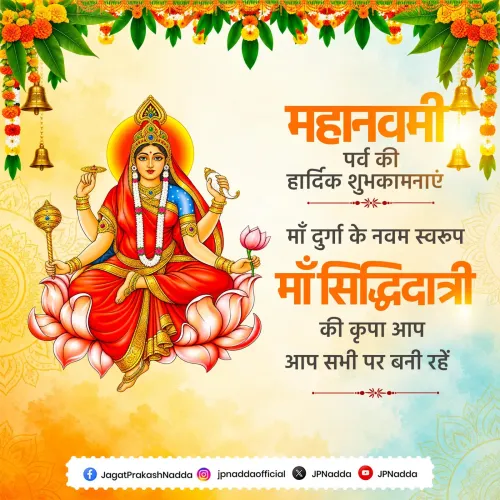
Mandaviya extends Mahanavami greetings, invokes Maa Siddhidatri
Synopsis
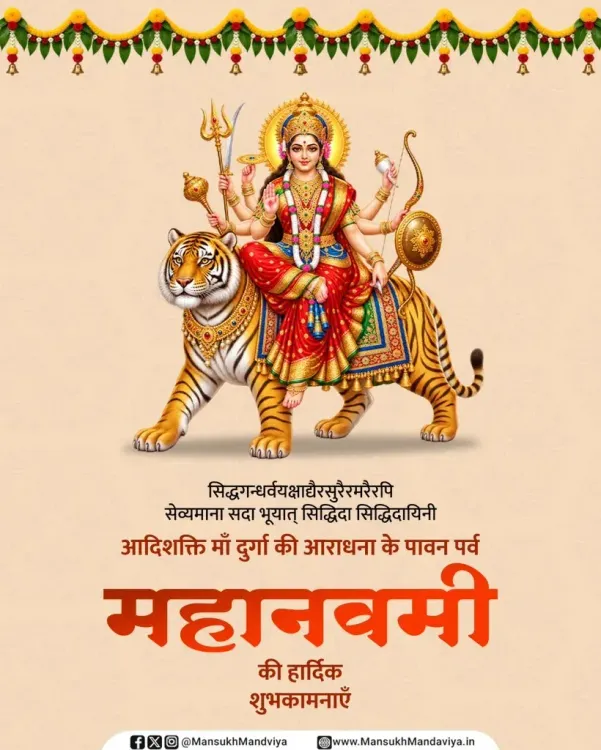
Union Minister Mansukh Mandaviya marked Mahanavami on 19 October 2026 by invoking a Sanskrit verse and praying for Maa Siddhidatri's blessings of happiness, prosperity, and joy upon all of creation.
Key Takeaways
Union Labour and Sports Minister Mansukh Mandaviya posted Mahanavami greetings on 19 October 2026 .
Mahanavami is the ninth and final day of Navratri, dedicated to Maa Siddhidatri , the goddess of all spiritual accomplishments.
The minister's post opened with a Sanskrit verse describing Siddhidatri as revered by gods, celestial beings, and demons alike.
He prayed for the goddess's grace upon 'the entire creation' and for happiness, prosperity, and joy in everyone's lives.
The gesture reflects a consistent pattern of Indian political leaders publicly marking major Hindu festivals via social media.
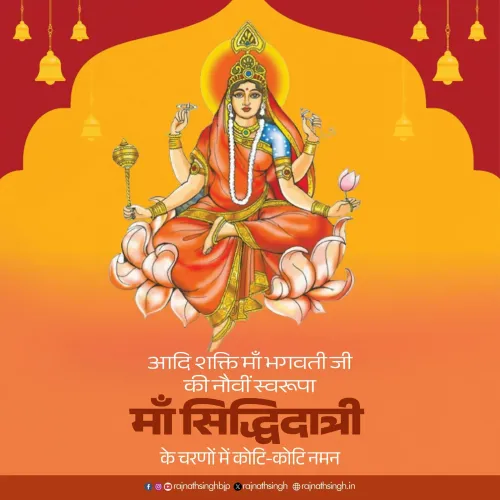
On the auspicious ninth and final day of Navratri, Union Labour and Sports Minister Mansukh Mandaviya offered heartfelt greetings to the nation on the occasion of Mahanavami, invoking the blessings of Maa Siddhidatri — the goddess revered as the bestower of all spiritual accomplishments.
In his post on Monday, 19 October 2026, the senior BJP leader shared a Sanskrit verse and a warm message in Hindi: 'Siddhagandharva yakshādyair asurair amarair api sevyamānā sadā bhūyāt siddhidā Siddhidāyinī' — invoking the goddess who is worshipped by Siddhas, Gandharvas, Yakshas, Asuras, and the immortals alike, praying that she continue to grant all siddhis. He added: 'May the grace of Maa Siddhidatri, who bestows all accomplishments, remain upon the entire creation. May the lamp of happiness, prosperity, and joy always shine brightly in everyone's life.'
Mahanavami and the Goddess of All Siddhis
Mahanavami marks the ninth and most spiritually potent night of the Navratri cycle. On this day, devotees across India worship Maa Siddhidatri, the ninth and final form of Goddess Durga. Her name translates literally to 'the giver of siddhis' — the eight supernatural and spiritual accomplishments described in Hindu scripture. Tradition holds that even the gods, celestial musicians (Gandharvas), semi-divine beings (Yakshas), and demons (Asuras) seek her grace, a belief the Sanskrit verse in the minister's post directly references.
A Ritual of Public Devotion by India's Leaders
Mandaviya's greeting follows a well-established pattern: India's elected representatives routinely mark major Hindu festivals with public messages on social media, combining scriptural invocations with wishes for national well-being. The gesture speaks both to personal faith and to the cultural calendar that shapes public life across the country every October.
As temple bells ring on Mahanavami and households complete the final rituals of the nine-night festival, the minister's message carries a simple, timeless prayer — that prosperity and joy endure well beyond the festival's close.
Point of View
A combination that resonates well beyond the party's core base. Across Navratri's nine days, virtually every senior minister participates in this social-media ritual, collectively reinforcing the government's cultural positioning. While individually ceremonial, these posts in aggregate constitute a deliberate and sustained communication strategy around Hindu festival cycles.
NationPress
19 Oct 2026
Frequently Asked Questions
What is Mahanavami and why is it celebrated?
Mahanavami is the ninth day of the Hindu festival of Navratri, considered the most spiritually significant night of the nine-day cycle. It is dedicated to Maa Siddhidatri, the ninth form of Goddess Durga, who is believed to grant all eight siddhis or divine accomplishments to her devotees.
Who is Maa Siddhidatri?
Maa Siddhidatri is the ninth manifestation of Goddess Durga, worshipped on Mahanavami. Her name means 'the giver of siddhis,' and Hindu tradition holds that gods, Gandharvas, Yakshas, Asuras, and humans all seek her grace for spiritual and material accomplishments.
What did Mansukh Mandaviya post for Mahanavami 2026?
Union Minister Mansukh Mandaviya posted a Sanskrit verse invoking Maa Siddhidatri on 19 October 2026, followed by a Hindi message praying for the goddess's grace upon all creation and wishing everyone happiness, prosperity, and joy.
What is the significance of the Sanskrit shloka in Mandaviya's post?
The shloka describes Maa Siddhidatri as one worshipped by Siddhas, Gandharvas, Yakshas, Asuras, and immortal beings alike, emphasising her universal reverence across all planes of existence in Hindu cosmology.
Do Indian politicians routinely post festival greetings on social media?
Yes. Elected representatives across parties, particularly cabinet ministers, regularly post greetings on major Hindu festivals such as Navratri, Diwali, and Dussehra via social media platforms as part of both personal expression and public cultural engagement.