Mandaviya offers Navratri tribute to Maa Kalratri on Saptami
Synopsis
Union Minister Mansukh Mandaviya marked Navratri Saptami by saluting Maa Kalratri, the seventh form of Goddess Durga, praying for the destruction of negative forces and the spread of peace and harmony in society.
Key Takeaways
Mansukh Mandaviya posted a devotional tribute to Maa Kalratri on 17 October 2026 , the seventh day of Navratri.
Maa Kalratri is the seventh of the nine Navadurga forms, worshipped on Saptami for protection and destruction of evil.
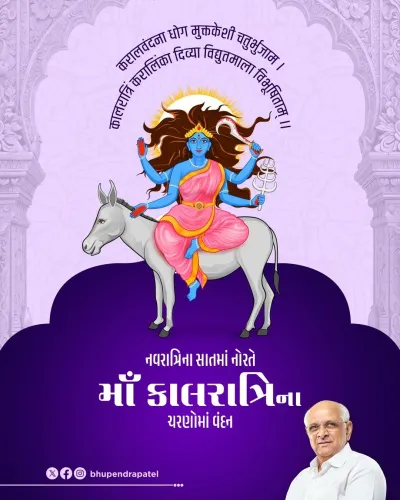
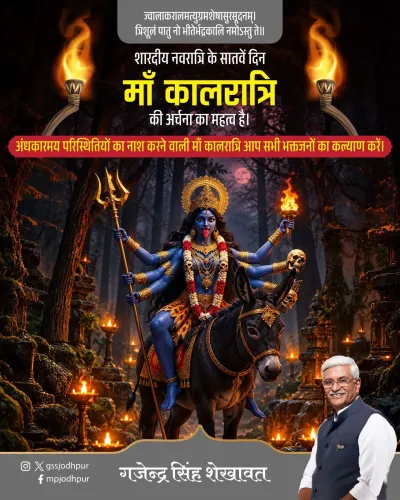
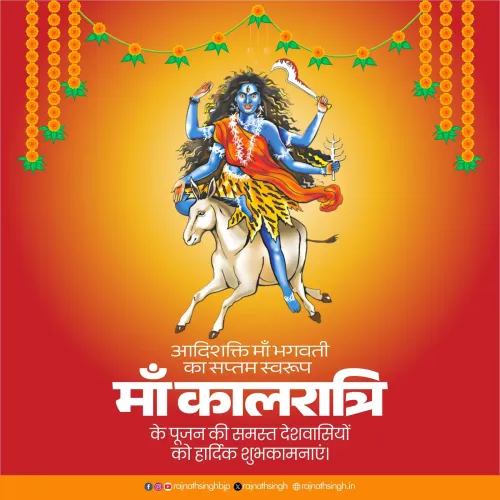
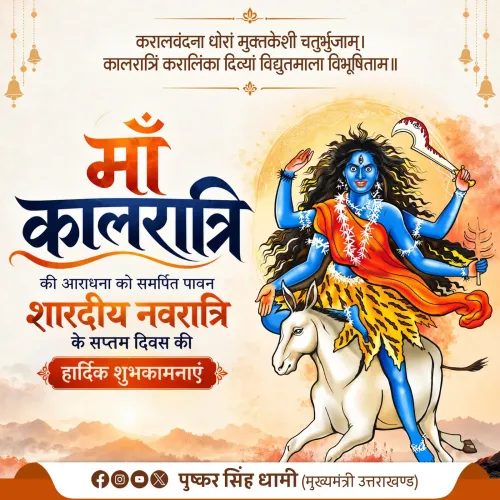
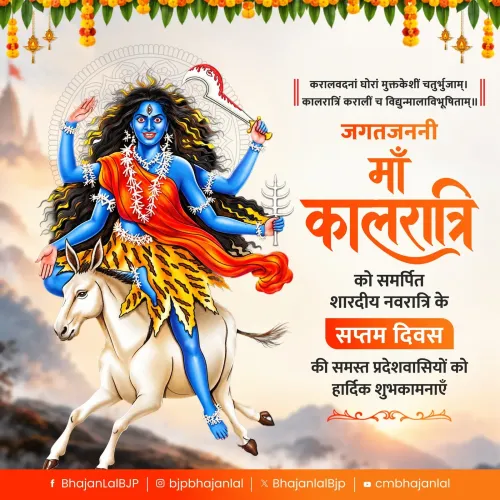
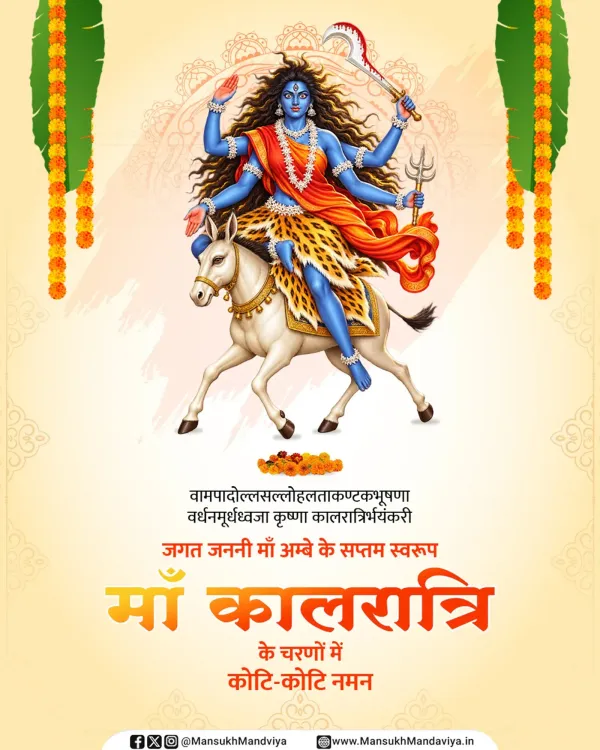
Mandaviya quoted a classical Sanskrit invocation describing Kalratri's iconographic form in detail.
The minister prayed for the elimination of 'every negative energy' and the spread of peace, harmony, and new strength in society.
Posting Navratri tributes for each of the nine divine forms is a well-established tradition among senior BJP leaders .
On the seventh and most fearsome night of Navratri, Union Labour and Sports Minister Mansukh Mandaviya turned to the divine to carry a message of collective renewal — invoking Maa Kalratri, the seventh manifestation of Goddess Durga, on Saturday, 17 October 2026.
In a post on X, the minister offered koti-koti naman (countless salutations) at the feet of Maa Kalratri, citing her classical form as described in Sanskrit verse: adorned with iron thorns, bearing a rising victory flag, dark in complexion and fearsome in aspect. He prayed that 'every negative energy be destroyed by the Mother's grace, and that peace, harmony, and new strength flow through society.'
The seventh night: who is Maa Kalratri?
Among the Navadurga — the nine forms of Goddess Durga worshipped across the nine nights of Navratri — Kalratri holds a singular place. Her name translates literally as 'the dark night,' and tradition holds her as the destroyer of darkness, ignorance, and malevolent forces. Devotees worship her on the seventh day (Saptami) of Shardiya Navratri, seeking protection and the annihilation of fear. The Sanskrit invocation Mandaviya quoted draws directly from classical Devi-stuti texts, underlining the iconographic detail of her form.
BJP leaders and the Navratri social-media tradition
Senior leaders of the Bharatiya Janata Party, including cabinet ministers, have made it a consistent practice to mark each of the nine days of Navratri with dedicated posts saluting the corresponding form of the Goddess. The practice reflects the party's broader cultural and religious outreach to its Hindu voter base, while the devotional language — peace, harmony, the defeat of negativity — keeps the tone inclusive rather than explicitly political. Mandaviya, a Gujarat-based leader and two-portfolio cabinet minister, has been a regular participant in this tradition.
Point of View
The minister signals scriptural familiarity to a devout base while the prayer for 'peace and harmony' broadens the appeal beyond core supporters. For a two-portfolio minister with a national profile, Navratri posts are low-risk, high-visibility touchpoints that reinforce identity politics without making a policy claim. The consistency of this practice across the party's leadership suggests it is coordinated cultural messaging as much as personal devotion. Watching whether Mandaviya's subsequent posts complete all nine Navadurga tributes will confirm whether this is a structured campaign.
NationPress
17 Oct 2026
Frequently Asked Questions
Who is Maa Kalratri and why is she worshipped on the seventh day of Navratri?
Maa Kalratri is the seventh of the nine forms of Goddess Durga in the Navadurga tradition. She is worshipped on Saptami, the seventh day, as the destroyer of darkness, fear, and evil forces; her name means 'the dark night.'
What did Mansukh Mandaviya post for Navratri 2026?
On 17 October 2026, Mandaviya posted a Sanskrit-laced tribute on X saluting Maa Kalratri and praying that her grace destroy every negative energy and bring peace, harmony, and new strength to society.
Why do BJP leaders post Navratri greetings for each of the nine days?
Posting tributes to each of the nine Navadurga forms across the nine nights of Navratri is an established tradition among BJP leaders, combining religious devotion with cultural outreach to Hindu voters.
What is the Sanskrit verse Mandaviya quoted about Maa Kalratri?
Mandaviya cited a classical invocation describing Kalratri as adorned with iron thorns, bearing a rising victory flag, dark in complexion, and fearsome in aspect — imagery drawn from traditional Devi-stuti literature.
What portfolios does Mansukh Mandaviya hold in the Union Cabinet?
Mansukh Mandaviya serves as Union Minister of Labour and Employment and also holds the Youth Affairs and Sports portfolio. He is a senior BJP leader from Gujarat.