CM Dhami extends interest-free loans to Uttarakhand women SHGs
Synopsis
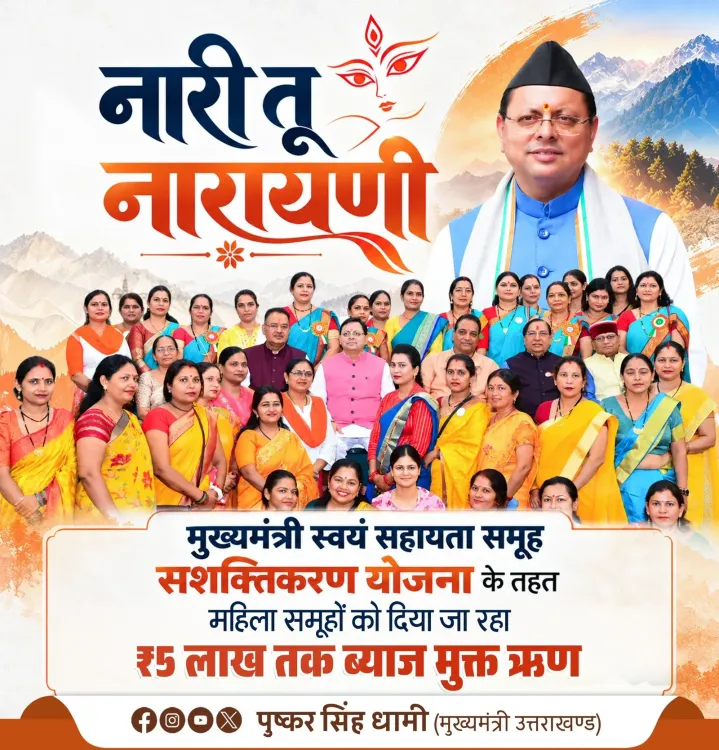
Uttarakhand CM Pushkar Singh Dhami has announced interest-free loans of up to ₹5 lakh for women self-help groups under the Mukhyamantri Swayam Sahayata Samuh Sashaktikaran Yojana, aiming to boost self-employment and economic independence for women across the hill state.
Key Takeaways
Uttarakhand CM Pushkar Singh Dhami announced the scheme on 17 October 2026 via a post on X.
Women self-help groups are eligible for interest-free loans of up to ₹5 lakh under the Mukhyamantri Swayam Sahayata Samuh Sashaktikaran Yojana .
The scheme aims to create self-employment opportunities and strengthen women's economic independence in Uttarakhand .
The initiative aligns with the national Atmanirbhar Bharat framework and builds on India's long-running SHG-bank linkage architecture dating to the 1990s .
Key metrics — beneficiary count and total disbursements — are expected in upcoming state welfare reports and the next Uttarakhand budget session .
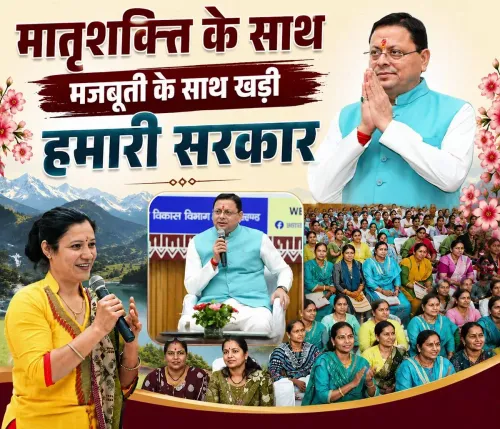
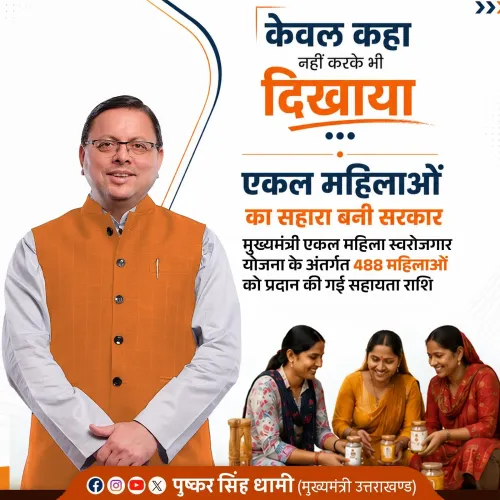
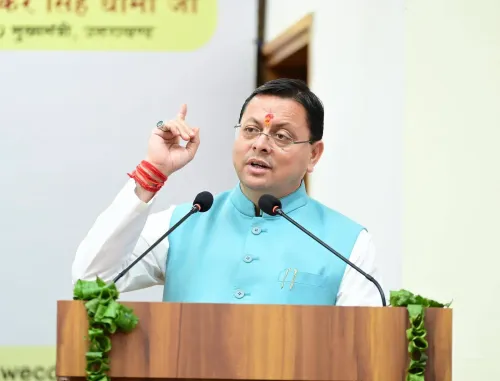
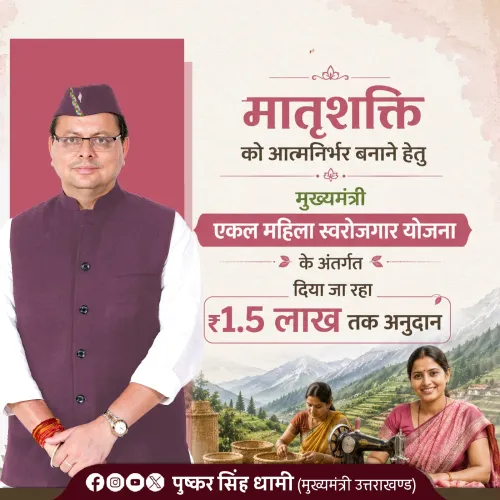
Uttarakhand Chief Minister Pushkar Singh Dhami has announced that women across the state are being offered interest-free loans of up to ₹5 lakh under the Mukhyamantri Swayam Sahayata Samuh Sashaktikaran Yojana — a state government scheme designed to turn self-help groups into launchpads for self-employment. The announcement, made on Saturday, 17 October 2026, signals a focused push to deepen financial access for women-led collectives at the grassroots.
In his post, CM Dhami framed the initiative as part of a broader mission to 'mātṛśakti ko sashakt aur ātmanirbhar banāne' — 'empowering and making the maternal force self-reliant' — a recurring rhetorical anchor in BJP-led state welfare messaging. The scheme, he said, is designed to open 'new avenues of self-employment, strengthen women's economic standing, and pave the path to self-reliance.'
What the ₹5 lakh interest-free loan actually means for SHG women
Self-help groups are community-based collectives — typically of 10 to 20 women — that pool savings and access credit together. Access to formal, affordable credit has historically been their biggest bottleneck; informal moneylenders routinely charge rates that can exceed 30–40% annually, eroding whatever margin a micro-enterprise earns. An interest-free loan of up to ₹5 lakh from the state government removes that cost entirely, letting women reinvest surplus into the business rather than service a debt.
Uttarakhand's terrain amplifies the need. The state's predominantly hill and mountain geography limits large-scale industrial employment, making micro-enterprise — handicrafts, food processing, agri-produce, homestays — the primary economic engine for rural women. Credit access on decent terms is not a luxury here; it is infrastructure.
Fitting into India's long SHG-to-finance journey
The scheme does not emerge from nowhere. India's SHG-bank linkage programme dates to the early 1990s, and the National Rural Livelihoods Mission (NRLM), launched in 2011, massively scaled up SHG formation and formal credit linkage nationwide. Uttarakhand has been part of that architecture, but state-specific top-up schemes — offering subsidised or interest-free credit beyond what NRLM channels — have become a signature tool for BJP-governed states looking to align with the Centre's Atmanirbhar Bharat framework while retaining local political ownership.
Similar interest-free or low-cost SHG loan programmes operate across states including Madhya Pradesh, Rajasthan, and Chhattisgarh, reflecting a consensus that credit cost, not credit availability alone, is the real barrier for women micro-entrepreneurs. Uttarakhand's scheme fits squarely into that consensus.
The numbers that will matter in coming months — total beneficiary count, aggregate disbursements, and district-wise spread — are expected to appear in quarterly welfare reports and the next Uttarakhand budget session. Those figures will reveal whether the scheme is reaching the hill districts where the need is sharpest, or concentrating in the more accessible Terai belt. That gap, if it exists, will be the real test.
Point of View
Who faces the dual challenge of a geographically fragmented state and a voting base where women's self-help groups are both economically vital and electorally significant, interest-free credit is a high-visibility, low-bureaucracy welfare lever. The real policy question is disbursement depth: whether the scheme penetrates remote hill districts or stalls in better-connected lowland areas will determine its developmental impact versus its political optics. Quarterly beneficiary data, not the announcement itself, will be the true measure.
NationPress
17 Oct 2026
Frequently Asked Questions
What is the Mukhyamantri Swayam Sahayata Samuh Sashaktikaran Yojana?
It is an Uttarakhand government scheme that provides interest-free loans of up to ₹5 lakh to women's self-help groups in the state to promote self-employment and economic independence.
Who is eligible for the interest-free loan under Dhami's SHG scheme?
Women who are members of self-help groups in Uttarakhand are the intended beneficiaries of this scheme, which targets grassroots women's collectives across the state.
How much loan can women get under the Uttarakhand SHG scheme?
Women self-help groups can receive interest-free loans of up to ₹5 lakh under the Mukhyamantri Swayam Sahayata Samuh Sashaktikaran Yojana announced by CM Pushkar Singh Dhami.
What is a self-help group and why does it matter for women in Uttarakhand?
A self-help group (SHG) is a community collective, typically of 10 to 20 women, that pools savings and accesses credit together. In Uttarakhand's hill terrain, where large-scale industrial jobs are scarce, SHGs support micro-enterprises like handicrafts, food processing, and agri-produce — making affordable credit especially critical.
How does Uttarakhand's SHG loan scheme connect to the national Atmanirbhar Bharat programme?
The scheme aligns with the Centre's Atmanirbhar Bharat goal of building grassroots self-reliance, while building on India's SHG-bank linkage architecture that dates back to the early 1990s and was further scaled through the National Rural Livelihoods Mission launched in 2011.