Mandaviya: India crosses 1 billion in social protection
Synopsis
India has crossed 1 billion citizens under social protection coverage, rising from 25 crore (19%) in 2015 to over 100 crore (68.4%) in 2026. Union Minister Mansukh Mandaviya announced the milestone, citing acknowledgement from ILO Director-General Gilbert F. Houngbo and crediting PM Modi's welfare expansion drive.
Key Takeaways
India's social protection coverage has grown from 25 crore citizens (19%) in 2015 to over 100 crore citizens (68.4%) in 2026, crossing the 1 billion mark.
ILO Director-General Gilbert F.
Houngbo acknowledged India's efforts in expanding social protection, lending multilateral recognition to the milestone.
Key schemes underpinning the expansion include Pradhan Mantri Jan Dhan Yojana (2014) and Ayushman Bharat PM-JAY (2018) .
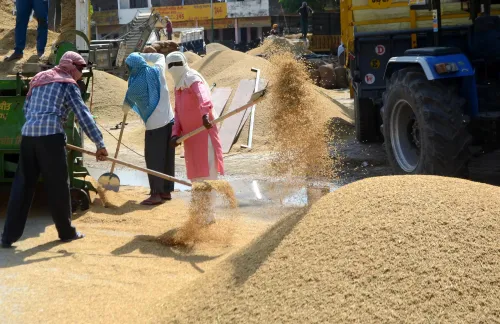
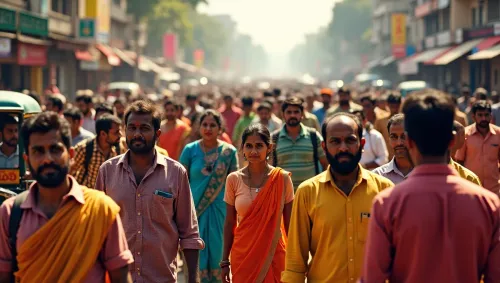
The coverage push primarily targets informal-sector workers and low-income households , historically excluded from formal social security.
The ILO's next World Social Protection Report (expected 2027) and implementation of India's four labour codes are the key developments to watch.
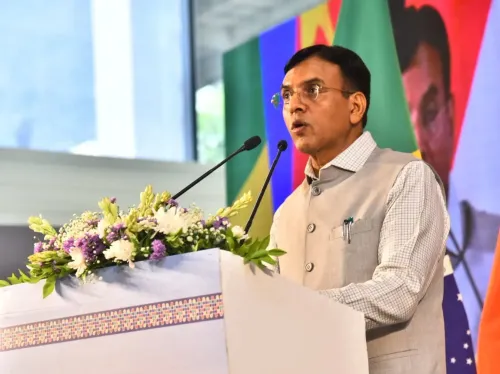
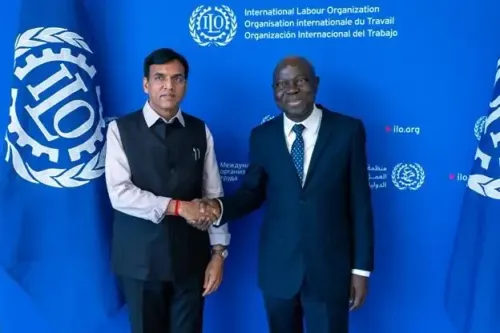
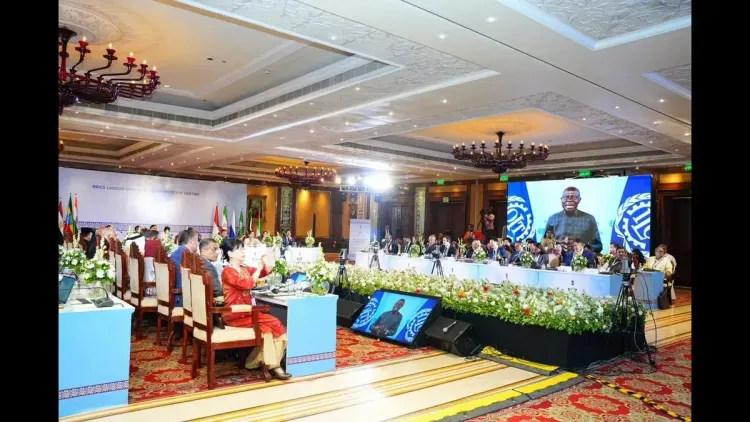
Union Labour and Sports Minister Mansukh Mandaviya on Wednesday, 15 July 2026 announced that India has crossed the 1 billion mark in social protection coverage, citing acknowledgement from International Labour Organization Director-General Gilbert F. Houngbo of India's progress in expanding welfare reach to its citizens.
Context
Minister Mandaviya stated that India's social protection coverage has grown from 25 crore citizens (19 per cent) in 2015 to over 100 crore citizens (68.4 per cent) in 2026 — a near four-fold increase in absolute beneficiary numbers over roughly a decade. He attributed the expansion to the leadership of Prime Minister Narendra Modi and framed it under the government's signature slogan Sabka Saath Sabka Vikas (development with and for all). The post, which Mandaviya pinned to his profile, also thanked ILO chief Houngbo for publicly recognising India's efforts.
The International Labour Organization, a United Nations agency, monitors social protection floors globally through its World Social Protection Report series. An acknowledgement from its Director-General carries diplomatic and multilateral weight, lending external validation to India's domestic coverage claims.
Policy Backdrop
India's social protection architecture has been built incrementally over more than a decade. The Unorganised Workers' Social Security Act, 2008 created the first legislative framework for extending benefits to informal-sector workers, who constitute the vast majority of India's labour force. The Pradhan Mantri Jan Dhan Yojana, launched in 2014, brought hundreds of millions of unbanked citizens into the formal financial system, creating the digital infrastructure for direct delivery of pensions, insurance payouts and cash transfers.
A landmark addition came in 2018 with the Ayushman Bharat Pradhan Mantri Jan Arogya Yojana, which extended health-insurance coverage worth up to Rs 5 lakh per family per year to low-income households. Together, these schemes — along with direct benefit transfers for food, fuel and fertiliser — form the scaffolding behind the coverage figures cited by the minister. The ILO has tracked such multi-scheme consolidation in large emerging economies, noting both significant coverage gains and ongoing questions around benefit adequacy and portability for migrant workers.
Stakeholders and Impact
The primary beneficiaries of this expansion are informal-sector workers and low-income households, groups that historically lacked access to contributory social insurance. For these populations, inclusion in schemes such as Jan Dhan, Ayushman Bharat and the PM Shram Yogi Maan-dhan pension represents a first formal safety net. Civil society researchers have noted, however, that coverage metrics based on scheme enrolment may differ from assessments of whether benefits are regularly received and adequate in value.
At the multilateral level, India's milestone positions the country as a model for other large developing economies seeking to scale social protection rapidly through digital and administrative means rather than through traditional contribution-based systems. The ILO's endorsement, if formalised in an upcoming report, could influence how peer nations and international financial institutions evaluate India's human-development trajectory.
What's Next
The ILO's next World Social Protection Report, expected around 2027, is likely to carry detailed data on India's coverage expansion, adequacy levels and gaps — particularly for seasonal and migrant workers. Domestically, parliamentary debate on the four labour codes, once fully notified and implemented by states, will determine how the formal social security architecture evolves for the organised and unorganised sectors alike. The government's ability to sustain and deepen coverage — moving from enrolment to active benefit delivery — will be the metric that defines the next phase of this policy push.
Point of View
Arriving ahead of what may be an election cycle and reinforcing the 'Sabka Saath Sabka Vikas' brand narrative. The ILO Director-General's acknowledgement provides rare external validation that the government will leverage in multilateral forums, even as independent researchers distinguish between scheme enrolment and substantive benefit delivery. This announcement fits a broader pattern of India reframing its welfare architecture — built on digital public infrastructure and direct benefit transfers — as a replicable model for the developing world. The real test will come when the ILO's 2027 report examines not just coverage breadth but the depth and adequacy of benefits reaching India's vast informal workforce.
NationPress
15 Jul 2026
Frequently Asked Questions
What is India's social protection coverage in 2026?
According to Union Minister Mansukh Mandaviya, India's social protection coverage stood at over 100 crore citizens, or approximately 68.4 per cent of the population, as of 2026.
What was India's social protection coverage in 2015?
In 2015, India's social protection coverage was approximately 25 crore citizens, representing about 19 per cent of the population, according to figures cited by Minister Mandaviya.
What did the ILO say about India's social protection?
ILO Director-General Gilbert F. Houngbo acknowledged India's efforts in expanding social protection coverage, a recognition that Minister Mandaviya highlighted in his post on 15 July 2026.
Which schemes helped India expand social protection coverage?
Key schemes include Pradhan Mantri Jan Dhan Yojana (2014), which enabled digital benefit delivery, and Ayushman Bharat Pradhan Mantri Jan Arogya Yojana (2018), which extended health insurance to low-income families, along with several direct benefit transfer programmes.
What is Sabka Saath Sabka Vikas?
'Sabka Saath Sabka Vikas' is the Modi government's guiding slogan meaning 'development with and for all,' used to frame inclusive welfare and economic policies targeting marginalised and low-income populations.