Mandaviya Meets Lesotho Sports Minister, Eyes High-Altitude Training Pact
Synopsis
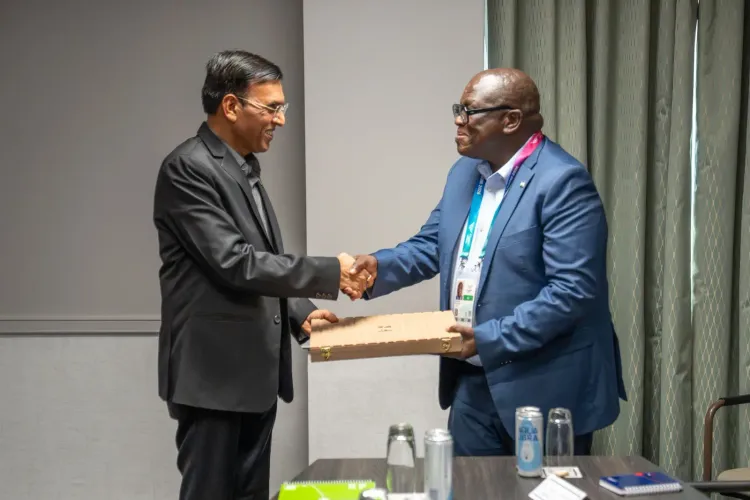
Union Sports Minister Mansukh Mandaviya met Lesotho's Sports Minister Hon. Mputi Mputi on 22 July 2026, agreeing to share India's sports science and coaching expertise with Lesotho while exploring the country's high-altitude terrain for Indian athlete training — a move that extends India's sports diplomacy into Southern Africa.
Key Takeaways
Mansukh Mandaviya held a bilateral meeting with Lesotho Sports Minister Hon.
Mputi Mputi on 22 July 2026 .
India offered to share expertise in sports science, coach training, physical education , and sports infrastructure with Lesotho.
Both sides explored using Lesotho's high-altitude terrain (much of it above 1,500 m ) for specialised training of Indian athletes .
The engagement aligns with India's ITEC programme and domestic schemes such as Khelo India and SAI initiatives.
A formal sports cooperation MoU is the likely next step, with implications for the upcoming Olympic cycle .
The meeting extends India's South-South sports diplomacy footprint into Southern Africa .
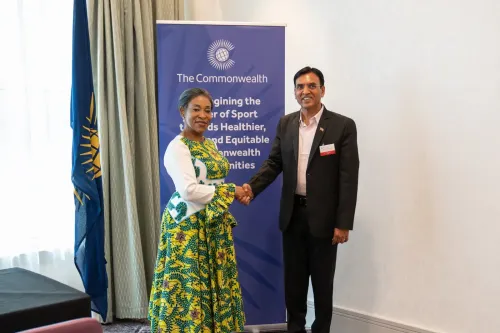
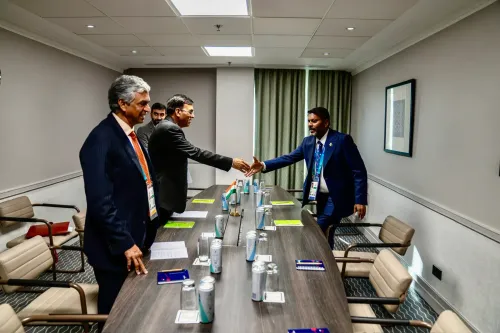
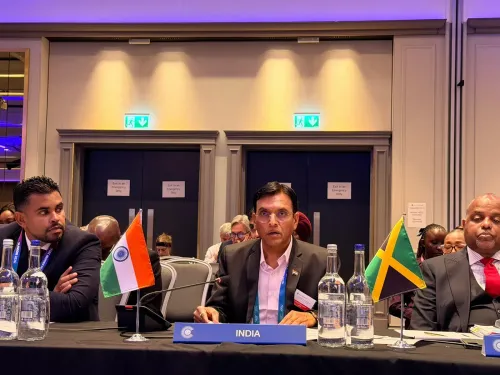
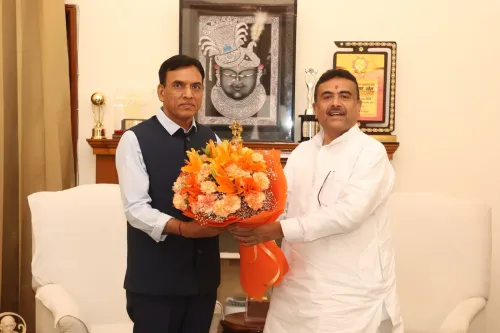
Union Labour and Sports Minister Mansukh Mandaviya held a bilateral meeting with Lesotho's Sports Minister Hon. Mputi Mputi on Wednesday, 22 July 2026, discussing a broad sports partnership that would see India share its expertise in sports science, coach training, physical education, and infrastructure while leveraging Lesotho's high-altitude terrain for Indian athletes.
Context
Mandaviya described the meeting as 'productive' and said both sides explored ways to strengthen their sports partnership. India offered to share its expertise in sports science, coach training, physical education, and world-class sports infrastructure to support Lesotho's athletes. In return, the two sides discussed using Lesotho's high-altitude terrain — much of the landlocked Southern African nation sits above 1,500 metres — to provide specialised training opportunities for Indian athletes, particularly in endurance disciplines.
Policy Backdrop
India has channelled sports and capacity-building cooperation with African nations for decades through the Indian Technical and Economic Cooperation (ITEC) programme, which has provided training slots in physical education and related fields since the 1960s. Domestically, flagship initiatives such as Khelo India and programmes run by the Sports Authority of India (SAI) have built a pipeline of coaches, sports scientists, and infrastructure that the government has increasingly sought to project abroad as soft power.
High-altitude training exchanges are not new to Indian sports diplomacy — similar arrangements exist with East African nations for endurance events. The Lesotho engagement fits neatly into that pattern, extending India's South-South cooperation footprint into Southern Africa.
Stakeholders and Impact
Indian athletes — especially those competing in middle- and long-distance running, cycling, and other endurance disciplines — stand to gain access to a high-altitude training environment that is difficult to replicate domestically at scale. Lesotho's athletes, meanwhile, could benefit from structured coaching education, sports science support, and exposure to Indian training methodologies ahead of continental and Olympic qualification cycles.
The engagement also signals India's intent to deepen its presence in Africa beyond traditional economic and diplomatic channels, using sport as a vehicle for people-to-people ties and goodwill.
What's Next
Both sides are expected to work towards a formal sports cooperation Memorandum of Understanding (MoU) that could identify specific training camps, SAI-facilitated exchange programmes, and ITEC slots for Lesotho sports officials and coaches. The timing — ahead of the next Olympic cycle — gives both nations an incentive to move quickly from dialogue to concrete programming. Any formalised agreement would mark a notable expansion of India's sports diplomacy on the African continent.
Point of View
India is constructing a reciprocal arrangement rather than a purely aid-driven one, which gives the partnership greater durability. The framing also serves a domestic purpose: it positions Khelo India and SAI as internationally credible institutions whose outputs are sought by foreign governments. If an MoU materialises before the next Olympic cycle, it could become a template for similar bilateral arrangements across the continent.
NationPress
21 Oct 2026
Frequently Asked Questions
What did Mansukh Mandaviya discuss with Lesotho's Sports Minister?
Mandaviya discussed sharing India's expertise in sports science, coach training, physical education, and sports infrastructure with Lesotho, and explored using Lesotho's high-altitude terrain to train Indian athletes.
Why is Lesotho's high altitude useful for Indian athletes?
Much of Lesotho sits above 1,500 metres, making it ideal for endurance training. High-altitude conditions improve cardiovascular capacity, which benefits athletes in middle- and long-distance running and other endurance disciplines.
What is India's ITEC programme and how does it relate to sports?
The Indian Technical and Economic Cooperation (ITEC) programme, running since the 1960s, provides training slots to partner countries including in physical education and sports, and forms the backbone of India's capacity-building outreach to African nations.
Is there a formal India-Lesotho sports agreement in place?
As of the 22 July 2026 meeting, both sides were at the discussion stage. A formal Memorandum of Understanding on sports cooperation is the expected next step following the bilateral talks.
How does this meeting fit into India's broader Africa sports diplomacy?
India has existing high-altitude training exchanges with East African nations and uses Khelo India and SAI programmes as export vehicles. The Lesotho engagement extends this South-South cooperation model into Southern Africa.