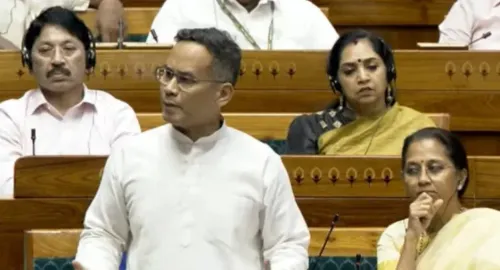
Mandaviya: Lok Sabha Passes Public Exam Amendment Bill 2026

Synopsis
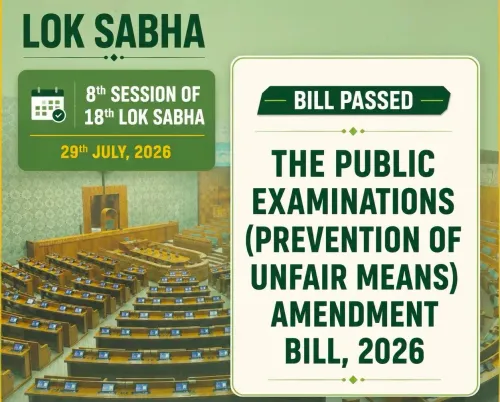
The Lok Sabha passed the Public Examinations Amendment Bill, 2026 on 29 July, strengthening India's legal shield against exam fraud. Union Minister Mansukh Mandaviya hailed it as an 'iron-clad' protection for students, building on the 2024 Act triggered by the NEET and UGC-NET paper leak scandals.
Key Takeaways
The Public Examinations Amendment Bill, 2026 was passed in the Lok Sabha on 29 July 2026 .
The bill amends the Public Examinations (Prevention of Unfair Means) Act, 2024 , which was itself enacted after the NEET and UGC-NET paper leak crises of 2024.
Union Minister Mansukh Mandaviya described the legislation as an 'iron-clad shield' promising the 'harshest punishment' for those who compromise exam integrity.
The bill must still clear the Rajya Sabha before it becomes law.
Detailed rules on penalties and investigation mechanisms are yet to be notified.
Every student who has stayed up past midnight memorising formulas, every aspirant who has sacrificed years chasing a government job — this bill is for them. Union Labour and Sports Minister Mansukh Mandaviya announced on Wednesday, 29 July 2026 that the Public Examinations Amendment Bill, 2026 was passed in the Lok Sabha, marking a significant escalation in India's legislative war against exam fraud.
The 2024 Paper Leak Crisis That Made This Inevitable
The bill does not arrive in a vacuum. In 2024, back-to-back paper leak scandals rocked two of India's most high-stakes examinations — NEET and UGC-NET — triggering nationwide protests from lakhs of students who felt their futures had been stolen. The crisis exposed the limits of existing deterrents and created irresistible political pressure for tougher law. Parliament responded with the Public Examinations (Prevention of Unfair Means) Act, 2024, which imposed penalties for malpractice in national recruitment and entrance exams. The 2026 Amendment Bill now tightens that framework further.
What Mandaviya Said — and What It Signals
Mandaviya described the legislation as an 'iron-clad shield' for students, promising that 'anyone daring to breach this trust faces the absolute harshest punishment and the full wrath of the law.' The language is pointed: this is a government staking its credibility on exam integrity at a time when youth unemployment and competitive exam pressure remain politically charged flashpoints. The Modi government has framed the bill as a direct commitment to the crores of students who depend on public examinations for government jobs and higher-education admissions.
The Road Through Rajya Sabha
Passage in the Lok Sabha is the first of two legislative hurdles. The bill must clear the Rajya Sabha — the upper house — before it can become law. Equally critical will be the notification of detailed rules specifying penalties, investigation mechanisms, and the agencies empowered to act. The strength of any anti-paper-leak law ultimately lives in its implementation architecture, not just its headline provisions.
For millions of students preparing for their next exam cycle, the question is no longer whether the law exists — it is whether it will have teeth sharp enough to actually deter those who profit from stolen question papers.
Point of View
Parents, and opposition parties in outrage. By toughening the 2024 Act so quickly, the government is signalling that exam integrity will remain a priority plank heading into future electoral cycles, where youth disillusionment with competitive exams is a live vulnerability. The real test, however, is enforcement: India has a long history of strong legislation undone by weak implementation, and the credibility of this bill will be judged by its first high-profile conviction, not its passage in the Lok Sabha.
NationPress
29 Jul 2026
Frequently Asked Questions
What is the Public Examinations Amendment Bill 2026?
It is a bill passed in the Lok Sabha on 29 July 2026 that amends the Public Examinations (Prevention of Unfair Means) Act, 2024, with the aim of imposing stricter penalties on those who engage in paper leaks or other forms of exam fraud in national public examinations.
Why was the Public Examinations Amendment Bill introduced?
The bill follows the 2024 paper leak scandals in NEET and UGC-NET exams, which triggered nationwide protests. The original 2024 Act was seen as a first step, and the 2026 amendment seeks to further tighten the legal framework against malpractice.
Has the Public Examinations Amendment Bill 2026 become law yet?
Not yet. The bill was passed in the Lok Sabha on 29 July 2026 but must still be cleared by the Rajya Sabha and receive Presidential assent before it becomes law.
What exams does the Public Examinations (Prevention of Unfair Means) Act cover?
The Act covers public examinations conducted by central bodies used for government recruitment and higher-education admissions, including competitive exams like NEET and UGC-NET.
What did Mansukh Mandaviya say about the exam bill?
Mandaviya called the bill an 'iron-clad shield' for students and said the government would ensure that anyone who breaches the integrity of public exams faces 'the absolute harshest punishment and the full wrath of the law.'