Mandaviya meets Commonwealth SG-elect, pitches India's 2030 Games bid
Synopsis
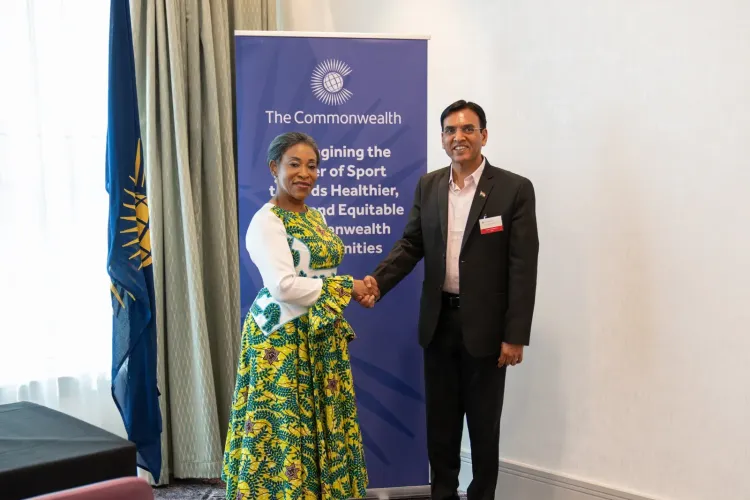
Sports Minister Mansukh Mandaviya met Commonwealth Secretary-General Elect Shirley Ayorkor Botchwey in Glasgow on 23 July 2026, presenting India's Khelo Bharat Niti and ASMITA Leagues while advancing the country's case to host the 2030 Commonwealth Games.
Key Takeaways
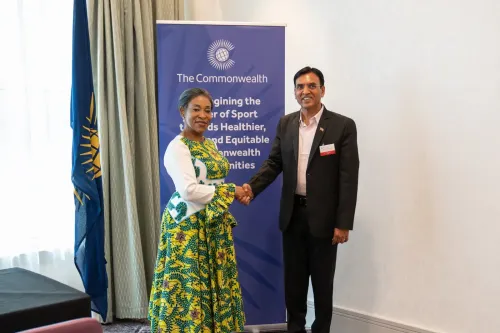
Mansukh Mandaviya held a bilateral meeting with Shirley Ayorkor Botchwey , Commonwealth Secretary-General Elect, in Glasgow on 23 July 2026 .
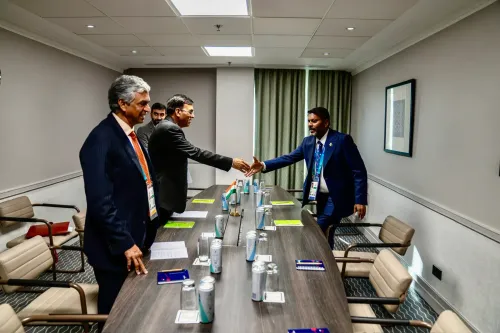
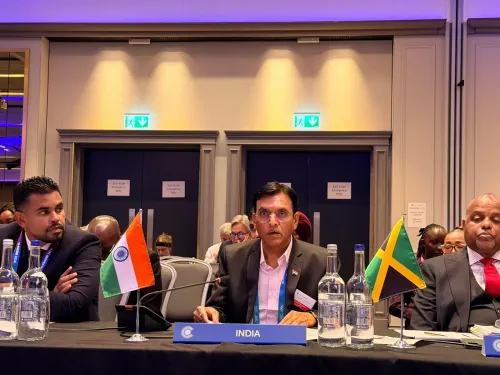
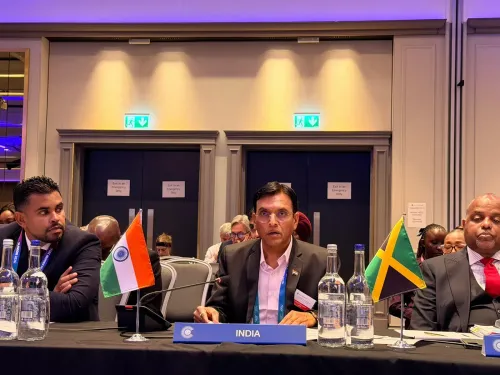
The meeting took place on the sidelines of the Commonwealth Sports Ministers' Meeting .
Mandaviya showcased the Khelo Bharat Niti and ASMITA Leagues as pillars of India's grassroots and gender-inclusive sports reforms.
India is preparing to host the 2030 Commonwealth Games , which would be its first edition since New Delhi 2010 .
Both sides discussed using the Commonwealth Advantage to expand sports partnerships and explore trade and investment opportunities.
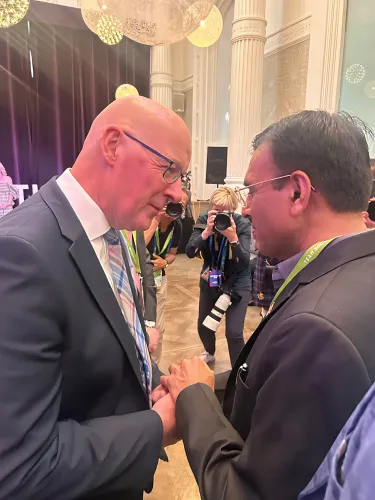
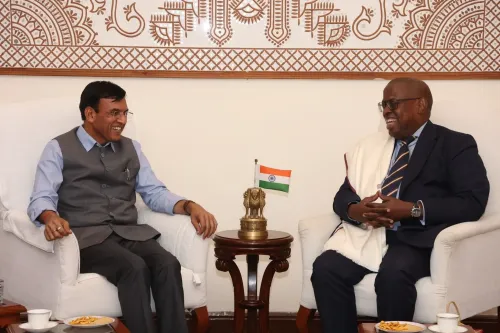
Union Labour and Sports Minister Mansukh Mandaviya met Shirley Ayorkor Botchwey, Secretary-General Elect of the Commonwealth, on the sidelines of the Commonwealth Sports Ministers' Meeting in Glasgow on Wednesday, 23 July 2026. The discussion centred on India's sports reforms and the country's preparations to host the 2030 Commonwealth Games.
Context
Mandaviya used the Glasgow forum to formally introduce Botchwey — Ghana's former Foreign Minister and the incoming Commonwealth Secretary-General — to India's evolving sports policy architecture. The bilateral conversation took place on the margins of a multilateral gathering of Commonwealth sports ministers, giving it added diplomatic weight ahead of Botchwey's assumption of the top Commonwealth role.
In his post on X, the minister said he 'highlighted India's transformative sports reforms, including the Khelo Bharat Niti and ASMITA Leagues, which are strengthening grassroots sports, advancing gender inclusion, and creating pathways for sporting excellence across the country.'
Policy Backdrop
The Khelo Bharat Niti builds on the Khelo India programme launched in 2017, which was designed to identify grassroots talent and upgrade sports infrastructure across the country. The ASMITA Leagues represent a more recent gender-focused initiative aimed at creating structured competitive pathways for women athletes at the district and state levels.
India last hosted the Commonwealth Games in New Delhi in 2010 — its only prior edition as host. A successful 2030 edition would mark a significant return to multi-sport hosting at the Commonwealth level and is being positioned as a showcase for the country's upgraded sports ecosystem.
The Commonwealth, a voluntary association of 56 independent states, has historically served as a platform for India to combine sports diplomacy with broader economic and cultural engagement. Mandaviya flagged this dimension explicitly, noting that the two sides 'exchanged views on leveraging the Commonwealth Advantage to deepen sports partnerships and unlock new opportunities in trade and investment.'
Stakeholders and Impact
Indian athletes — particularly women competing through the ASMITA Leagues — stand to benefit if the Commonwealth framework is used to expand international exposure and competitive opportunities. Sports federations could gain from deeper institutional partnerships with Commonwealth member states.
For Botchwey, engaging with India early signals a priority relationship: India is among the Commonwealth's largest economies and a major driver of the organisation's sporting calendar. Her incoming tenure as Secretary-General is expected to place renewed emphasis on sports as a tool for development and inclusion across member nations.
What's Next
Concrete milestones in India's 2030 Commonwealth Games preparations — including host-city confirmation, infrastructure timelines, and formal Commonwealth approval — will be closely watched in the months ahead. Any follow-up bilateral or multilateral agreements on sports cooperation emerging from the Glasgow meeting would be the next tangible indicator of progress.
With Botchwey set to take charge of the Commonwealth Secretariat, her early engagement with Mandaviya in Glasgow could set the tone for India's relationship with the organisation as the 2030 Games planning enters a more intensive phase.
Point of View
The minister is framing India not merely as a host-in-waiting but as a model for Commonwealth sports development. The 2030 Games bid gives India structural leverage within the organisation, and the explicit linkage of sports partnerships to trade and investment signals that New Delhi views the Commonwealth less as a ceremonial club and more as an economic corridor. How quickly concrete hosting agreements materialise will determine whether this engagement translates into lasting institutional momentum.
NationPress
21 Oct 2026
Frequently Asked Questions
What did Mansukh Mandaviya discuss with the Commonwealth Secretary-General Elect in Glasgow?
Mandaviya discussed India's sports reforms — including the Khelo Bharat Niti and ASMITA Leagues — and India's preparations to host the 2030 Commonwealth Games, as well as opportunities to deepen trade and investment through Commonwealth sports partnerships.
What is the Khelo Bharat Niti?
The Khelo Bharat Niti is India's national sports policy framework that builds on the Khelo India programme launched in 2017, aimed at strengthening grassroots sports infrastructure and talent development across the country.
What are the ASMITA Leagues?
The ASMITA Leagues are gender-focused competitive sports leagues in India designed to create structured pathways for women athletes at the district and state levels, advancing gender inclusion in Indian sport.
Is India confirmed as the host of the 2030 Commonwealth Games?
India has signalled its intent to host the 2030 Commonwealth Games, and Minister Mandaviya raised the hosting plans in Glasgow, but formal Commonwealth confirmation and detailed hosting arrangements are still being worked through.
Who is Shirley Ayorkor Botchwey?
Shirley Ayorkor Botchwey is a Ghanaian politician and former Foreign Minister who has been elected as the incoming Secretary-General of the Commonwealth, the voluntary association of 56 independent states.