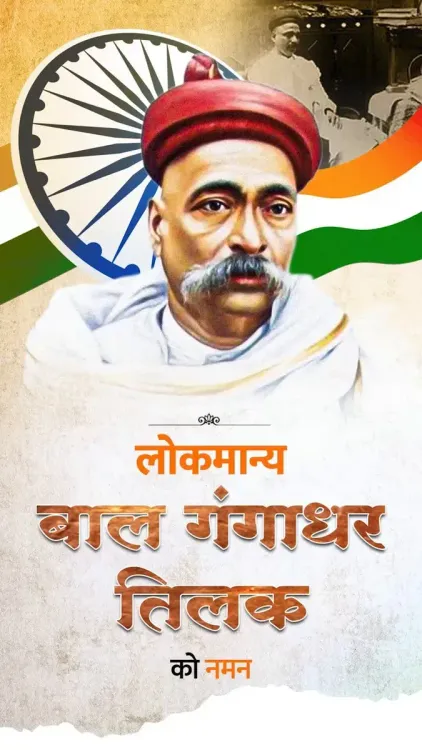
Mandaviya Pays Tribute to Tilak on Jayanti
Synopsis
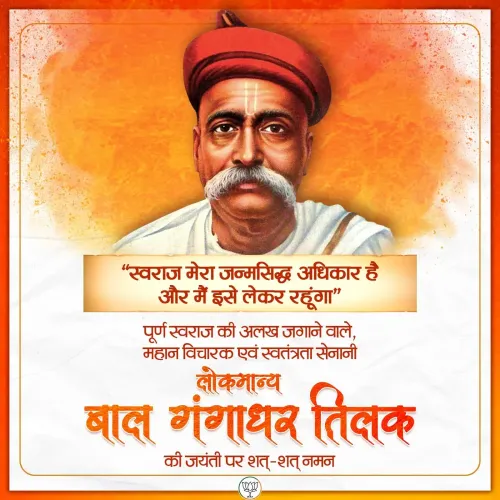
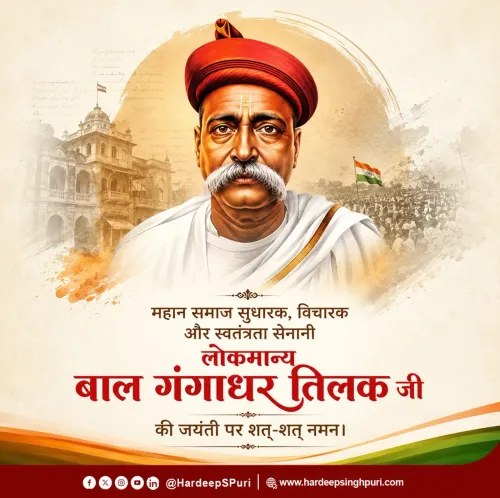
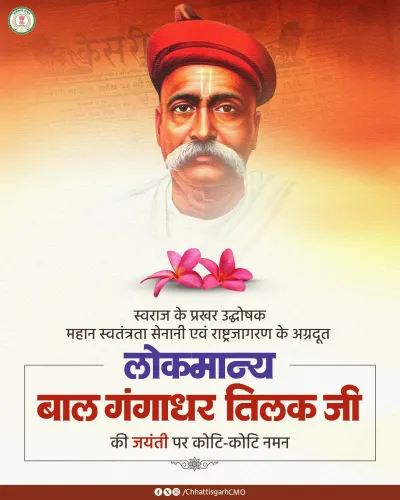
Union Labour and Sports Minister Mansukh Mandaviya on 23 July paid tribute to Lokmanya Bal Gangadhar Tilak on his birth anniversary, invoking the nationalist leader's iconic Swaraj declaration and honouring his legacy as a pioneer of India's independence movement.
Key Takeaways
Union Minister Mansukh Mandaviya paid tribute to Lokmanya Bal Gangadhar Tilak on his birth anniversary on 23 July .
Tilak is remembered for the declaration: 'Swaraj is my birthright and I shall have it,' a cornerstone phrase of India's independence movement.
Bal Gangadhar Tilak was born on 23 July 1856 in Ratnagiri, Maharashtra .
At the 1906 Calcutta session of the Indian National Congress, Swaraj was formally adopted as the movement's goal, building on Tilak's advocacy.
Tilak pioneered the use of mass public festivals such as Ganesh Chaturthi celebrations as tools for nationalist mobilisation.
Tributes to independence-era leaders form a consistent part of Indian political communication across party lines.
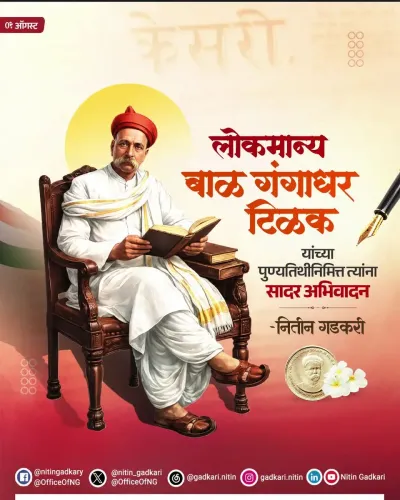
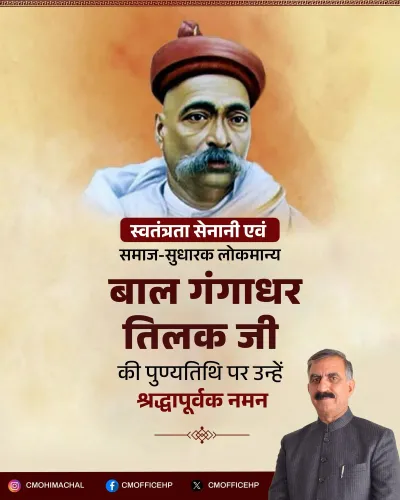
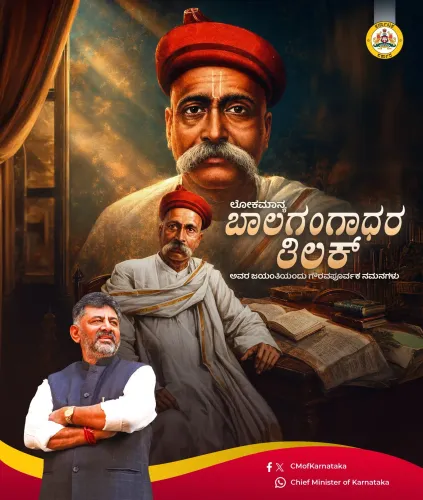
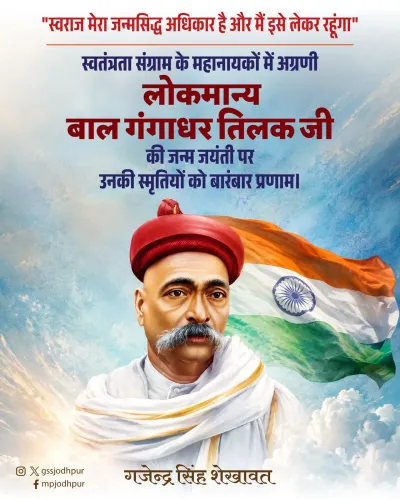
Union Labour and Sports Minister Mansukh Mandaviya on Thursday, 23 July paid homage to freedom fighter Lokmanya Bal Gangadhar Tilak on his birth anniversary, honouring the nationalist leader who gave India the rallying cry of self-rule.
Context
Mandaviya's post on X offered a respectful salute — 'sadar naman' (a respectful bow) — to Tilak, describing him as a 'prakhar rashtrbhakt' (ardent nationalist) who sounded the conch of Swaraj. The minister directly invoked Tilak's legendary declaration: 'Swaraj is my birthright and I shall have it,' one of the most quoted phrases from India's independence movement.
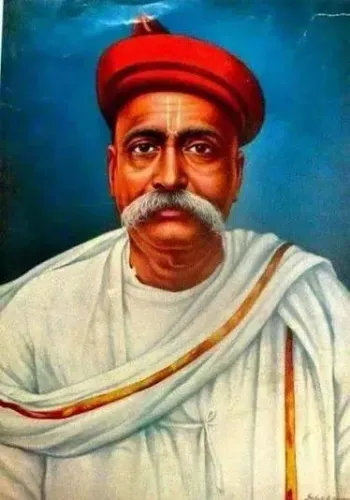
Lokmanya Bal Gangadhar Tilak was born on 23 July 1856 in Ratnagiri, Maharashtra. A lawyer, journalist, mathematician, and fierce anti-colonial agitator, he became one of the earliest and most influential voices demanding complete self-governance for India.
Policy Backdrop
Tilak's articulation of Swaraj as an inalienable right was not merely rhetorical — it carried constitutional weight within the freedom movement. At the 1906 Calcutta session of the Indian National Congress, Swaraj was formally adopted as the movement's central goal, a direct consequence of the political groundwork Tilak and his contemporaries had laid.
He also pioneered the use of mass public festivals — most notably the Ganesh Chaturthi and Shivaji Jayanti celebrations — as platforms for nationalist mobilisation, transforming religious and cultural gatherings into vehicles for political consciousness among ordinary Indians.
Stakeholders and Impact
Tilak's legacy is claimed across the Indian political spectrum. His emphasis on cultural pride, grassroots mobilisation, and uncompromising demands for self-rule resonates with nationalist organisations, historians, and citizens alike. Maharashtra, his home state, observes Tilak Jayanti with particular fervour, with commemorations held at educational institutions, cultural bodies, and government offices.
For the ruling BJP, invoking Tilak aligns with a broader political communication strategy of drawing continuity between contemporary governance and the pre-1947 freedom struggle. Mandaviya's tribute is consistent with a well-established pattern among Indian leaders of publicly honouring independence-era icons on their birth and death anniversaries.
What's Next
Annual Tilak Jayanti commemorations on 23 July typically include government-organised events, seminars, and cultural programmes, particularly in Maharashtra and at national institutions in New Delhi. As India continues to situate its contemporary political identity within the narrative of the independence struggle, tributes such as Mandaviya's signal the enduring relevance of Tilak's ideas — especially his insistence that self-determination is not a concession to be granted, but a right to be claimed.
Point of View
The communication subtly underscores themes of assertive self-determination that resonate with the party's ideological positioning. Such tributes also serve a cultural function, reinforcing the idea that the ruling dispensation is the natural inheritor of the independence struggle's most combative strand. Over time, the cumulative effect of these anniversary posts builds a political vocabulary that connects present governance to historical legitimacy.
NationPress
21 Oct 2026
Frequently Asked Questions
Why is 23 July celebrated as Tilak Jayanti?
23 July is observed as Tilak Jayanti because Lokmanya Bal Gangadhar Tilak was born on this date in 1856 in Ratnagiri, Maharashtra. It is marked annually with tributes, seminars, and cultural events across India, especially in Maharashtra.
What is the meaning of 'Swaraj is my birthright and I shall have it'?
This declaration by Bal Gangadhar Tilak asserted that self-rule was not a favour to be granted by colonial rulers but an inherent right of every Indian. It became one of the most powerful slogans of India's independence movement and helped galvanise mass participation in the struggle against British rule.
Who was Lokmanya Bal Gangadhar Tilak?
Lokmanya Bal Gangadhar Tilak was an Indian nationalist, lawyer, journalist, and mathematician who was one of the earliest and most influential leaders of the independence movement. He is credited with popularising the demand for Swaraj and using public festivals like Ganesh Chaturthi for nationalist mobilisation.
What did Mansukh Mandaviya say about Tilak Jayanti?
Union Minister Mansukh Mandaviya posted a tribute on X describing Tilak as an ardent nationalist who sounded the conch of Swaraj, offering a respectful salute on the occasion of his birth anniversary on 23 July.
When was Swaraj adopted as the goal of India's independence movement?
Swaraj was formally adopted as the goal of the Indian National Congress at its 1906 Calcutta session, a milestone that reflected the growing influence of leaders like Bal Gangadhar Tilak who had long championed the cause of self-rule.