Mandaviya Shares MY Bharat Youth's Take on Gen Z
Synopsis
Union Minister Mansukh Mandaviya shared a video on 26 July 2026 of a MY Bharat volunteer explaining what Gen Z means, spotlighting the platform's strategy of letting youth speak for themselves on civic engagement and nation-building.
Key Takeaways
Union Minister Mansukh Mandaviya posted a video on 26 July 2026 featuring a MY Bharat volunteer's personal definition of Gen Z.
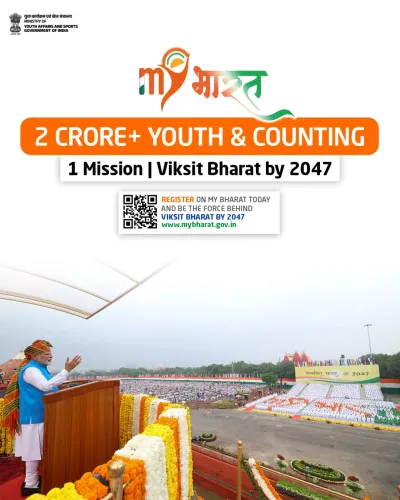
Mera Yuva Bharat was launched on 31 October 2023 to consolidate youth programmes into a single digital platform targeting Indians aged 15 to 29 .
The platform is rooted in the National Youth Policy 2014 and extends youth engagement into the social-media era.
The post reflects a ministry strategy of amplifying volunteer voices rather than top-down official messaging.
Parliamentary budget discussions for the Ministry of Youth Affairs and Sports are the next key policy milestone to watch.
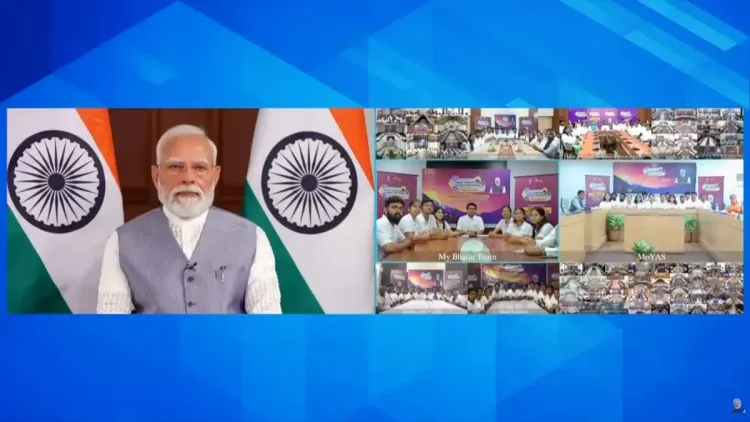
Union Labour and Sports Minister Mansukh Mandaviya on Sunday, 26 July 2026, shared a video on X featuring a young volunteer from the Mera Yuva Bharat (MY Bharat) platform who offered his own definition of what 'Gen Z' means — framing the term through the lens of civic participation and nation-building.
Context
The post, captioned 'MY Bharat ke yuva sathi ne bataya Gen Z ka matlab' ('A young companion from MY Bharat explained the meaning of Gen Z'), spotlights a grassroots voice from within the government's flagship youth engagement ecosystem. By amplifying a volunteer's perspective rather than an official statement, Mandaviya underscores the platform's emphasis on youth-led narratives and peer communication.
The framing is deliberate: instead of a minister defining a generation, a member of that generation does it himself — a format that resonates strongly with social-media-native audiences aged 15 to 29, the core demographic MY Bharat targets.
Policy Backdrop
Mera Yuva Bharat was launched on 31 October 2023 under the Ministry of Youth Affairs and Sports to consolidate scattered youth-focused programmes into a single digital platform. It enables volunteer registration, skill-building activities, and direct participation in community and national initiatives.
The platform is rooted in the National Youth Policy 2014, which first articulated India's ambition to harness its demographic dividend through structured civic engagement. MY Bharat extends that policy lineage into the app-based, short-video era, using social media as a primary channel to reach first-time volunteers and students across states.
Successive central governments have treated youth platforms as both a governance tool and a communication strategy, recognising that India's median age of roughly 29 years makes youth outreach central to long-term policy legitimacy.
Stakeholders and Impact
The immediate audience for this post is India's Gen Z cohort — tens of millions of young Indians who consume content on short-video and microblogging platforms. By letting a peer define their own generation, the Ministry signals that MY Bharat sees volunteers not as beneficiaries but as spokespersons.
Youth volunteers already registered on the MY Bharat portal stand to benefit from the visibility such ministerial amplification brings, potentially encouraging higher sign-ups and greater participation in upcoming civic programmes. Educational institutions and youth clubs affiliated with the platform are also indirect stakeholders, as increased visibility can translate into institutional partnerships and resource allocation.
What's Next
Parliamentary discussions on the Ministry of Youth Affairs and Sports budget are a key forum to watch for any expansion of MY Bharat-linked programmes, particularly in educational institutions and tier-2 and tier-3 cities where volunteer density remains lower.
The ministry's continued use of social-media storytelling — volunteer testimonials, peer-to-peer definitions, and user-generated content — suggests a communications strategy that will likely intensify ahead of major national youth events and scheme anniversaries. How the Gen Z cohort responds to and reshapes these narratives in their own words may well define the next phase of India's youth-engagement policy.
Point of View
The Ministry of Youth Affairs is consciously mimicking the peer-to-peer grammar of Gen Z content culture. This fits a broader pattern in which MY Bharat functions as both a governance platform and a soft-power vehicle, building the government's credibility with a demographic that is sceptical of top-down messaging. The strategic question is whether volunteer testimonials can sustain engagement beyond social media virality and translate into measurable upticks in civic participation.
NationPress
25 Oct 2026
Frequently Asked Questions
What is Mera Yuva Bharat or MY Bharat?
Mera Yuva Bharat (MY Bharat) is a Government of India platform launched on 31 October 2023 under the Ministry of Youth Affairs and Sports to connect young Indians aged 15 to 29 with volunteerism, skill-building, and civic activities through a unified digital portal.
What did Mansukh Mandaviya post about Gen Z?
On 26 July 2026, Minister Mansukh Mandaviya shared a video on X in which a MY Bharat youth volunteer explained his personal understanding of what the term 'Gen Z' means, framing it through civic participation and nation-building.
Who is Mansukh Mandaviya?
Mansukh Mandaviya is a senior BJP leader serving as Union Minister of Labour and Employment and Youth Affairs and Sports in the Government of India.
What is the purpose of the MY Bharat platform?
MY Bharat aims to harness India's demographic dividend by consolidating youth-focused government schemes into one digital platform, encouraging volunteer registration, skill development, and direct participation in community and national programmes.
How does MY Bharat relate to India's National Youth Policy?
MY Bharat extends the framework of the National Youth Policy 2014, which first outlined India's strategy to engage its large youth population through structured civic participation, now adapted for app-based and social-media-driven outreach.