Mandaviya pays tribute to Dattopant Thengadi on death anniversary
Synopsis
Union Labour Minister Mansukh Mandaviya marked the death anniversary of Dattopant Thengadi on 14 October 2026, honouring the RSS ideologue who founded Bharatiya Mazdoor Sangh in 1955 and Swadeshi Jagran Manch in 1991, and dedicated his life to nationalist labour welfare.
Key Takeaways
Mansukh Mandaviya , Union Labour and Sports Minister, paid tribute to Dattopant Thengadi on his death anniversary on 14 October 2026 .
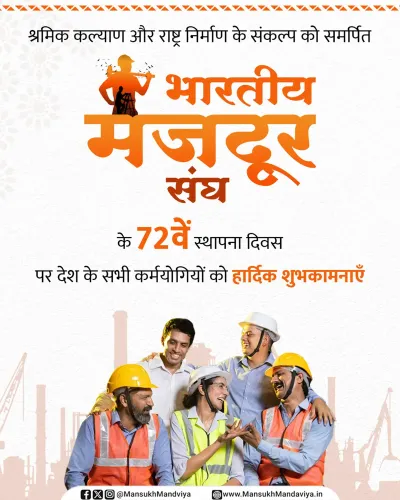
Thengadi founded Bharatiya Mazdoor Sangh in 1955 as a nationalist trade union; it is today India's largest trade union by membership.
He also co-founded Swadeshi Jagran Manch in 1991 to advocate economic self-reliance amid India's liberalisation era.
BJP ministers regularly mark this anniversary to affirm ideological continuity with RSS labour and swadeshi traditions.
The tribute connects to the current government's Atmanirbhar Bharat agenda and the pending implementation of India's four labour codes .
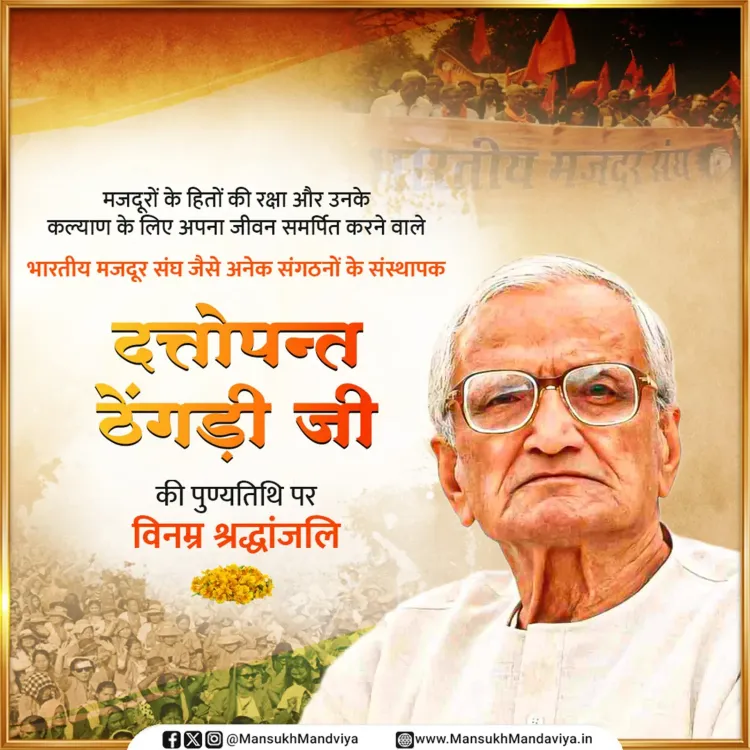
A life devoted entirely to the cause of India's workers — that is how Union Labour and Sports Minister Mansukh Mandaviya remembered Dattopant Thengadi on his death anniversary on Wednesday, 14 October 2026, offering a humble tribute to the ideologue who reshaped the landscape of nationalist labour organising in independent India.
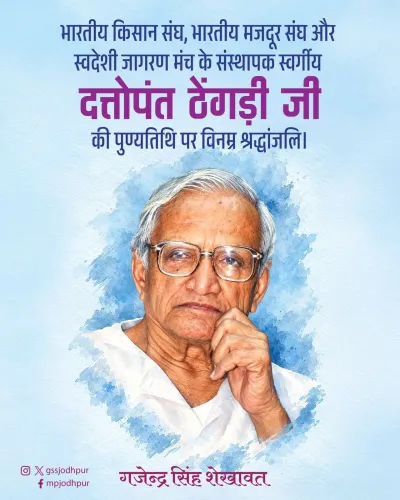
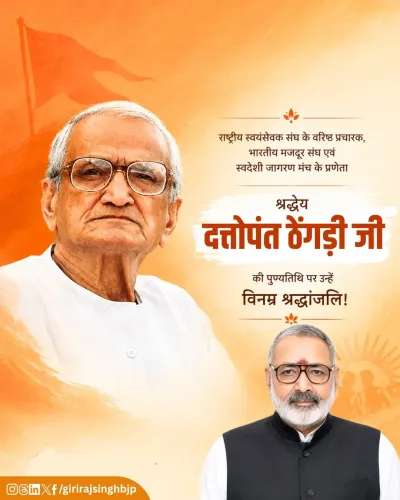
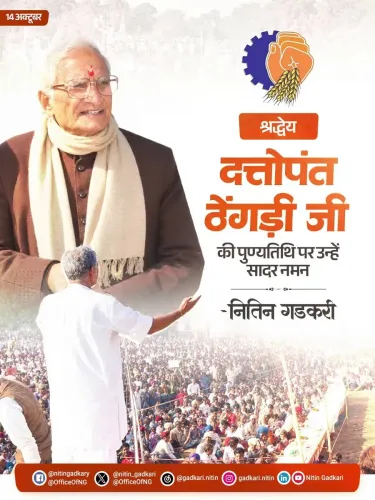
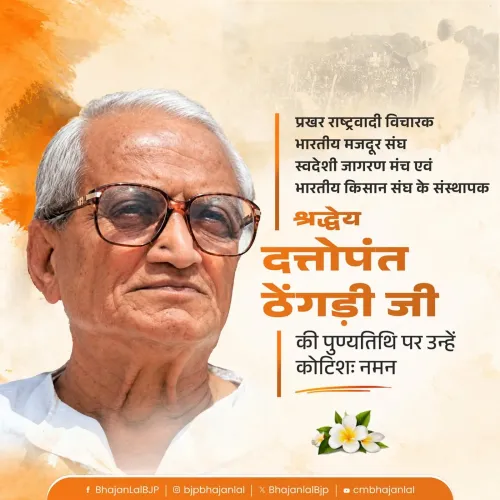
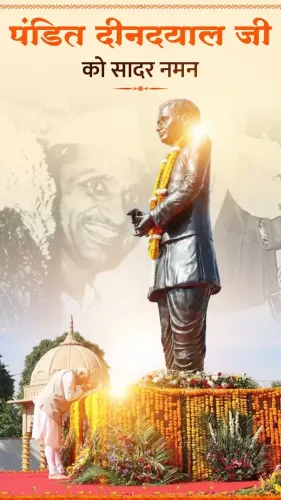
In his post, Minister Mandaviya wrote: 'Shramikon ke hiton ki raksha ke liye apna sampurna jeevan samarpit karne wale...' — 'A humble tribute to revered Dattopant Thengadi ji, a sharp thinker and ideologue who dedicated his entire life to protecting the interests of workers, and the founder of numerous organisations including Bharatiya Mazdoor Sangh and Swadeshi Jagran Manch, on his death anniversary.'
The man who built India's largest trade union
Dattopant Thengadi was an RSS pracharak who channelled ideological conviction into institutional architecture. In 1955, he founded the Bharatiya Mazdoor Sangh (BMS) as a nationalist alternative to trade unions then aligned with left-leaning or Congress politics — a body that would grow into the single largest trade union in India by membership. His argument was simple and radical at once: workers' welfare and national interest were inseparable, not competing, concerns.
Thirty-six years later, as India swung open its economy, Thengadi struck again. In 1991, he co-founded the Swadeshi Jagran Manch (SJM), an RSS-affiliated platform built to challenge unbridled liberalisation and assert the case for economic self-reliance — a philosophy that would echo decades later in the government's own Atmanirbhar Bharat agenda.
Why BJP ministers keep this anniversary
Mandaviya's tribute is not a solitary gesture. Senior BJP and RSS figures consistently mark Thengadi's death anniversary as an affirmation of ideological lineage — a signal that the current government's labour and economic policies trace their roots to the Sangh Parivar's long tradition of worker-centric nationalism. The timing matters: with the government's consolidation of India's fragmented labour laws into four labour codes still pending full implementation, invoking Thengadi connects present-day reform to a founding moral authority.
As the nation's Labour Minister, Mandaviya himself sits at the intersection of those two legacies — the BMS tradition of organised labour welfare and the SJM tradition of swadeshi economics — making the tribute as much a statement of governing philosophy as a mark of personal respect.
Point of View
Not mere ceremonial courtesy — it anchors the BJP government's labour reform narrative within the Sangh Parivar's pre-liberalisation intellectual tradition. By invoking both BMS and SJM, the minister implicitly frames India's ongoing four labour codes consolidation and Atmanirbhar Bharat push as the institutional heirs of Thengadi's vision. For a government that has faced criticism from left-leaning unions over labour law changes, aligning with Thengadi's legacy serves as a counter-narrative: that worker welfare and nationalist economics are, by founding design, the same project.
NationPress
14 Oct 2026
Frequently Asked Questions
Who was Dattopant Thengadi?
Dattopant Thengadi was an RSS pracharak and ideologue who founded the Bharatiya Mazdoor Sangh in 1955 and the Swadeshi Jagran Manch in 1991, dedicating his life to nationalist labour welfare and economic self-reliance.
What is the Bharatiya Mazdoor Sangh?
Bharatiya Mazdoor Sangh (BMS) is India's largest trade union by membership, established in 1955 by Dattopant Thengadi as a nationalist alternative to left-aligned trade unions.
What is the Swadeshi Jagran Manch?
The Swadeshi Jagran Manch (SJM) is an RSS-affiliated organisation founded in 1991 by Dattopant Thengadi to advocate swadeshi economics and oppose unbridled foreign economic liberalisation.
Why did Mansukh Mandaviya pay tribute to Thengadi?
As Union Labour Minister, Mandaviya paid tribute on Thengadi's death anniversary on 14 October 2026, following the BJP tradition of honouring Sangh Parivar founders to affirm ideological continuity in labour and economic policy.
When is Dattopant Thengadi's death anniversary?
Dattopant Thengadi's death anniversary falls on 14 October, marked annually by RSS, BMS, SJM, and BJP leaders.