Manipur Governor flags TB detection gaps in remote areas, NTPC backs ₹2.9 crore nutrition drive
Synopsis
Manipur Governor Ajay Kumar Bhalla has flagged that the state's official TB numbers may understate actual disease prevalence — a rare policy-level admission of detection gaps in remote areas. With NTPC committing ₹2.9 crore to feed 1,800 patients and AI-enabled X-ray machines now in district hands, the real question is whether equipment and funding translate into a measurable reduction in missed cases.
Key Takeaways
Manipur Governor Ajay Kumar Bhalla warned on 3 October that reported TB figures may not reflect actual disease prevalence in remote areas of the state.
NTPC has sanctioned approximately ₹2.9 crore under its CSR initiative to provide six months of nutritional support to around 1,800 TB patients across all districts of Manipur.
Handheld AI-enabled X-ray machines were distributed to health officials and Deputy Commissioners to strengthen early TB detection in difficult-to-reach areas.
The initiative is part of the TB Mukt Bharat Abhiyan under the National TB Elimination Programme , with NTPC acting as a Nikshay Mitra .
Governor Bhalla urged community leaders and organisations to register as Nikshay Mitras and called for a coordinated government-corporate-community response to achieve a TB-free Manipur.
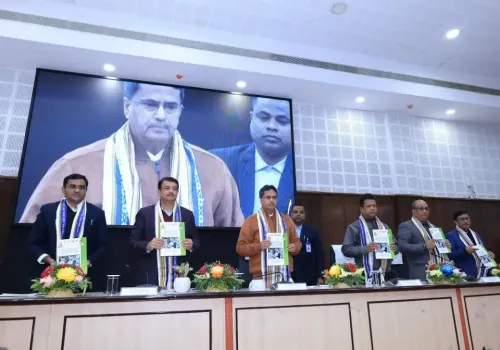
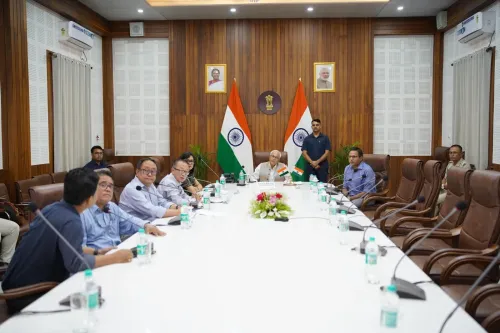
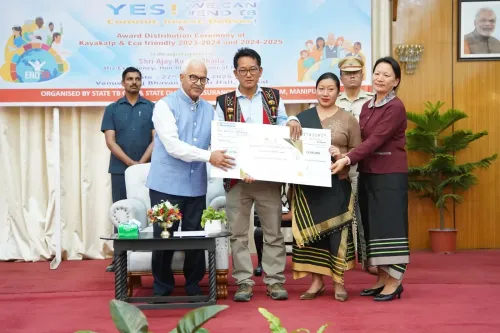
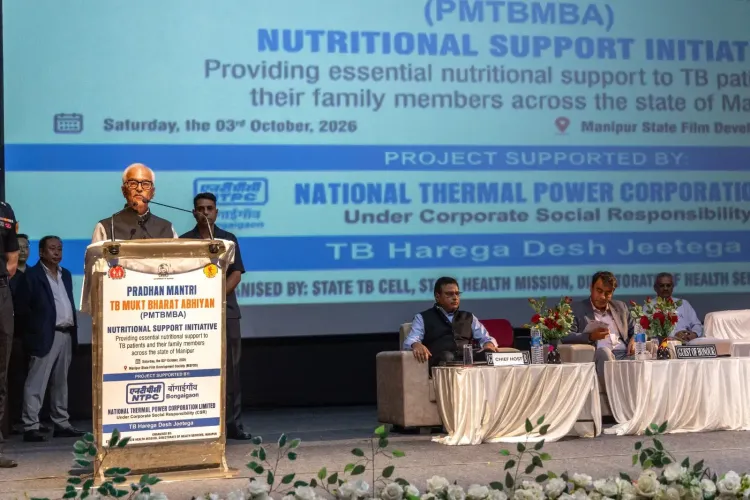
Manipur Governor Ajay Kumar Bhalla on Saturday, 3 October called for intensified tuberculosis (TB) case detection in remote and difficult-to-reach parts of Manipur, warning that the state's reported TB indicators may not fully capture the actual prevalence of the disease. His remarks came at a distribution ceremony for nutritional food baskets for TB patients held at MSFDS, Imphal.
Key Developments at the Imphal Ceremony
Governor Bhalla led the distribution of nutritional food baskets to TB patients and their family caregivers. He also handed over handheld AI-enabled X-ray machines to health officials and Deputy Commissioners from across the state, aimed at strengthening TB screening and early detection in areas that conventional health infrastructure struggles to reach.
The Governor specifically urged the Health Department and district authorities to ensure the effective and monitored deployment of these machines, stressing that regular tracking of their use and outcomes is essential to translating equipment provision into actual diagnostic gains.
NTPC's ₹2.9 Crore CSR Commitment
The nutritional support initiative is backed by National Thermal Power Corporation Limited (NTPC), participating as a Nikshay Mitra under the TB Mukt Bharat Abhiyan, which forms part of the National TB Elimination Programme. Under its Corporate Social Responsibility (CSR) initiative, NTPC has sanctioned approximately ₹2.9 crore to provide six months of nutritional assistance to around 1,800 TB patients and their families across all districts of Manipur.
NTPC Chairman and Managing Director Gurdeep Singh reaffirmed the corporation's commitment to the TB Mukt Bharat Abhiyan, describing the nutritional assistance as 'a meaningful intervention in supporting patients through their treatment journey.' He expressed readiness to extend support under the Nikshay Mitra initiative as additional cases are identified.
What the Governor Said
Bhalla welcomed NTPC's initiative and expressed hope that the nutritional support could be extended to cover more patients as fresh cases come to light. He urged community leaders and organisations to register as Nikshay Mitras and provide nutritional, emotional, and social backing to patients. He emphasised that eliminating TB requires a coordinated effort spanning government agencies, corporate partners, healthcare workers, and local communities.
Notably, the Governor's acknowledgement that reported figures 'may not fully reflect the actual prevalence' signals a policy-level concern: under-detection in remote geographies could mean Manipur's TB burden is larger than official numbers suggest.
State Administration's Response
Chief Secretary Rajeev Singh Thakur expressed appreciation to NTPC for its financial support, noting that the partnership 'significantly strengthens the state's TB elimination efforts.' His remarks underline the state government's view that corporate participation is now a structural component — not a supplementary one — of Manipur's TB response.
Broader Context and What Comes Next
India has set a target of eliminating TB by 2025 — five years ahead of the global Sustainable Development Goal deadline of 2030. Manipur's challenge with remote-area detection mirrors a nationwide pattern: tribal, hilly, and conflict-affected regions consistently report lower case-detection rates, which experts argue reflects access barriers rather than lower disease burden. The deployment of AI-enabled portable X-ray machines is part of a broader national push to close this detection gap. How effectively Manipur's district machinery deploys and monitors these devices will be a critical test of whether the equipment translates into outcomes.
Point of View
Reliable power supply, and functional referral chains, AI-enabled X-ray machines risk becoming unused assets. India's 2025 TB elimination deadline has effectively been missed at the national level, and Manipur's remote-area detection gap is a microcosm of why. Corporate CSR nutrition support is welcome, but it addresses the downstream consequences of TB, not the upstream failure to find and treat cases early.
NationPress
3 Oct 2026
Frequently Asked Questions
What did Manipur Governor Ajay Kumar Bhalla say about TB in the state?
Governor Bhalla said that while Manipur's reported TB indicators are relatively favourable, they may not fully reflect the actual prevalence of the disease, particularly in remote and difficult-to-reach areas. He called on the Health Department and district authorities to ensure effective deployment and monitoring of newly provided handheld AI-enabled X-ray machines to strengthen early detection.
What is NTPC's role in Manipur's TB programme?
NTPC is participating as a Nikshay Mitra under the TB Mukt Bharat Abhiyan and has sanctioned approximately ₹2.9 crore under its CSR initiative to provide six months of nutritional assistance to around 1,800 TB patients and their families across all districts of Manipur. NTPC Chairman and Managing Director Gurdeep Singh has expressed readiness to extend the support as more cases are identified.
What is the TB Mukt Bharat Abhiyan?
The TB Mukt Bharat Abhiyan is a national initiative under India's National TB Elimination Programme, which aims to eliminate tuberculosis in India by 2025 — five years ahead of the global Sustainable Development Goal deadline of 2030. It encourages corporates, community organisations, and individuals to register as Nikshay Mitras and provide nutritional, emotional, and social support to TB patients.
Who are Nikshay Mitras and how do they help TB patients?
Nikshay Mitras are individuals, organisations, or corporates who volunteer to support TB patients under the National TB Elimination Programme. They provide nutritional, emotional, and social assistance to patients during their treatment and recovery, complementing the government's medical interventions.
Why is TB detection in remote areas of Manipur a concern?
Governor Bhalla noted that reported TB figures may not capture the full burden of disease in Manipur's remote and difficult-to-reach areas, suggesting that access barriers rather than lower disease prevalence may be suppressing case counts. This mirrors a broader national pattern where tribal, hilly, and conflict-affected regions consistently show lower detection rates, prompting the deployment of portable AI-enabled X-ray machines to bridge the gap.