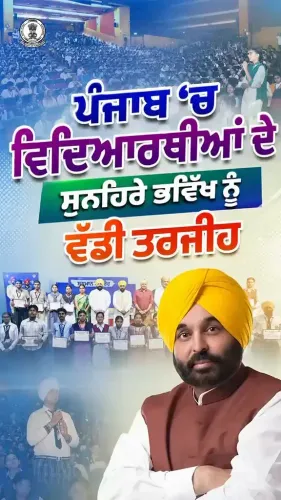
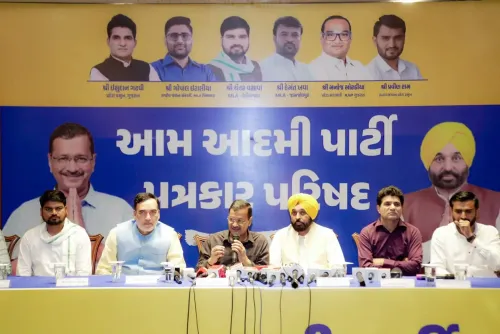
Punjab CM Bhagwant Mann opposes Higher Education Bill, urges Centre to reconsider
Synopsis
Punjab CM Bhagwant Mann has formally written to Union Education Minister Dharmendra Pradhan opposing the Viksit Bharat Shiksha Adhiniyam Bill – 2025, warning it could centralise power, raise costs, and shut out students from ordinary families. With education on the Concurrent List, his pushback signals a potential federal fault line that could widen if other opposition states join in.
Key Takeaways
Punjab CM Bhagwant Mann wrote to Union Education Minister Dharmendra Pradhan opposing the Viksit Bharat Shiksha Adhiniyam Bill – 2025 .
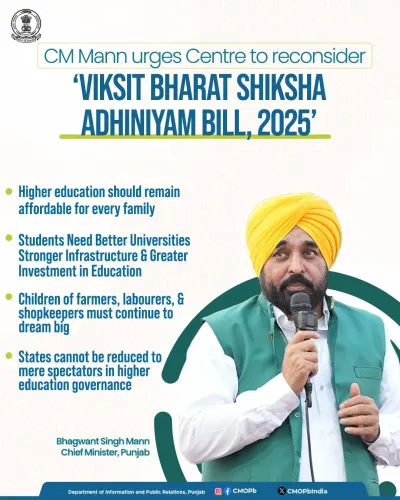
Mann warned the Bill could make higher education more expensive and centralise decision-making away from states.
He argued the legislation could weaken opportunities for children of farmers, labourers, and shopkeepers .
Mann called for wider consultations with states, educators, and students before the Bill proceeds.
The Bill has not yet been tabled in Parliament; opposition from multiple states could complicate its passage.
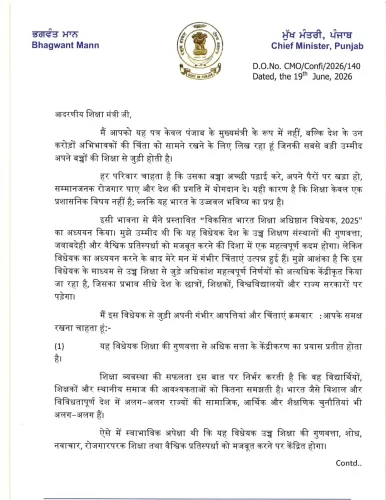
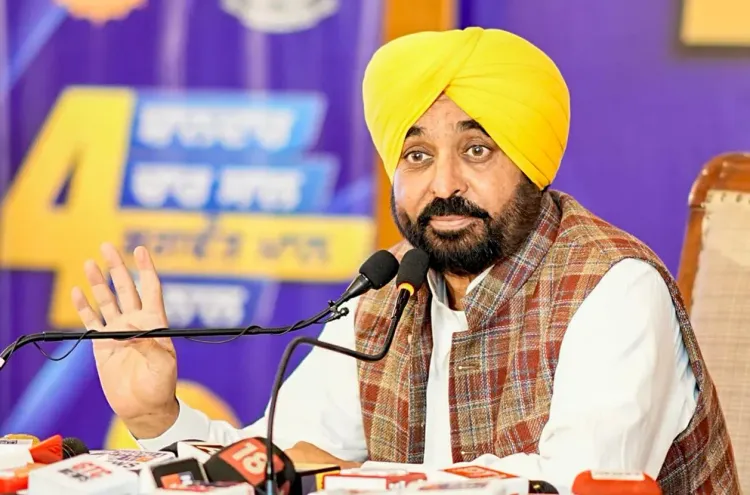
Punjab Chief Minister Bhagwant Mann has formally opposed the proposed Viksit Bharat Shiksha Adhiniyam Bill – 2025 (Higher Education Bill), warning that the legislation risks making higher education costlier, narrowing opportunities for students from ordinary families, and eroding states' capacity to address local educational needs. Mann conveyed his concerns in a letter to Union Education Minister Dharmendra Pradhan, calling for broader consultations before any reforms are enacted.
Key Concerns Raised
In his letter, CM Mann said he was writing not merely as the Chief Minister of Punjab but as a representative of crores of parents across India whose aspirations are bound to their children's education. He argued that higher education must remain a pathway of opportunity for the child of a farmer, labourer, or shopkeeper — not become a financial burden on families.
'Every family wants its child to receive quality education, stand on his or her own feet, secure dignified employment and contribute to the progress of the nation. That is why education is not merely an administrative subject; it is a question concerning India's bright future,' Mann wrote in the letter.
Centralisation vs. Quality
Mann said he had initially hoped the Bill would strengthen the quality, accountability, and global competitiveness of higher educational institutions. However, after closely examining the legislation, he concluded that it seeks to centralise critical decisions in higher education — with far-reaching consequences for students, teachers, universities, and state governments alike.
'The success of an education system depends upon how effectively it understands the needs of students, teachers and local communities. In a country as vast and diverse as India, every state faces different social, economic and educational challenges,' he said.
The Chief Minister argued that the Bill appears to prioritise centralisation of power over genuine improvements in educational quality — a concern that critics of federal overreach in education policy have raised repeatedly in recent years. This is not the first time a state government has pushed back against Union-level reforms touching the Concurrent List subject of education.
What the Centre Should Do Instead
Mann urged the Centre to invest more in universities, infrastructure, faculty, and research rather than pursue measures that could increase costs and concentrate decision-making in New Delhi. He called for wider stakeholder consultations — including state governments, educators, and student communities — before the Bill is taken forward.
He emphasised that India's progress depends on making higher education more accessible, affordable, and inclusive, not less so.
What Happens Next
The Viksit Bharat Shiksha Adhiniyam Bill – 2025 has not yet been tabled in Parliament, and Mann's letter adds political weight to growing calls for a review. Whether the Centre will agree to wider consultations or proceed with the current draft remains to be seen. Other opposition-governed states are likely watching the Punjab government's stance closely, and a coordinated pushback from multiple chief ministers could complicate the Bill's legislative path.
Point of View
And any Bill that effectively strips states of regulatory authority over universities invites a constitutional challenge, not just a political one. The Centre's track record on education reform suggests a preference for top-down standardisation, but India's diversity of languages, economies, and social conditions makes a one-size approach structurally risky. The real question the Bill must answer — and has not yet publicly answered — is how it improves learning outcomes rather than just consolidating administrative control. If the Centre proceeds without genuine state buy-in, it risks a replay of the NEP implementation friction, where policy ambition outpaced ground-level capacity.
NationPress
19 Sept 2026
Frequently Asked Questions
What is the Viksit Bharat Shiksha Adhiniyam Bill 2025?
The Viksit Bharat Shiksha Adhiniyam Bill – 2025 is a proposed central legislation aimed at reforming higher education in India. Critics, including Punjab CM Bhagwant Mann, argue it centralises key decisions away from state governments and could make higher education more expensive and less accessible.
Why has Bhagwant Mann opposed the Higher Education Bill?
Mann has raised concerns that the Bill prioritises centralisation of power over improving educational quality, could raise costs for students from ordinary families, and diminishes states' ability to respond to local educational needs. He wrote to Union Education Minister Dharmendra Pradhan urging reconsideration and wider consultations.
What does Mann want the Centre to do instead?
Mann has urged the Centre to invest more in universities, infrastructure, faculty, and research, and to hold broader consultations with state governments, educators, and student communities before proceeding with the Bill.
Has the Higher Education Bill been passed yet?
No. The Viksit Bharat Shiksha Adhiniyam Bill – 2025 has not yet been tabled in Parliament. Mann's letter is part of pre-legislative opposition aimed at prompting the Centre to revise or delay the Bill.
Why does it matter that education is on the Concurrent List?
Education is a Concurrent List subject under the Indian Constitution, meaning both the Centre and states have legislative authority over it. A Bill that significantly centralises control could be seen as encroaching on states' rights, making political and potentially legal opposition more likely.