New Surrenders Signal Shift in Naxal Dynamics in Kanker, Chhattisgarh

Synopsis
In a significant development, two Maoists surrendered in Kanker, Chhattisgarh, just hours before a pivotal deadline set by the Central government to eliminate Naxalism. Their decision highlights a growing trend of disillusionment with Maoist ideology amid improving local conditions.
Key Takeaways
Two Maoists surrendered in Chhattisgarh's Kanker district.
They cited disillusionment with Maoist ideology .
Government aims for a Naxal-free India by March 31, 2026.
Over 115 Naxals remain active in Kanker.
Recent arms recovery signals a decline in Maoist power .
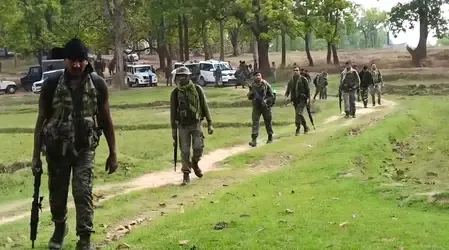
Raipur/Kanker, March 31 (NationPress) With only hours remaining until the Central government’s ambitious target to render India entirely “Naxal-free,” two additional Maoists surrendered their arms in Chhattisgarh’s Kanker district on Tuesday.
This act of surrender has injected renewed vigor into the ongoing fight against Left-Wing Extremism, as security forces persist in their rigorous operations in the remaining areas.
The two former Naxals, known as “Hidme” and “Shankar”, turned themselves in to the police in Kanker, relinquishing their weapons. Notably, one of them was armed with an AK-47 assault rifle, a meaningful recovery that underscores the gradual decline of Maoist firepower within the region.
Law enforcement officials indicated that the two decided to reintegrate into society due to their disenchantment with Maoist ideology and the enhancing development opportunities present in the area.
This occurrence is part of a broader trend of surrenders across Chhattisgarh.
Over the past two years, thousands of Naxals have voluntarily abandoned violence and embraced normalcy under the state’s rehabilitation initiative. Nevertheless, estimates suggest that approximately 115 Naxals continue to operate in the dense forests of Kanker district.
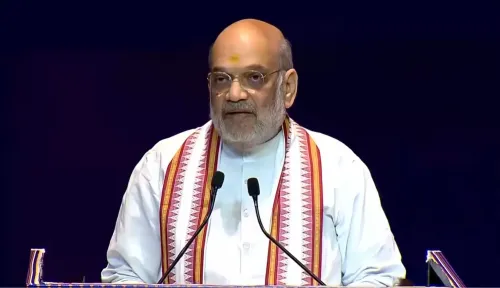
On the preceding day, Union Home Minister Amit Shah addressed the Lok Sabha regarding the goal of a ‘Naxal-free India’. He expressed appreciation to the House on behalf of the residents of the ‘Red Corridor,’ an area that once spanned twelve states and covered extensive territory.
HM Shah remarked that Naxalism has been “almost entirely eradicated” from the Bastar region.
He emphasized the government's targeted initiatives, which include establishing schools and ration shops in every village in Bastar to promote governance and development in these remote tribal regions. The Union Home Minister expressed gratitude to the House on behalf of the entire population residing in the ‘Red Corridor’.
In a different incident on Monday, security forces uncovered a significant Naxal arms cache in the Mohla-Manpur-Ambagarh Chowki area of Rajnandgaon district. This cache, which included one AK-47 rifle, one INSAS rifle, and 46 live cartridges, is perceived as another setback for the remaining Maoist factions operating in the vicinity.
The Central government has established March 31, 2026, as the definitive deadline for the complete elimination of Naxalism in the country. In recent years, a combination of persistent security measures, development initiatives, and effective surrender-and-rehabilitation strategies has significantly diminished the Maoist influence.
Incidents of violence have drastically decreased, and the previously feared Red Corridor has considerably contracted. Security experts and local inhabitants are of the opinion that while achieving complete eradication by the deadline may prove challenging in the last few remaining areas, the momentum is firmly favoring the security forces.
Senior police officials in Kanker stated that efforts are being made to reach out to the remaining cadres and encourage them to surrender before the situation escalates further.
As the deadline approaches, the surrenders of Hidme and Shankar serve as a clear sign of the evolving ground reality in the Naxal-affected districts of Chhattisgarh.
Point of View
The recent surrenders of Hidme and Shankar in Kanker reflect a noteworthy shift in the dynamics of Naxalism in India. This trend may indicate a growing disillusionment with Maoist ideologies and an inclination towards peace and development, aligning with the government's rehabilitation strategies.
NationPress
29 Sept 2026
Frequently Asked Questions
What prompted the recent surrenders of Maoists in Kanker?
The two Maoists cited disillusionment with the Maoist ideology and the improved development prospects in their area as reasons for their decision to surrender.
How many Naxals remain active in Kanker district?
Estimates suggest that around 115 Naxals continue to operate within the dense forests of Kanker district.
What measures has the government taken against Naxalism?
The government has implemented sustained security operations, development initiatives, and effective surrender-and-rehabilitation policies to diminish Naxal influence.
What is the deadline set by the Central government for Naxalism elimination?
The Central government has set March 31, 2026, as the deadline for the complete elimination of Naxalism from India.
What is the significance of the recent arms recovery in Rajnandgaon?
The recovery of a significant Naxal arms cache in Rajnandgaon is viewed as another setback for the remaining Maoist networks operating in the region.