Fadnavis: Marathis must keep homes in Mumbai, cites BDD Chawl
Synopsis
Devendra Fadnavis is linking Mumbai housing policy to Marathi identity. He says mill-worker colonies are being rebuilt where they stand instead of residents being pushed to Vasai, Virar and Karjat. BDD Chawl residents are moving from 120 sq ft rooms to free homes of up to 600 sq ft, and a larger beneficiary campaign has been promised.
Key Takeaways
Maharashtra CM Devendra Fadnavis said on 27 November 2026 that the government is working to keep Mumbai's native Marathi population in the city.
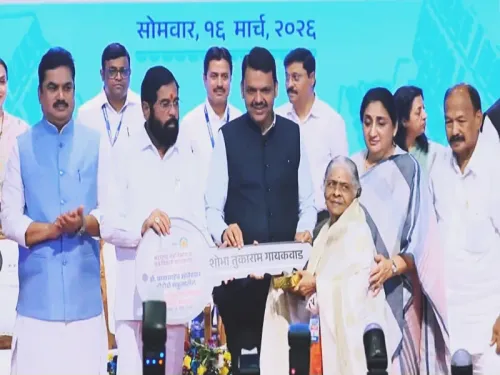
He distributed Class-1 land conversion orders to cooperative housing societies under the Nagari Nivara Parishad .
Fadnavis said 1,600 housing projects have taken shape in Mumbai and 625 families have received homes under the Parishad.
He said BDD Chawl residents are moving from 120 sq. ft. rooms to free homes of 450 to 600 sq. ft. on the same site.
He announced a large-scale campaign to reach more beneficiaries and praised BJP leader Ashish Shelar .
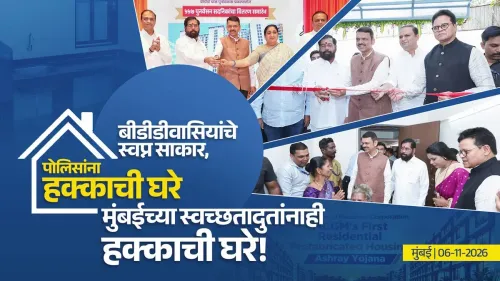
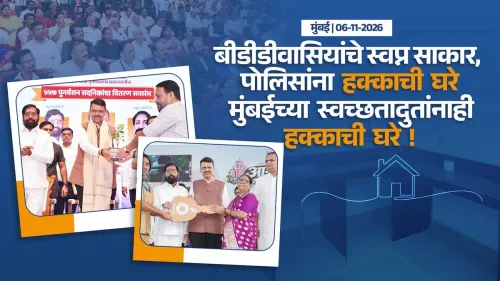
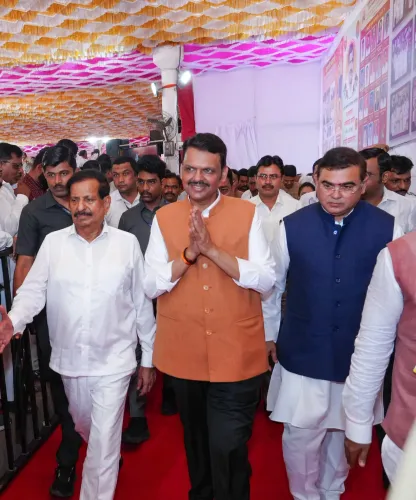
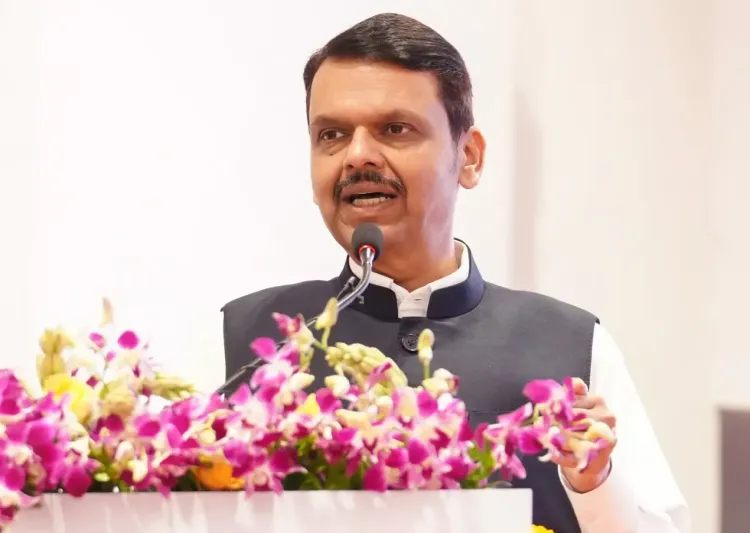
Maharashtra Chief Minister Devendra Fadnavis on Friday, 27 November 2026, said the state government is making every possible effort to ensure Mumbai's native Marathi population continues to live within the city. He spoke in Mumbai at a ceremony where Class-1 land conversion orders were handed to cooperative housing societies under the Nagari Nivara Parishad, and he pointed to redevelopment projects that are rehousing residents at their original locations.
Key Developments at the Mumbai Ceremony
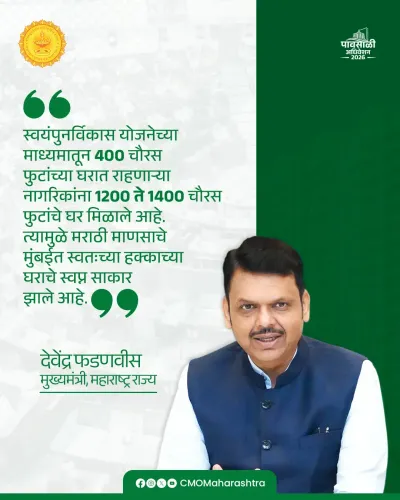
Fadnavis praised the changes in urban housing projects across the metropolis. He said residents who once lived in cramped tenements of 300 to 350 sq. ft. have now received homes of 1,200 sq. ft.
“When we actually saw the homes while handing over the keys, we realised the true impact of this project,” the Chief Minister said.
He also announced that a large-scale campaign will be launched soon to reach as many beneficiaries as possible. “This belongs to the people, and it must be returned to the people,” he said.
History of the Nagari Nivara Parishad
Fadnavis said the Nagari Nivara Parishad law was originally enacted to provide housing for the poor but had been misused in the past. He added that the scheme also produced positive results, with 625 families receiving homes, a milestone he described as a dream fulfilled.
According to the Chief Minister, 1,600 housing projects have taken shape in Mumbai following the government's key policy decisions.
The Class-1 land conversion orders distributed at Friday's event are the latest step under this framework for the cooperative housing societies involved.
Reversing the Exodus of Mill Workers
Fadnavis also spoke about the displacement of working-class locals. He said mill workers from South Mumbai had earlier been forced to move as far as Vasai, Virar and Karjat.
“Because of our decisions, we are now redeveloping all these colonies in their original locations,” he said.
Notably, the movement of working-class families from the island city to distant suburbs has long been part of debates over who can afford to live in Mumbai. The Chief Minister's remarks place housing policy directly within that discussion.
BDD Chawl: India's Largest Urban Renewal Project
Fadnavis described the BDD Chawl redevelopment as India's largest urban renewal project. Under the project, residents of 120 sq. ft. rooms are being given homes of 450 to 600 sq. ft. free of cost on the same site.
He said this has brought a major change to residents' lives. He added that the government is committed to upgrading all the traditional settlements that define Mumbai's identity, so that their residents get a better quality of life.
What Happens Next
During his address, Fadnavis also praised Bharatiya Janata Party (BJP) leader Ashish Shelar for his contribution to the initiative.
The Chief Minister did not give a date or details for the proposed beneficiary outreach campaign. Its scope will show how many more Mumbai residents can gain from the redevelopment push.
Point of View
Which turns a housing scheme into a political statement in a city where that identity is contested. The BDD Chawl numbers are real gains for residents, but they do not address the larger affordability problem that pushed families to Vasai, Virar and Karjat in the first place. He also admitted the Nagari Nivara Parishad law was misused in the past, so the safeguards in the new beneficiary campaign need scrutiny. The test is whether Mumbai's working-class families can still afford to stay after redevelopment, through higher maintenance costs and rising property taxes.
NationPress
27 Nov 2026
Frequently Asked Questions
What did Devendra Fadnavis say about Marathis in Mumbai?
Maharashtra CM Devendra Fadnavis said on 27 November 2026 that the state government is making every effort to ensure Mumbai's native Marathi population continues to live within the city. He cited redevelopment projects that rehouse residents at their original locations.
What is the BDD Chawl redevelopment project?
Fadnavis called it India's largest urban renewal project. Residents living in 120 sq. ft. rooms are being given 450 to 600 sq. ft. homes free of cost on the same site.
What is the Nagari Nivara Parishad?
It operates under a law originally enacted to provide housing for the poor in Mumbai. Fadnavis said the law was misused in the past but also helped 625 families get homes.
How many housing projects have come up in Mumbai under the government's policies?
According to Fadnavis, 1,600 housing projects have taken shape in Mumbai following the government's key policy decisions.
What happens next for housing beneficiaries in Mumbai?
Fadnavis announced that a large-scale campaign will be launched soon to reach the maximum number of beneficiaries. No timeline or details have been shared yet.