EAM Jaishankar at IORA: Protect shipping, respect UNCLOS
Synopsis
External Affairs Minister S. Jaishankar told IORA that UNCLOS must be respected and attacks on seafarers are unacceptable. He urged members to pair self-reliance with partnership against terror, narcotics, IUU fishing and climate disasters, without losing sight of interdependence.
Key Takeaways
Union External Affairs Minister Dr.
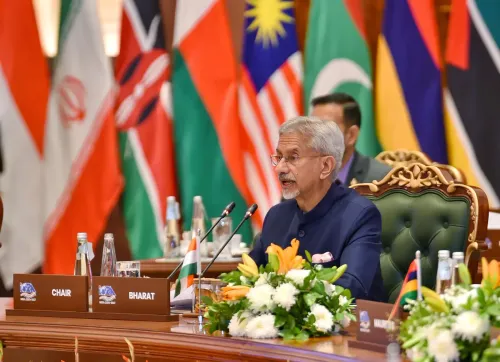
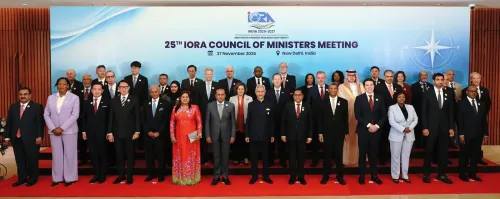
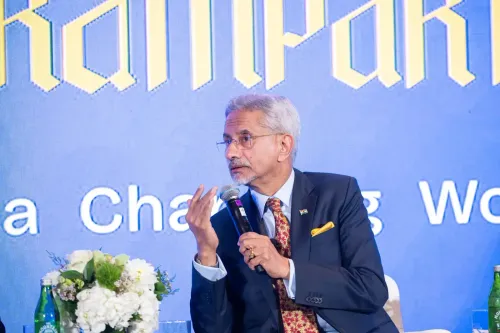
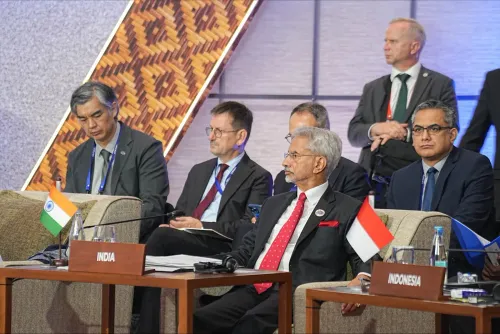
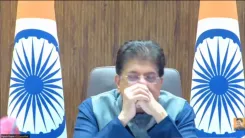
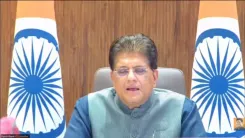
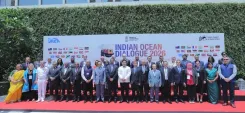
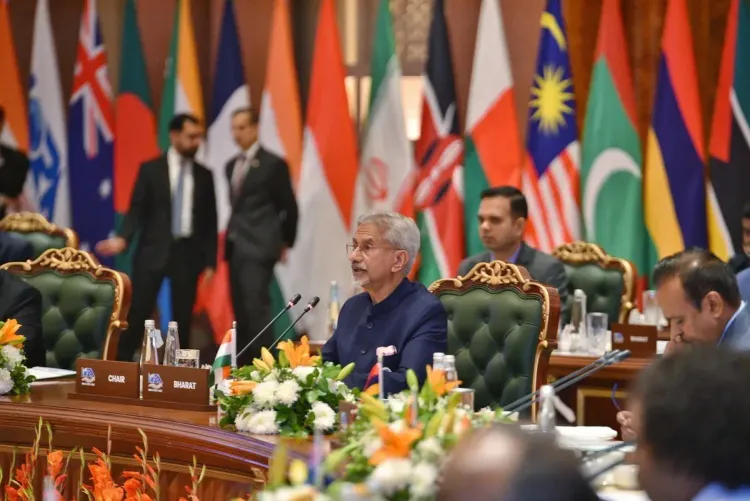
Jaishankar addressed the IORA General Debate on 27 November 2026 on positioning IORA in a changing global order.
He said international law, particularly UNCLOS, must be respected and attacks on maritime shipping and seafarers are simply unacceptable.
He argued partners must also appreciate interdependence, globalization and international cooperation, not only conflicts and disruptions.
Threats listed included terrorism, narcotics, IUU fishing, and climate and disaster response.
IORA is a 23-member grouping founded in Mauritius in 1997; India’s SAGAR policy dates to 2015.
Attacks on ships and seafarers are simply unacceptable. That was the line Union External Affairs Minister Dr. S. Jaishankar carried into the Indian Ocean Rim Association General Debate on 27 November 2026, insisting that international law, particularly UNCLOS, must be respected. Speaking on ‘A Stronger Regional Voice: Positioning IORA in a Changing Global Order’, he argued the Indian Ocean is poised to meet its challenges if partners deliver on the safety of maritime trade.
A global response to attacks on shipping
The minister’s sharpest operational point was also the simplest. The Indian Ocean, he said, is particularly poised to address its challenges. Recognising the criticality of maritime trade to global growth, partners must deliver on its safety and security.
‘International Law, particularly UNCLOS, must be respected,’ he wrote after the debate. ‘Attacks on maritime shipping and seafarers are simply unacceptable and call for a global response.’ The United Nations Convention on the Law of the Sea, adopted in 1982, remains the primary treaty on navigation rights and maritime jurisdiction. India has long treated its observance as a red line across the world’s third-largest ocean — the corridor linking Asia, Africa and the Middle East.
Interdependence in a transforming global order
He did not deny the storm. ‘We are understandably focused on the volatile aspects of a transforming global order, especially conflicts, frictions and disruptions,’ he said. Then the correction: it is equally imperative to appreciate the promising aspects — deep interdependence, strong globalization and the benefits of international cooperation.
That is a diplomat’s refusal of a false choice. Conflicts dominate the news cycle. Trade still moves. The Indian Ocean is where those two facts collide.
Terror, narcotics, IUU fishing and climate shocks
Jaishankar then listed the threats that now sit beside classic naval security. Whether it is to counter terrorism, narcotics trade or illegal, unreported and unregulated fishing, or indeed response to climate events and disaster situations, IORA members ‘have to become more self-reliant as well as more enthusiastic about cooperating with partners.’
Self-reliance plus partnership is the pairing that has defined India’s SAGAR (Security and Growth for All in the Region) policy since 2015. IORA, a 23-member grouping founded in Mauritius in 1997, was built for that mix of economic cooperation and maritime work among littoral states.
The test is whether those words harden into denser disaster-response habits and a tighter regional reflex when ships, fish stocks or coastlines come under pressure. For New Delhi, the Indian Ocean is not scenery. It is where rules, trade and security either hold — or fray.
Point of View
Keep trade routes open, and push littoral states to handle non-traditional threats without waiting for distant powers. SAGAR in 2015 already sketched that bargain. The new emphasis is self-reliance paired with enthusiasm for partners, a signal that New Delhi wants IORA to be more than a talking shop as shipping and climate risks rise. It is continuity with an edge, not a doctrinal reset.
NationPress
27 Nov 2026
Frequently Asked Questions
What did S Jaishankar say at the IORA General Debate?
He said international law, particularly UNCLOS, must be respected and that attacks on maritime shipping and seafarers are simply unacceptable. He also argued the Indian Ocean can address its challenges if members become more self-reliant and more willing to cooperate.
What is UNCLOS and why did Jaishankar mention it?
UNCLOS is the United Nations Convention on the Law of the Sea, adopted in 1982, the main treaty on maritime rights, navigation and resource jurisdiction. Jaishankar said it must be respected as the legal foundation for the safety and security of Indian Ocean trade.
What is India’s SAGAR policy?
SAGAR, or Security and Growth for All in the Region, is India’s 2015 maritime policy to strengthen security and development partnerships in the Indian Ocean. Jaishankar’s call for self-reliance plus cooperation tracks that framework.
What threats did Jaishankar list for the Indian Ocean?
He listed terrorism, narcotics trade, illegal, unreported and unregulated fishing, and responses to climate events and disaster situations. He said IORA members must tackle them together and become more self-reliant.