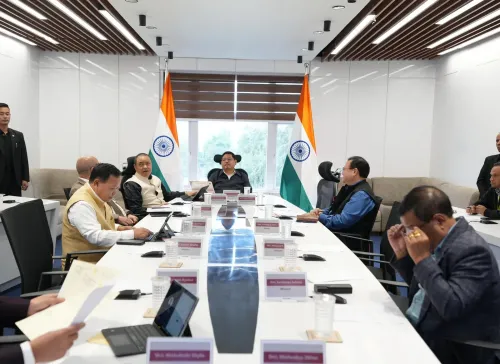
Meghalaya CM Conrad Sangma repeals non-functional university act
Synopsis
Meghalaya Chief Minister Conrad Sangma announced Cabinet approval of the International Open University (Repeal) Bill 2026, scrapping a dormant 2011 Act whose name violated UGC regulations that bar the combined use of 'International' and 'Open University' in a single institution's title.
Key Takeaways
The Meghalaya Cabinet approved the International Open University (Repeal) Bill, 2026 on 19 August 2026 .
The original Act was passed in 2011 but remained non-functional for over a decade.
The UGC prohibits the combined use of 'International' and 'Open University' in a single university name — the core reason for repeal.
The repeal is intended to prevent future legal or regulatory complications for the state.
The Bill must still be passed by the Meghalaya Legislative Assembly to take effect.
The move follows a broader Indian pattern of states aligning university laws with central UGC nomenclature norms.
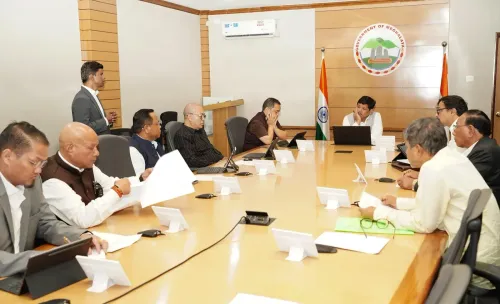
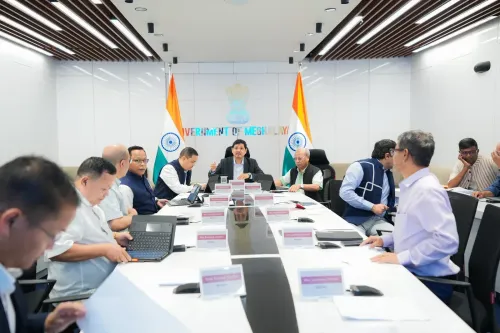
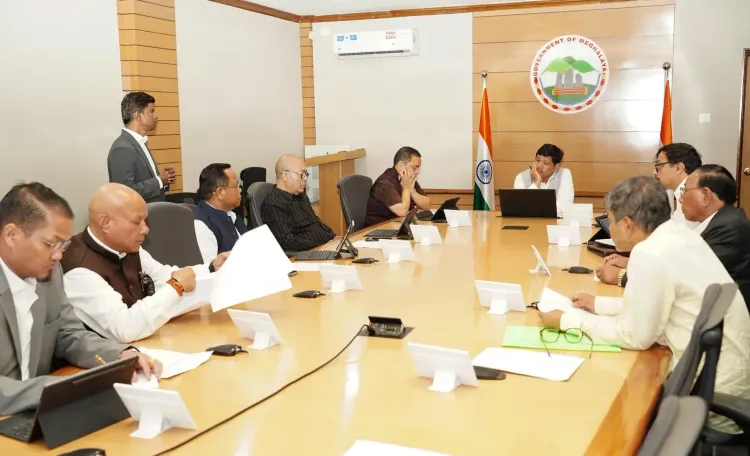
A decade-and-a-half after it was passed, a Meghalaya law to establish an 'International Open University' has been quietly buried — not by failure of ambition, but by a name that ran afoul of India's higher-education rulebook. Meghalaya Chief Minister Conrad Sangma announced on Wednesday, 19 August 2026 that the state Cabinet has approved the International Open University (Repeal) Bill, 2026, scrapping a law that never got off the ground.
A law born in 2011, dormant until it became a liability
The original Act was passed by the Meghalaya Assembly in 2011 but remained entirely non-functional for over a decade. According to CM Sangma, the Cabinet's decision to repeal it was driven by a clear regulatory red line: the University Grants Commission (UGC), India's statutory regulator for higher education, does not permit the combined use of the words 'International' and 'Open University' in a single institutional name. The proposed name violated both norms simultaneously, making any future operationalisation legally untenable.
The Chief Minister noted that the Act's problems compounded over time. The repeal, he stated, has been taken 'to avoid any future legal or regulatory issues' — a candid acknowledgement that leaving a non-compliant law on the books was a risk the state was no longer willing to carry.
UGC nomenclature rules and why they matter
The UGC maintains strict guidelines on what Indian universities may call themselves. The use of 'International' in a university's name typically requires central government approval and adherence to specific criteria; 'Open University' is a distinct category reserved for institutions following the distance and open-learning model under separate regulatory frameworks. Combining both terms in one name creates an overlap that UGC regulations explicitly disallow.
Indian states have periodically had to amend or repeal university laws precisely for this reason — nomenclature non-compliance can expose an institution's degrees to legal challenge and leave students in regulatory limbo. Meghalaya's move follows that broader pattern of course-correction before harm is done.
What the Meghalaya Assembly will now decide
The Cabinet approval is the first step. The International Open University (Repeal) Bill, 2026 must now be introduced and passed in the Meghalaya Legislative Assembly to formally strike the 2011 Act from the statute books. Once enacted, it will close a legislative chapter that opened with ambition and stalled before a single student was enrolled.
For Meghalaya's higher-education landscape, the repeal clears the air — any future proposal for a new university in the state will need to start with a UGC-compliant name from day one.
Point of View
But it also signals a more compliance-conscious approach to higher-education governance in smaller states that have historically passed aspirational legislation without stress-testing it against central regulatory frameworks. For the UGC, this outcome reinforces the deterrent value of its nomenclature rules. For Conrad Sangma's government, acting proactively — rather than waiting for a legal challenge — is a defensible political choice, even if it means acknowledging that a fifteen-year-old law was never fit for purpose. The broader question it raises is how many similar dormant university Acts exist across India's states, quietly accumulating regulatory risk.
NationPress
19 Aug 2026
Frequently Asked Questions
What is the International Open University (Repeal) Bill 2026?
It is a bill approved by the Meghalaya Cabinet on 19 August 2026 to repeal the International Open University Act of 2011, which was non-functional and whose proposed university name violated UGC regulations.
Why did Meghalaya repeal the International Open University Act?
The UGC does not permit the combined use of 'International' and 'Open University' in a single institution's name, making the 2011 Act non-compliant. The Cabinet repealed it to avoid future legal or regulatory complications.
What are UGC rules on university names in India?
The University Grants Commission maintains strict guidelines on university nomenclature. Terms like 'International' and 'Open University' each carry specific regulatory requirements, and using them together in one name is not permitted under UGC norms.
Did the International Open University in Meghalaya ever function?
No. The Act was passed in 2011 but remained entirely non-functional until it was moved for repeal in 2026.
What happens next after the Meghalaya Cabinet approved the repeal?
The International Open University (Repeal) Bill 2026 must be introduced and passed by the Meghalaya Legislative Assembly before the 2011 Act is formally struck from the statute books.