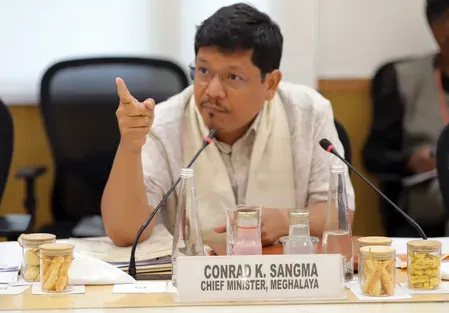
CM Conrad Sangma moves to ban uranium mining in Meghalaya
Synopsis
Meghalaya CM Conrad Sangma's Cabinet has approved a draft resolution against uranium mining in the state, to be moved in the Legislative Assembly's Autumn Session beginning 24 August 2026 — formalising decades of tribal and environmental opposition into official state policy.
Key Takeaways
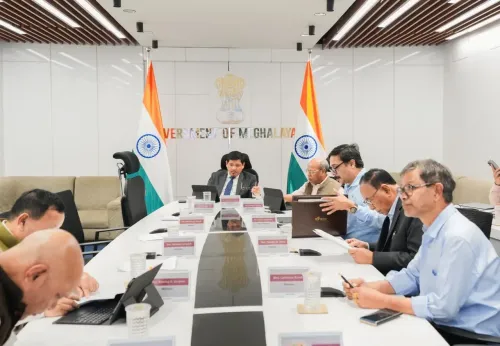
The Meghalaya Cabinet approved a draft 'Resolution against the mining of uranium in the State of Meghalaya' on 13 August 2026 .
The resolution will be moved in the Meghalaya Legislative Assembly Autumn Session beginning 24 August 2026 .
Uranium deposits in Meghalaya, notably in West Khasi Hills , have faced sustained opposition from Khasi tribal communities and environmental activists for decades.
UCIL suspended mining activities in the late 2000s following local protests over radiation and water-contamination risks.
A passed resolution would represent the most formal legislative pushback yet against central-government uranium extraction proposals in the state.
The central government's response to the resolution will be a key indicator of how the state-centre standoff over strategic minerals in the Northeast evolves.
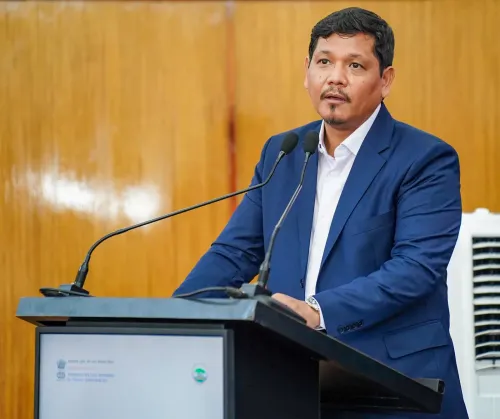
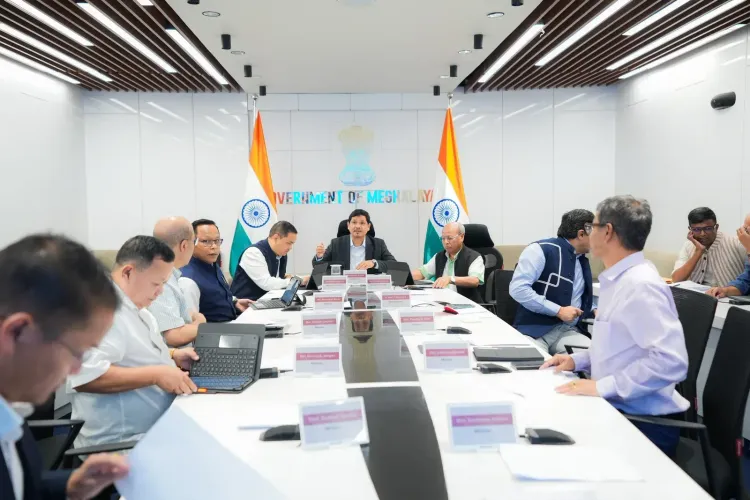
Meghalaya Chief Minister Conrad Sangma delivered a sharp legislative signal on Thursday, 13 August 2026: his Cabinet has cleared a draft resolution formally opposing uranium mining in the state — and it is heading to the floor of the Assembly. The move crystallises years of simmering community resistance into official state policy, putting Meghalaya on a collision course with central-government mining ambitions in the Northeast.
What the Cabinet cleared — and where it goes next
The Cabinet approved the draft 'Resolution against the mining of uranium in the State of Meghalaya', which will be tabled during the Autumn Session of the Meghalaya Legislative Assembly beginning 24 August 2026. A resolution passed by a state legislature carries significant political weight: it is a formal, on-the-record statement of the House's collective will, and it signals to New Delhi that the state government is not a passive bystander on the question of what gets extracted from its soil.
Decades of resistance in West Khasi Hills
Uranium deposits in Meghalaya — concentrated notably in the West Khasi Hills — have been a flashpoint since they were identified decades ago. Uranium Corporation of India Limited (UCIL), the central government's mining arm, faced intensifying local protests in the late 2000s, eventually suspending activities amid fears of radiation exposure, water contamination, and the destruction of tribal livelihoods. Those fears never went away. Khasi tribal communities and environmental activists have maintained sustained pressure on successive state governments to draw a clear line.
Sangma's Cabinet has now drawn it. The resolution, if passed by the Assembly, would represent the most formal legislative rebuke yet to uranium extraction proposals in the state — a unanimous institutional voice to match what communities have been saying on the ground for years.
A state-centre fault line over Northeast resources
The broader pattern is familiar across ecologically sensitive parts of India's Northeast: resource-rich terrain, constitutionally protected tribal land rights, and central government appetite for strategic minerals colliding in slow, grinding legislative and judicial battles. Meghalaya's coal-mining controversies — including the Supreme Court's intervention over 'rat-hole' mining — have already established the state as a theatre for exactly this kind of conflict.
Uranium, however, is in a different category. It is a strategic mineral tied directly to India's civil nuclear programme, which makes any state-level veto politically and legally complex. The central government and UCIL will be watching the 24 August session closely. So will the communities whose rivers and forests sit above the deposits.
The Assembly vote will test whether Meghalaya's political consensus holds — and force New Delhi to respond to a state that is no longer content to leave the question unanswered.
Point of View
The resolution is also politically astute: it consolidates support among Khasi tribal constituencies ahead of any future electoral cycle. The deeper tension, however, is structural — uranium is a strategic mineral central to India's nuclear programme, meaning New Delhi cannot simply defer to state sentiment the way it might on a routine extractive industry. How the central government navigates a formal state-assembly resolution will set a precedent for tribal-land and resource-sovereignty disputes across the Northeast.
NationPress
28 Sept 2026
Frequently Asked Questions
What is the Meghalaya uranium mining resolution about?
The Meghalaya Cabinet approved a draft resolution formally opposing uranium mining in the state. It will be tabled in the Legislative Assembly's Autumn Session beginning 24 August 2026 for debate and a vote.
Where are uranium deposits located in Meghalaya?
Uranium deposits in Meghalaya are concentrated notably in the West Khasi Hills district. These deposits were identified decades ago and have been the subject of exploration by UCIL, the central government's uranium mining arm.
Why are communities opposed to uranium mining in Meghalaya?
Khasi tribal communities and environmental activists have long opposed uranium mining over fears of radiation exposure, water contamination, and damage to tribal lands and livelihoods. Protests intensified in the late 2000s, leading UCIL to suspend activities.
What is UCIL and what is its role in Meghalaya?
Uranium Corporation of India Limited (UCIL) is the central government's uranium mining and processing company. It had proposed and begun preliminary work on uranium extraction in Meghalaya before suspending activities amid local opposition.
What happens after the Meghalaya Assembly passes the resolution?
If passed, the resolution would be a formal statement of the Meghalaya legislature's opposition to uranium mining, placing pressure on the central government and UCIL to respond. The central government's reaction will be closely watched, given uranium's status as a strategic mineral tied to India's nuclear programme.