VPP march to Meghalaya Secretariat: 10-point demands put MDA govt on notice
Synopsis
Meghalaya's main opposition VPP brought thousands to the Secretariat gates in Shillong with a 10-point charter — but the march is remembered as much for a leader accidentally denouncing his own party as for the demands themselves. With the Assembly session just weeks away, the episode raises sharp questions about protest strategy, participant awareness, and whether street pressure can translate into legislative accountability.
Key Takeaways
The Voice of the People's Party (VPP) marched to the Meghalaya Secretariat on 6 August , pressing 10 public demands on the MDA government.
Turnout was significant but fell short of the party's projection of over 1 lakh participants.
Key demands include the Lum Pongdeng project implementation, independent DSC/MPSC recruitment review, indigenous rights legislation, and action against illegal coal mining syndicates.
Chief Minister Conrad K.
Sangma questioned the need for a street march with the Autumn Assembly Session (24–28 August) weeks away.
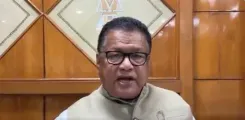
VPP leader MDC Powell Sohkhlet reportedly inadvertently included his own party in slogans calling for denunciation — an episode that drew attention to participant awareness gaps.
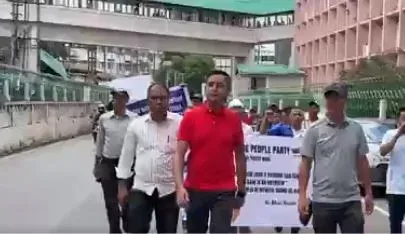
The opposition Voice of the People's Party (VPP) on Thursday, 6 August staged a large-scale march to the Meghalaya Secretariat in Shillong, pressing the ruling Meghalaya Democratic Alliance (MDA) government on 10 key public issues ranging from indigenous rights to illegal coal mining. The demonstration, billed by the VPP as one of the biggest public mobilisations in the state's recent political history, drew a significant crowd, though attendance fell short of the party's own projection of over 1 lakh participants.
Key Demands Placed Before the MDA Government
The VPP's 10-point charter covered a broad sweep of governance concerns. At the top of the list was the implementation of the Lum Pongdeng project and the release of a White Paper on it. The party also demanded an independent review of recruitments conducted through the District Selection Committee (DSC), the Meghalaya Public Service Commission (MPSC), and other agencies — a demand that reflects sustained public unease over transparency in government hiring.
Other demands included stronger safeguards for indigenous rights, dedicated legislation to regulate migration and identify indigenous residents, restoration of rights for street vendors, and formal recognition of traditional village heads and their councils. On the environmental front, the VPP called for stricter regulation of coke and cement industries, protection of rivers and water bodies from indiscriminate sand and stone quarrying, and decisive action against illegal coal mining, its transportation networks, and the alleged syndicates operating within the sector.
Political Timing: Assembly Session Just Weeks Away
The protest carries added political weight, coming less than three weeks before the Autumn Session of the Meghalaya Legislative Assembly, scheduled from 24 to 28 August. The opposition will have a formal platform during that session to raise these issues through debates, questions, and motions.
Chief Minister Conrad K. Sangma questioned the necessity of a street march given the imminent Assembly session, maintaining that the Legislature remains the appropriate democratic forum for elected representatives. He reiterated that the government remained open to discussion. Critics argue, however, that street mobilisation serves a different function — signalling public pressure beyond the Assembly floor.
An Embarrassing Moment for VPP Leadership
The march was not without controversy. VPP leader and MDC Powell Sohkhlet, while leading slogans against rival political parties, reportedly appeared to inadvertently include the VPP itself among the parties he asked the crowd to denounce. The crowd echoed the slogans without hesitation — an episode observers described as indicative of a lack of awareness among many participants about the protest's core messaging.
Broader Debate on Mass Mobilisation
The developments have reignited a wider political conversation in Meghalaya about the effectiveness of mass mobilisations as a tool of democratic pressure. Questions are being raised about whether participants were adequately briefed on the specific issues underpinning the march, and whether the VPP's organisational machinery can convert street energy into legislative outcomes when the Assembly session begins later this month.
Point of View
But the optics cut both ways. A leader accidentally denouncing his own party — and a crowd that didn't notice — is the kind of moment that opponents will replay. More fundamentally, the gap between the 1-lakh projection and actual turnout hands the MDA a ready-made counter-narrative. The real test comes when the Assembly session opens on 24 August: if the VPP's 10 demands do not find sustained legislative traction, the march risks being remembered more for its gaffe than its grievances. Meghalaya's politics of indigenous identity and resource governance deserves sharper accountability tools than a single street demonstration can provide.
NationPress
6 Aug 2026
Frequently Asked Questions
What are the VPP's 10 demands from the Meghalaya government?
The VPP's demands include implementation of the Lum Pongdeng project with a White Paper, an independent review of DSC and MPSC recruitments, stronger indigenous rights safeguards, legislation to regulate migration, restoration of street vendors' rights, recognition of traditional village councils, stricter regulation of coke and cement industries, protection of rivers from mining and dumping, and decisive action against illegal coal mining and its alleged syndicates.
Why did the VPP march to the Meghalaya Secretariat on 6 August?
The VPP organised the march to publicly pressure the ruling MDA government on 10 governance issues it says have gone unaddressed. The party chose a street demonstration to signal broad public support ahead of the Meghalaya Assembly's Autumn Session scheduled for 24–28 August 2025.
What did Chief Minister Conrad Sangma say about the protest?
Chief Minister Conrad K. Sangma questioned the necessity of a street march when the Assembly session was imminent, arguing that the Legislature is the appropriate democratic forum for elected representatives. He said the government remained open to discussion.
What was the embarrassing incident during the VPP march?
VPP leader and MDC Powell Sohkhlet reportedly appeared to inadvertently include the VPP itself among the parties he asked the crowd to denounce while leading slogans. The crowd echoed the slogans without hesitation, raising questions about participant awareness of the protest's messaging.
When is the Meghalaya Assembly Autumn Session and why does it matter?
The Meghalaya Legislative Assembly's Autumn Session is scheduled from 24 to 28 August 2025, less than three weeks after the VPP march. The session gives the opposition a formal platform to raise its 10 demands through debates, questions, and motions — making the march a precursor to a larger legislative confrontation.