Jal Shakti Minister Paatil Meets Haryana MPs on JJM 2.0
Synopsis
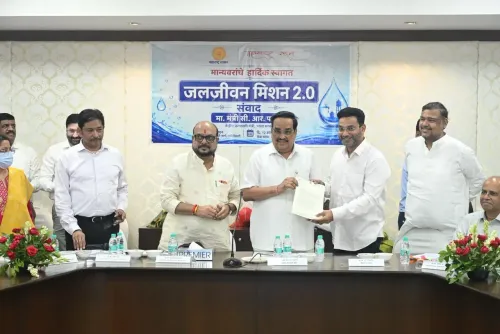
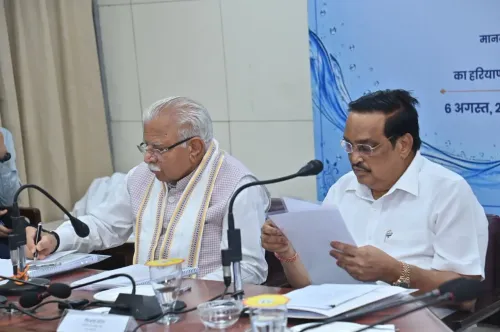
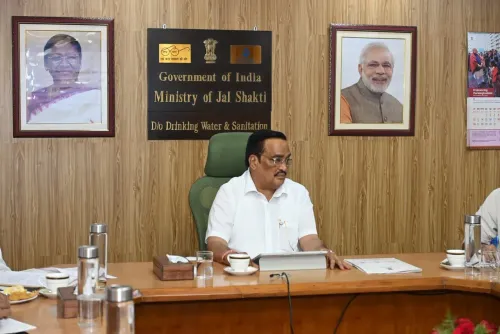
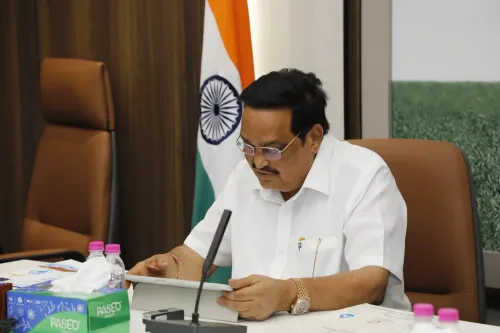
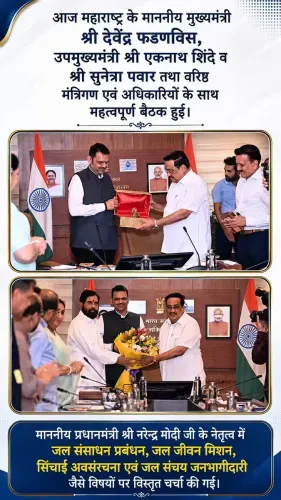
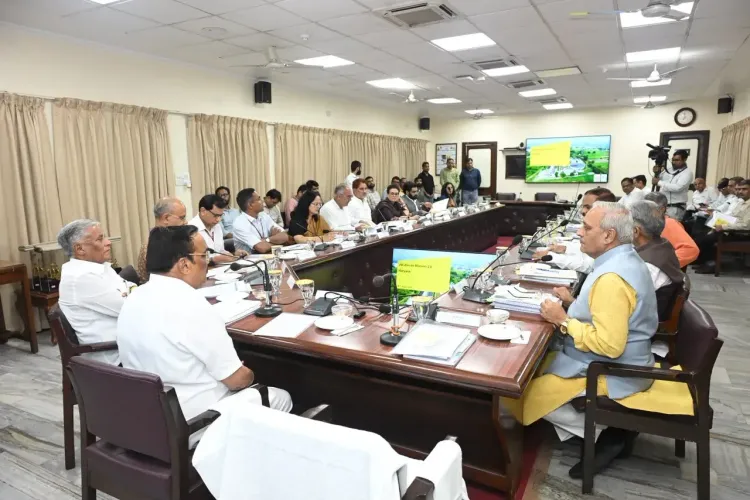
Union Jal Shakti Minister C. R. Paatil chaired a meeting with Haryana MPs at Haryana Bhavan on 6 August 2026 to accelerate Jal Jeevan Mission 2.0, with Housing Minister Manohar Lal Khattar and Haryana's PHE Minister Ranbir Gangwa also present. Discussions centred on timely rollout, community participation, and quality tap-water supply to rural households.
Key Takeaways
Paatil met Haryana MPs at Haryana Bhavan, New Delhi on 6 August 2026 to review Jal Jeevan Mission 2.0 .
Union Minister Manohar Lal Khattar (Housing and Urban Affairs) and MoS Krishna Pal Gurjar (Cooperation) attended the central government side.
Haryana's Public Health Engineering Minister Ranbir Gangwa represented the state government.
Discussions covered timely implementation, community participation, and sustained quality tap-water supply to every rural household.
MPs shared ground-level suggestions to strengthen mission delivery — a participatory approach to scheme governance.
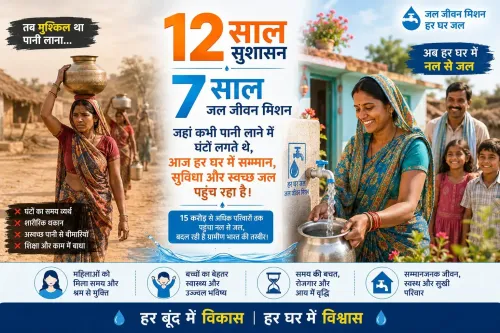
Jal Jeevan Mission was originally launched in 2019 under PM Narendra Modi to provide tap connections to all rural families.
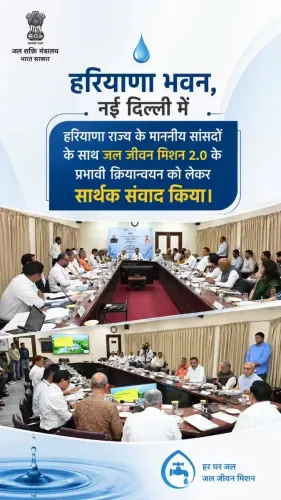
Tap water for every rural home is the promise — and on Thursday, 6 August 2026, Union Jal Shakti Minister C. R. Paatil sat down with Haryana's Members of Parliament at Haryana Bhavan, New Delhi, to make sure that promise holds. The meeting, focused on the effective rollout of Jal Jeevan Mission 2.0, brought together senior central and state leaders to tighten the screws on implementation.
Who Was in the Room at Haryana Bhavan
The gathering carried significant political weight. Union Minister of Housing and Urban Affairs Manohar Lal Khattar — himself a former Chief Minister of Haryana — was present, lending both central authority and deep state-level familiarity to the discussions. Union Minister of State for Cooperation Krishna Pal Gurjar and Haryana's Public Health Engineering Minister Ranbir Gangwa also participated, completing a rare alignment of central and state machinery in one room.
What the Haryana MPs Brought to the Table
The agenda went beyond routine review. Paatil's post described 'sarthak samvad' — a meaningful dialogue — covering timely execution, strengthening community participation, and ensuring the sustained, quality supply of tap water to every rural household. Critically, elected MPs shared ground-level observations and suggestions, the kind of field intelligence that top-down planning often misses. Those inputs, Paatil indicated, will feed directly into making the mission more effective.
JJM's Journey: From 2019 Target to a 2.0 Phase
Jal Jeevan Mission was launched in 2019 under Prime Minister Narendra Modi with the goal of delivering functional household tap connections to all rural families. The programme set a national coverage target and became one of the government's flagship welfare schemes. The emergence of a JJM 2.0 phase signals a renewed push — extending the mission's reach and reinforcing supply sustainability, quality assurance, and last-mile delivery in states like Haryana.
Haryana, a state that has moved steadily on rural water infrastructure, now becomes a test case for how the second phase beds in. The involvement of local MPs as active stakeholders — rather than passive recipients of central directives — marks a deliberate shift toward participatory governance in scheme delivery.
The centre and state governments are working, Paatil affirmed, with 'full commitment' to realise Modi's resolve of safe, clean drinking water for every rural family. That resolve is now being translated, meeting by meeting, district by district, into pipes and taps.
Point of View
State ministers, and elected MPs to synchronise delivery rather than leaving execution entirely to bureaucracies. The presence of Manohar Lal Khattar, who governed Haryana for over a decade, adds a layer of institutional memory that pure policy reviews often lack. JJM 2.0 signals the government is moving from the 'connection' metric of Phase 1 to the harder challenge of sustained, quality supply — a politically sensitive shift as rural voters will now judge not just whether a tap exists, but whether water actually flows. How Haryana performs in this second phase could shape the template for other BJP-governed states ahead of future electoral cycles.
NationPress
21 Sept 2026
Frequently Asked Questions
What is Jal Jeevan Mission 2.0?
Jal Jeevan Mission 2.0 is the second phase of the central government's flagship rural drinking water programme, which focuses on sustained quality supply and community participation after the original mission launched in 2019 aimed to provide tap connections to all rural households.
Why did C. R. Paatil meet Haryana MPs on 6 August 2026?
Union Jal Shakti Minister C. R. Paatil convened the meeting at Haryana Bhavan, New Delhi, to review the effective and timely implementation of Jal Jeevan Mission 2.0 in Haryana, gather ground-level inputs from MPs, and align central and state efforts on rural tap-water delivery.
Who is Manohar Lal Khattar and why was he at the JJM meeting?
Manohar Lal Khattar is the Union Minister of Housing and Urban Affairs and a former Chief Minister of Haryana. He attended the meeting in his capacity as a senior central minister, bringing both policy authority and deep familiarity with Haryana's governance landscape.
When was Jal Jeevan Mission originally launched?
Jal Jeevan Mission was launched in 2019 under Prime Minister Narendra Modi with the goal of providing functional household tap connections for safe drinking water to all rural families across India.
What was discussed at the Haryana Bhavan JJM 2.0 meeting?
The meeting covered timely and effective implementation of Jal Jeevan Mission 2.0, strengthening community participation, ensuring sustained quality tap-water supply to every rural household, and exchanging suggestions from Haryana MPs based on their field experience.