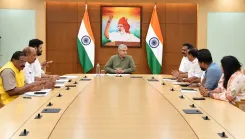
Paatil meets Haryana MPs on Jal Jeevan Mission 2.0 rollout
Synopsis
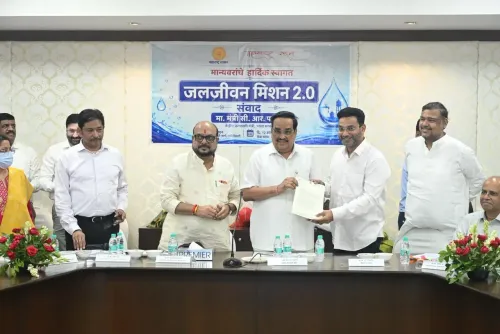
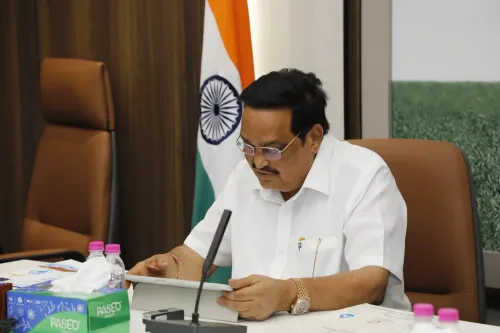
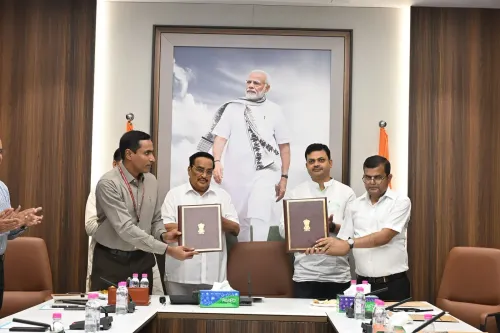
Union Jal Shakti Minister C. R. Paatil met Haryana MPs at Haryana Bhawan, New Delhi on 7 August 2026 for a structured dialogue on effective implementation of Jal Jeevan Mission 2.0, reinforcing Centre-state coordination on rural tap water coverage.
Key Takeaways
Paatil , Union Jal Shakti Minister, met Haryana MPs at Haryana Bhawan, New Delhi on 7 August 2026 .
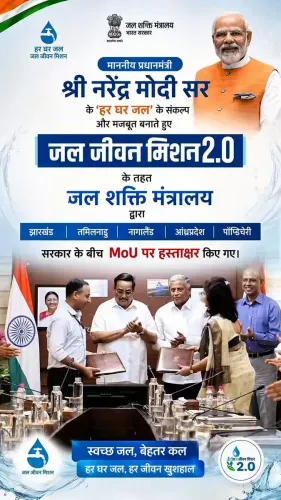
The meeting focused on effective implementation of Jal Jeevan Mission 2.0 , the next phase of India's rural tap-water programme.
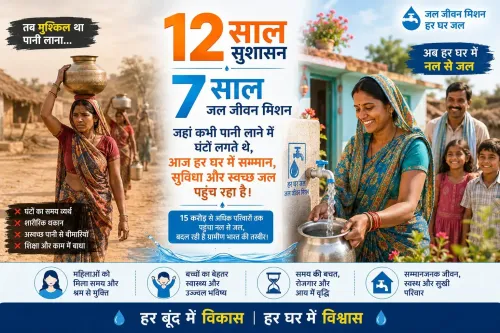
Jal Jeevan Mission was launched in 2019 to provide functional tap water connections to all rural households under the Har Ghar Jal initiative.
The session reflects a pattern of the Jal Shakti Ministry using parliamentary channels to accelerate state-level delivery of the scheme.
Key stakeholders are Haryana's rural households and the state government, which executes the centrally sponsored mission.
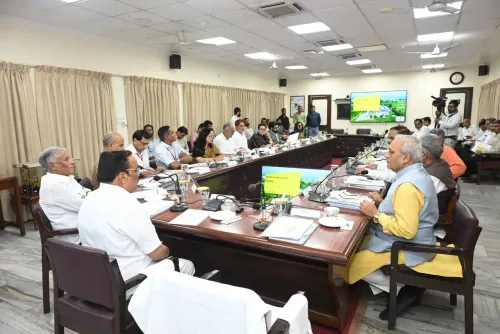
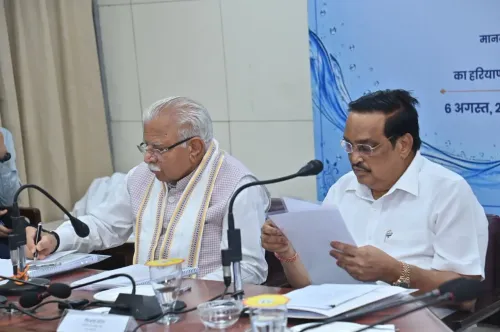
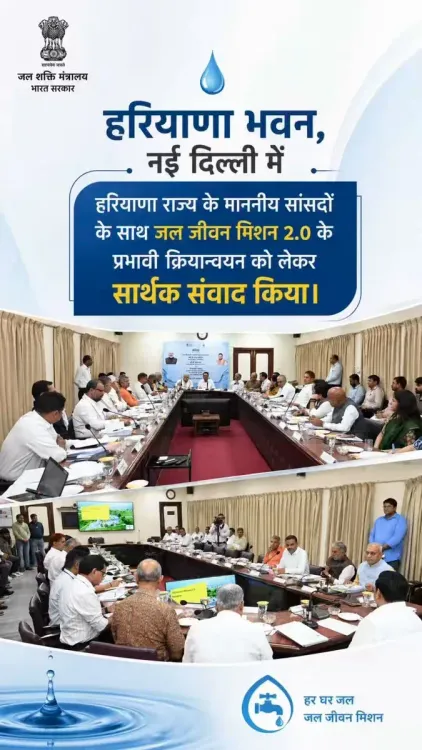
At Haryana Bhawan, New Delhi, on 7 August 2026, Union Jal Shakti Minister C. R. Paatil sat down with Haryana's Members of Parliament to work through the on-ground realities of Jal Jeevan Mission 2.0 — a signal that the Centre is leaning on its elected representatives to drive the next phase of rural tap-water coverage in the state.
Paatil shared a glimpse of the meeting on X, describing it as a 'sarthak samvad' — a meaningful dialogue — with Haryana's honourable MPs on the effective implementation of the mission. The hashtags #JalJeevanMission, #HarGharJal, and #Haryana anchored the post, underlining the government's continued public messaging around universal household water access.
Why Haryana MPs are in the room
Jal Jeevan Mission, launched in 2019 with the goal of delivering functional tap water connections to every rural household in India, is a centrally sponsored scheme executed at the state level. That division of responsibility makes the MP — a bridge between Delhi and the district — a critical link in the chain. Pulling Haryana's parliamentary delegation into a structured conversation at Haryana Bhawan is a textbook coordination move: surface the bottlenecks, align on targets, and push accountability downward.
Haryana has been among the states working to close remaining coverage gaps under the original mission. The invocation of a '2.0' phase suggests the ministry is now focused on consolidation, quality assurance, and extending coverage to households that slipped through the first wave — though the precise scope of the extended phase remains to be formally announced.
The bigger coordination push
This kind of ministry-meets-state-MPs session is part of a broader pattern under the Jal Shakti Ministry — using political channels to accelerate bureaucratic delivery. Rural water infrastructure is notoriously hard to scale: last-mile pipe-laying, gram panchayat capacity, and sustained water source availability all create friction that no Delhi circular can resolve alone. Bringing MPs into the conversation puts elected pressure — and political accountability — directly into the implementation loop.
For Haryana's rural households, the outcome of these conversations will eventually show up not in meeting minutes but in taps that actually run. That is the metric the mission has always promised to move.
Point of View
The ministry is visibly shifting to a consolidation mode, using political networks to pressure-test last-mile delivery gaps. Engaging state MPs — rather than only bureaucrats — signals that the Centre wants elected accountability built into the implementation chain, not just administrative compliance. For Haryana, a state with both urban-rural water disparities and a BJP-aligned government, this kind of direct ministerial engagement also carries electoral optics heading into future cycles. The '2.0' framing, however, will need a formal policy announcement to carry real weight beyond messaging.
NationPress
21 Sept 2026
Frequently Asked Questions
What is Jal Jeevan Mission 2.0?
Jal Jeevan Mission 2.0 refers to the extended phase of the original Jal Jeevan Mission, which was launched in 2019 to provide tap water connections to all rural households in India under the Har Ghar Jal programme. The 2.0 phase focuses on consolidating coverage and addressing gaps from the first phase, though its formal scope is yet to be officially announced.
Why did C. R. Paatil meet Haryana MPs at Haryana Bhawan?
Union Jal Shakti Minister C. R. Paatil met Haryana MPs at Haryana Bhawan, New Delhi on 7 August 2026 to discuss the effective implementation of Jal Jeevan Mission 2.0 in Haryana. Since the scheme is centrally sponsored but state-executed, MPs serve as a critical link between the ministry and district-level delivery.
What is the Jal Jeevan Mission and when was it launched?
Jal Jeevan Mission is a central government scheme launched in 2019-20 to provide functional tap water connections to every rural household in India. It operates under the Har Ghar Jal initiative and is implemented through state governments with central funding and oversight.
What is C. R. Paatil's role in the government?
C. R. Paatil is the Union Minister of Jal Shakti, the ministry responsible for India's water resources and drinking water schemes including Jal Jeevan Mission. He is a senior BJP leader and former Gujarat state president.
What does Har Ghar Jal mean?
'Har Ghar Jal' translates to 'water to every home' in English. It is the umbrella branding for the Jal Jeevan Mission's goal of ensuring every rural household in India has access to a functional tap water connection.