Jal Shakti Minister Paatil Signs JJM 2.0 MoU With Bihar
Synopsis
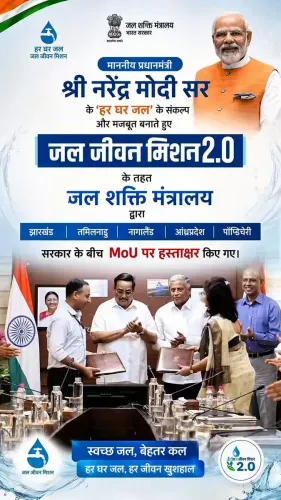
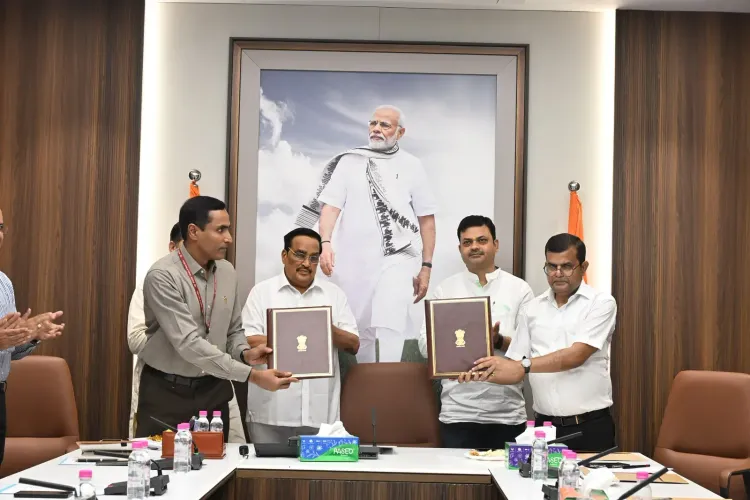
Union Jal Shakti Minister C. R. Paatil signed a Jal Jeevan Mission 2.0 MoU with Bihar on 10 June 2026, shifting the state's rural water focus from expanding tap connections — already at roughly 96 per cent coverage — to long-term operation, maintenance, and source sustainability under the Har Ghar Jal framework.
Key Takeaways
Union Jal Shakti Minister C.
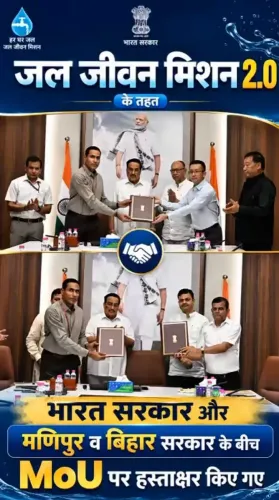
Paatil signed a JJM 2.0 MoU between the Centre and Bihar on 10 June 2026 .
Bihar has provided tap-water connections to approximately 96 per cent of rural households under the original Jal Jeevan Mission.
The new agreement shifts focus to long-term operation, maintenance (O&M), and sustainability of existing rural water infrastructure.
Bihar's PHED Minister Sanjay Kumar Singh and MoS Jal Shakti Dr.
Rajbhushan Choudhary were present at the signing.
The MoU follows the central-state partnership model in use since August 2019 when Jal Jeevan Mission was launched.
Similar sustainability-focused agreements with other high-coverage states are expected as JJM 2.0 expands nationally.
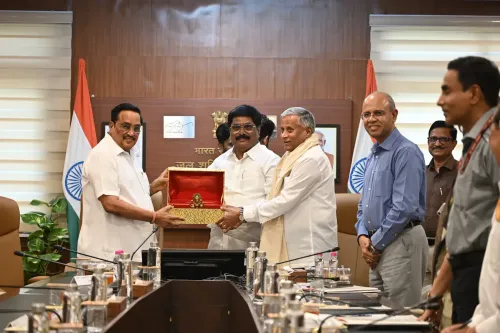
Union Jal Shakti Minister C. R. Paatil signed a Memorandum of Understanding between the Department of Drinking Water and Sanitation (DDWS), Ministry of Jal Shakti, Government of India, and the state of Bihar on Wednesday, 10 June 2026, under the Jal Jeevan Mission 2.0 framework. The agreement marks a formal transition in Bihar's rural water programme from expanding connections to securing their long-term sustainability.
Context
Paatil announced the signing on X, posting in Hindi: 'Jal Jeevan Mission 2.0 ke antargat... Bihar rajya ke beech aaj MoU par hastakshar kiye' ('Under Jal Jeevan Mission 2.0... an MoU was signed today with the state of Bihar'). He noted that Bihar has achieved 'remarkable progress' by providing tap-water connections to approximately 96 per cent of rural households. The minister stated that the state's focus must now shift to sustaining the 'Har Ghar Jal' drinking-water scheme and strengthening its long-term operation and maintenance (O&M) arrangements.
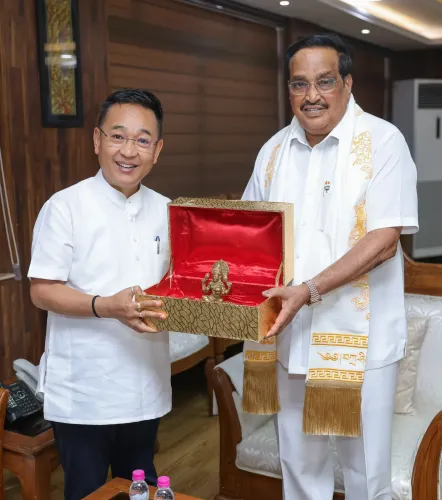
The signing ceremony was attended by Bihar's Public Health Engineering Department (PHED) Minister Sanjay Kumar Singh, senior state officials, Union Minister of State for Jal Shakti Dr. Rajbhushan Choudhary, and the Secretary of the Department of Drinking Water and Sanitation, along with other senior officials from both the Ministry and the state government.
Policy Backdrop
Jal Jeevan Mission was launched in August 2019 with the goal of delivering functional household tap connections to every rural household across India. The programme's original phase prioritised rapid coverage expansion, with states reporting substantial gains in rural water access over the following years.
With high-coverage states such as Bihar now approaching near-universal connection, the Centre has pivoted to a sustainability-focused second phase. JJM 2.0 emphasises institutional frameworks for O&M, source sustainability, and reliable service delivery rather than new infrastructure alone. Paatil framed the MoU as consistent with Prime Minister Narendra Modi's governing principle of 'Sabka Saath, Sabka Vikas, Sabka Vishwas, Sabka Prayas' ('Together with all, development for all, trust of all, effort of all').
Stakeholders and Impact
The agreement directly concerns Bihar's rural households, particularly the remaining families yet to receive a functional tap connection, as well as the millions already connected whose supply depends on robust O&M systems. The state's PHED will be the primary implementing body, tasked with operationalising the sustainability and maintenance mandates that the MoU formalises.
The central-state MoU model, used consistently since 2019, channels funding and technical guidelines from the Ministry of Jal Shakti to state agencies. For Bihar, which has one of the largest rural populations in India, durable water service delivery carries significant public-health and livelihoods implications for communities that have historically faced water-access challenges.
What's Next
Attention will now turn to the rollout of specific O&M guidelines and funding mechanisms under JJM 2.0 in Bihar, including how the state structures institutional responsibility for maintaining existing infrastructure. Similar MoU agreements with other high-coverage states are expected as the Centre broadens the second phase of the mission. The durability of Bihar's Har Ghar Jal gains will serve as an early test of whether the sustainability-first model can deliver on its promise of safe, continuous drinking water for every rural household.
Point of View
The government is now staking its credibility on whether those connections remain functional. For the BJP, sustaining near-universal rural water access in a politically significant state like Bihar directly reinforces the welfare-delivery narrative ahead of future electoral cycles. The O&M focus also reflects a broader pattern in Indian social infrastructure — programmes that sprint to headline targets often struggle with the quieter, harder work of institutional upkeep. How Bihar structures its maintenance funding and accountability mechanisms under JJM 2.0 will be closely watched by other states navigating the same transition.
NationPress
19 Sept 2026
Frequently Asked Questions
What is Jal Jeevan Mission 2.0?
Jal Jeevan Mission 2.0 is the sustainability-focused second phase of the central scheme launched in 2019 to provide tap-water connections to all rural households; it shifts emphasis from new connections to long-term operation, maintenance, and source sustainability of existing water infrastructure.
What did the JJM 2.0 MoU with Bihar involve?
The MoU signed on 10 June 2026 between the Department of Drinking Water and Sanitation and the Bihar state government formalises the framework for sustaining the Har Ghar Jal scheme, with a focus on strengthening O&M arrangements for rural water supply across the state.
How much of Bihar has tap-water coverage under Jal Jeevan Mission?
According to Union Minister C. R. Paatil's post, Bihar has provided tap-water connections to approximately 96 per cent of rural households, which he described as 'remarkable progress' under the original Jal Jeevan Mission.
Who attended the JJM 2.0 MoU signing with Bihar?
The signing was attended by Bihar's PHED Minister Sanjay Kumar Singh, Union Minister of State for Jal Shakti Dr. Rajbhushan Choudhary, the Secretary of the Department of Drinking Water and Sanitation, and senior officials from both the Ministry and the Bihar state government.
What is Har Ghar Jal?
Har Ghar Jal, meaning 'water to every home', is the flagship goal of the Jal Jeevan Mission, which aims to ensure every rural household in India has a functional household tap connection supplying safe and adequate drinking water.