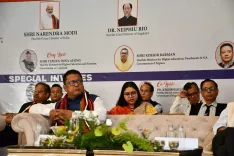
Jal Shakti Minister Paatil Signs JJM 2.0 MoU with Sikkim

Synopsis
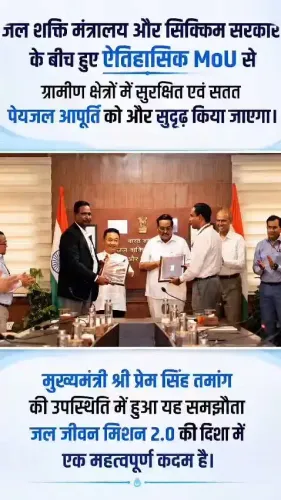
Union Jal Shakti Minister C. R. Paatil announced a Jal Jeevan Mission 2.0 MoU between the central government and Sikkim on June 9, 2026, targeting rural tap water access in the Himalayan state with Sikkim CM Prem Singh Tamang present at the signing.
Key Takeaways
Union Jal Shakti Minister C.
Paatil announced a Jal Jeevan Mission 2.0 MoU between the central government and Sikkim on June 9, 2026 .
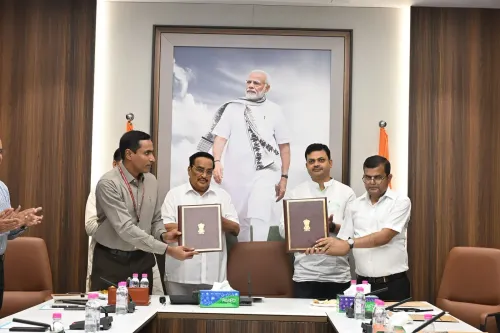
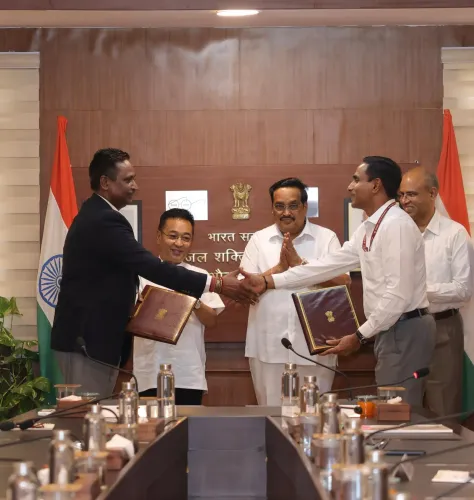
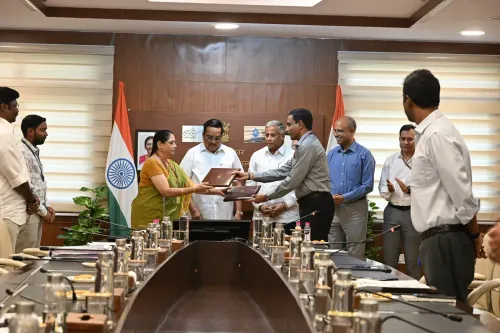
The MoU was signed between the Department of Drinking Water and Sanitation, Ministry of Jal Shakti and the Sikkim state government.
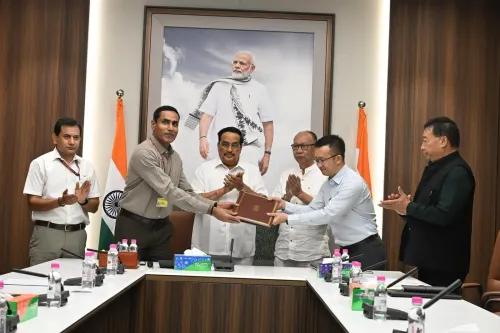
Sikkim Chief Minister Prem Singh Tamang was present at the signing ceremony alongside senior DDWS officials.
The agreement focuses on technical strengthening, water quality monitoring, community participation, and addressing the geographical challenges of Sikkim's hilly terrain.
The initiative is framed as part of PM Narendra Modi's 'Sabka Saath, Sabka Vikas' governance approach and a 12-year commitment to welfare of the poor.
The Jal Jeevan Mission was originally launched in August 2019 with the goal of tap water access for every rural household in India.
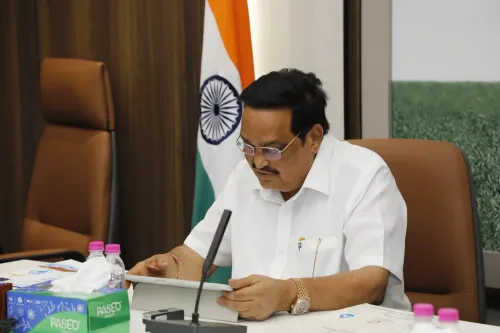
Union Jal Shakti Minister C. R. Paatil on Tuesday, June 9, 2026, announced the signing of a Memorandum of Understanding between the Department of Drinking Water and Sanitation (DDWS), Ministry of Jal Shakti, and the state of Sikkim under Jal Jeevan Mission 2.0, aimed at realising the 'Har Ghar Jal' (tap water to every household) goal across the state's rural areas. Sikkim Chief Minister Prem Singh Tamang was present at the signing ceremony, along with the Secretary of DDWS and senior ministry officials.
Context
Paatil shared the development on X, describing the Jal Jeevan Mission as 'vishwa ka sabse bada peyjal aapurti karyakram' (the world's largest drinking water supply programme). He stated that the MoU marks a significant step toward ensuring safe drinking water access in Sikkim's remote and geographically challenging areas, in line with Prime Minister Narendra Modi's governance mantra of 'Sabka Saath, Sabka Vikas, Sabka Vishwas, Sabka Prayas' — roughly translated as 'Together with all, development for all, trust of all, effort of all.'
Policy Backdrop
The Jal Jeevan Mission was launched nationally in August 2019 with the stated objective of providing functional household tap connections to every rural household in India. The programme has since been positioned by the central government as one of the flagship rural infrastructure drives under PM Modi's administration, with a particular push in recent years toward northeastern and Himalayan states where terrain poses distinct logistical hurdles.
The new MoU under Jal Jeevan Mission 2.0 is designed to go beyond initial coverage targets. According to Paatil's post, the agreement will strengthen technical capacity, water quality monitoring, and community participation — areas that have been focal points for the Ministry of Jal Shakti as it shifts emphasis from raw connection numbers toward sustainability and operational effectiveness of water supply systems.
Stakeholders and Impact
Sikkim, a small Himalayan state in India's northeast, has a predominantly rural population spread across difficult hill terrain. Delivering piped water to remote villages here requires specialised engineering approaches distinct from those used in plains states. The MoU specifically acknowledges these geographical challenges, committing to special efforts on the stability, reach, and operation of water supply schemes.
Chief Minister Prem Singh Tamang's presence at the signing signals state-level political endorsement of the initiative. The Department of Drinking Water and Sanitation will be the central implementing body, coordinating with Sikkim's state machinery on ground-level execution. Rural households across the state — particularly those in high-altitude and hard-to-reach villages — stand to be the primary beneficiaries.
What's Next
The MoU sets the framework for capacity-building programmes, technical assistance, and water quality surveillance systems to be rolled out across Sikkim's rural districts. Follow-up steps will likely include state-level project planning, tendering for infrastructure works, and the establishment of community-level water management committees as envisaged under the broader Jal Jeevan Mission guidelines.
Progress on tap water coverage in Sikkim and any subsequent announcements on funding allocation or specific project timelines under the new agreement will be key indicators of how effectively the MoU translates into on-ground outcomes for the state's rural population.
Point of View
Sustainability, and the harder engineering challenge of hill-terrain delivery — a pattern visible across the ministry's recent engagements with northeastern states. Securing the Chief Minister's presence at the signing is a political signal that the centre is investing in cooperative federalism optics ahead of any state-level reviews. For the BJP, demonstrating active progress on welfare infrastructure in a non-BJP-governed northeastern state also fits a broader coalition-building pattern in the region. The emphasis on community participation and water quality monitoring suggests the ministry is responding to earlier criticism that initial JJM connections lacked operational follow-through.
NationPress
19 Sept 2026
Frequently Asked Questions
What is the Jal Jeevan Mission 2.0 MoU with Sikkim about?
The MoU signed on June 9, 2026 between the Ministry of Jal Shakti's Department of Drinking Water and Sanitation and Sikkim aims to strengthen rural tap water supply in the state under Jal Jeevan Mission 2.0, focusing on technical capacity, water quality monitoring, community participation, and overcoming the geographical challenges of Sikkim's hilly terrain.
What is Jal Jeevan Mission and when was it launched?
Jal Jeevan Mission is a central government scheme launched in August 2019 to provide functional household tap water connections to every rural household in India. It is implemented by the Department of Drinking Water and Sanitation under the Ministry of Jal Shakti.
Who signed the Jal Jeevan Mission MoU for Sikkim?
The MoU was signed between the Department of Drinking Water and Sanitation under the Ministry of Jal Shakti and the state of Sikkim. Union Minister C. R. Paatil announced the signing, and Sikkim Chief Minister Prem Singh Tamang was present at the ceremony.
What are the special challenges for water supply in Sikkim?
Sikkim's predominantly rural, high-altitude Himalayan terrain makes laying and maintaining piped water infrastructure significantly harder than in plains states. The MoU specifically commits to addressing these geographical challenges to improve the stability, reach, and operation of water supply schemes.
What is 'Har Ghar Jal' and how does it relate to Sikkim?
'Har Ghar Jal' — meaning 'tap water to every household' — is the core objective of the Jal Jeevan Mission. The June 2026 MoU with Sikkim is aimed at realising this goal in the state's rural and remote areas under the mission's second phase.