CM Tamang Signs JJM 2.0 MoU With Jal Shakti Ministry
Synopsis
Sikkim Chief Minister Prem Singh Tamang signed the Jal Jeevan Mission 2.0 MoU with the Ministry of Jal Shakti in New Delhi on 9 June 2026. He highlighted Sikkim's unique Himalayan challenges and urged the Centre to fund pre-JJM 2.0 retrofitting projects already underway in the state.
Key Takeaways
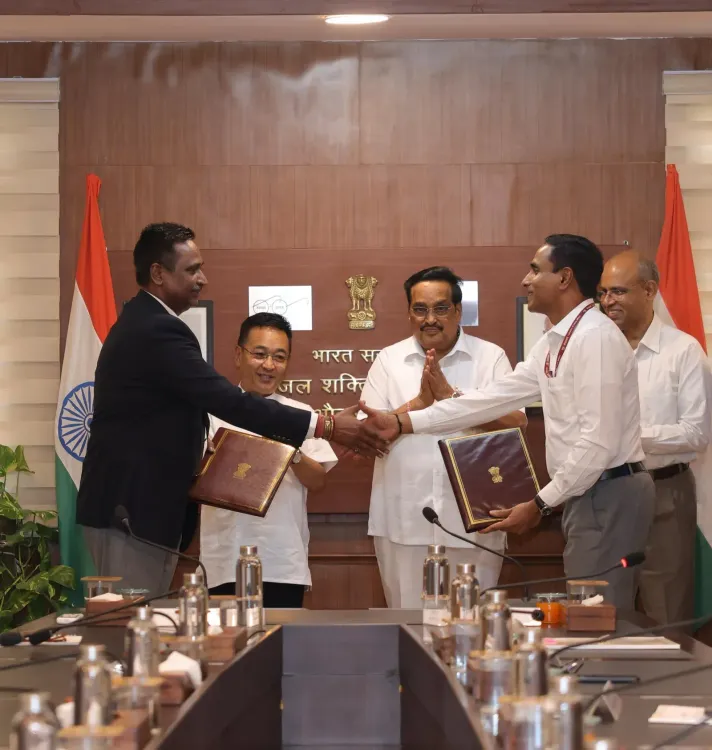
Sikkim CM Prem Singh Tamang signed the JJM 2.0 MoU with the Ministry of Jal Shakti in New Delhi on 9 June 2026 .
The ceremony was held in the presence of Union Minister for Jal Shakti C.R.
CM Tamang stressed sustainability, source protection, water quality, and long-term maintenance as priorities specific to Sikkim's fragile Himalayan terrain.
He urged the Ministry to extend central funding to retrofitting and capacity augmentation projects initiated before JJM 2.0 guidelines were notified.
Senior officials from the Department of Drinking Water and Sanitation , the National Jal Jeevan Mission , and Sikkim's Rural Development Department attended the ceremony.
The MoU formally integrates Sikkim into the revised JJM 2.0 framework, with rural households across the state as the primary beneficiaries.
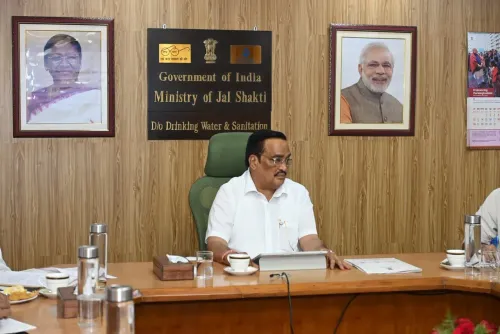
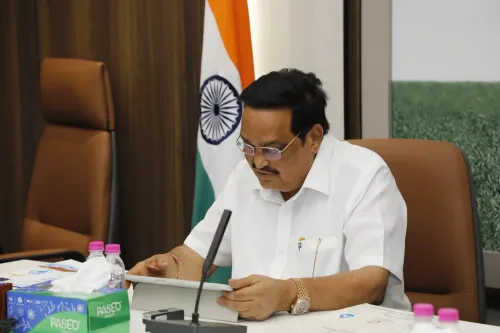
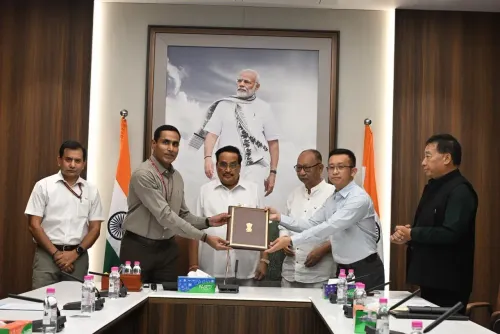
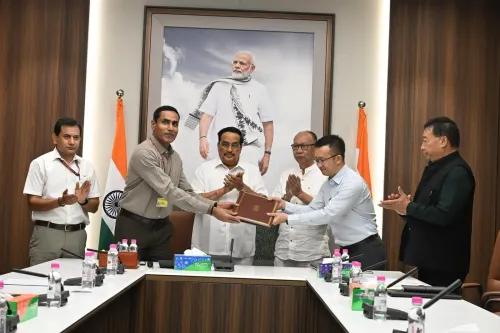
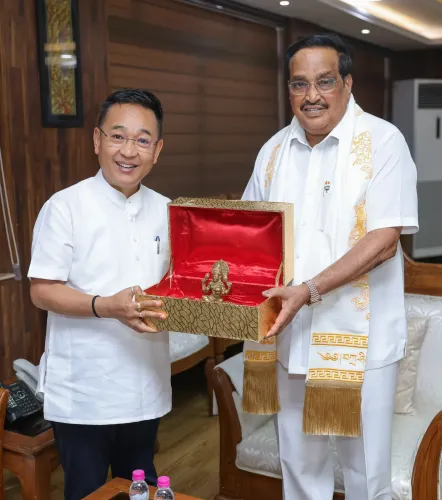
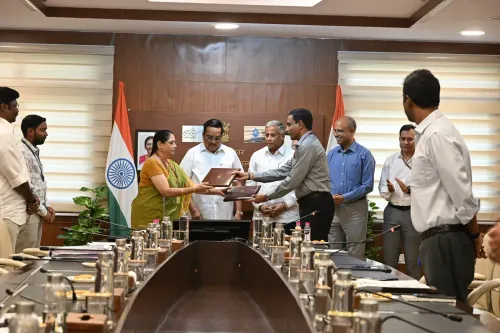
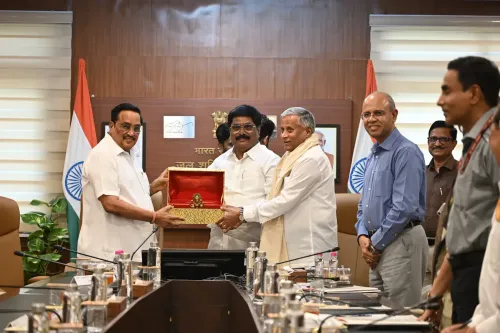
Sikkim Chief Minister Prem Singh Tamang signed a Memorandum of Understanding under Jal Jeevan Mission (JJM) 2.0 with the Ministry of Jal Shakti, Government of India, at a ceremony held in New Delhi on Tuesday, 9 June 2026. The exchange ceremony was held in the presence of Union Minister for Jal Shakti Shri C.R. Paatil and attended by senior officials from both the central and state governments.
Context
CM Tamang expressed gratitude to Prime Minister Narendra Modi and the Ministry of Jal Shakti for the implementation of the original Jal Jeevan Mission, calling it transformative for rural drinking water access across the country and specifically in Sikkim. He acknowledged the central government's support in addressing the distinct challenges of building water supply infrastructure across Sikkim's mountainous terrain.
The ceremony was attended by the Secretary, Department of Drinking Water and Sanitation, the Mission Director of the National Jal Jeevan Mission, the Secretary of Sikkim's Rural Development Department, and other officials from both governments.
Policy Backdrop
The Jal Jeevan Mission was launched in August 2019 with the national objective of delivering functional household tap connections for safe drinking water to all rural households. The programme required states to partner with the Centre on funding, implementation, and monitoring, with hill states like Sikkim facing added complexity due to difficult topography and source sustainability concerns.
The transition to JJM 2.0 introduces revised guidelines that shift emphasis toward sustainability, source protection, water quality monitoring, and long-term maintenance — priorities that CM Tamang specifically highlighted as 'particularly crucial for a fragile Himalayan State like Sikkim.'
Stakeholders and Impact
Rural households across Sikkim stand to be the primary beneficiaries of the renewed commitment under the MoU. The state government has framed JJM 2.0 not merely as an extension of the earlier scheme but as a framework for durable infrastructure that can withstand the ecological and geological pressures of the Eastern Himalayas.
A key concern raised by CM Tamang at the ceremony was the status of retrofitting and capacity augmentation projects that were approved or initiated before the notification of JJM 2.0 guidelines. He urged the Ministry to extend central assistance to these projects, noting that the state had already committed 'substantial resources' under the earlier norms with the expectation of central support — a standard centre-state funding coordination issue that hill states regularly navigate when scheme guidelines are revised mid-cycle.
What's Next
The signing of the MoU formally anchors Sikkim within the JJM 2.0 framework, setting the stage for project planning aligned with the revised mission guidelines. The immediate policy watch will be the Centre's response to CM Tamang's request for continued funding of pre-JJM 2.0 projects, which could set a precedent for other hill and northeastern states in similar situations.
Longer term, Sikkim's ability to meet the sustainability and source-protection benchmarks under JJM 2.0 will test the mission's adaptability to fragile Himalayan ecosystems — an outcome that carries implications well beyond the state's borders.
Point of View
It is also a test of how the Centre handles legacy commitments when scheme guidelines shift mid-implementation. For a small Himalayan state with limited fiscal headroom, securing that transitional funding is not incidental but essential. Tamang's positioning alongside PM Modi and Minister Paatil also reinforces his government's alignment with the Centre, a consistent feature of the SKM administration's federal strategy.
NationPress
23 Sept 2026
Frequently Asked Questions
What is the Jal Jeevan Mission 2.0 MoU signed by Sikkim?
The MoU is a formal agreement between the Government of Sikkim and the Ministry of Jal Shakti committing the state to the revised Jal Jeevan Mission 2.0 framework, which focuses on sustainability, source protection, water quality, and long-term maintenance of rural drinking water infrastructure.
What did Sikkim CM Prem Singh Tamang request at the JJM 2.0 ceremony?
CM Tamang urged the Ministry of Jal Shakti to extend central financial assistance for retrofitting and capacity augmentation projects in Sikkim that were approved or started before the JJM 2.0 guidelines were notified, as the state had already invested substantial resources under the earlier norms.
What is the Jal Jeevan Mission and when was it launched?
The Jal Jeevan Mission is a central government scheme launched in August 2019 to provide functional household tap connections for safe drinking water to all rural households in India.
Why does Sikkim face unique challenges under the Jal Jeevan Mission?
Sikkim's mountainous Himalayan terrain makes building and maintaining water supply infrastructure significantly more complex and costly than in plains states, requiring special attention to source protection, geological stability, and long-term maintenance.
Who attended the JJM 2.0 MoU signing ceremony in New Delhi?
The ceremony was attended by Union Minister for Jal Shakti C.R. Paatil, the Secretary of the Department of Drinking Water and Sanitation, the Mission Director of the National Jal Jeevan Mission, the Secretary of Sikkim's Rural Development Department, and other senior officials from both governments.