Manipur signs JJM 2.0 MoU with Centre for sustainable rural water supply
Synopsis
Manipur has formally joined JJM 2.0 with a Centre MoU that reframes rural water delivery — moving away from counting tap connections toward ensuring water actually flows, sustainably, into every eligible household. The shift to reform-linked funding and digital governance under Sujalam Bharat is the mission's most significant structural departure from its first phase.
Key Takeaways
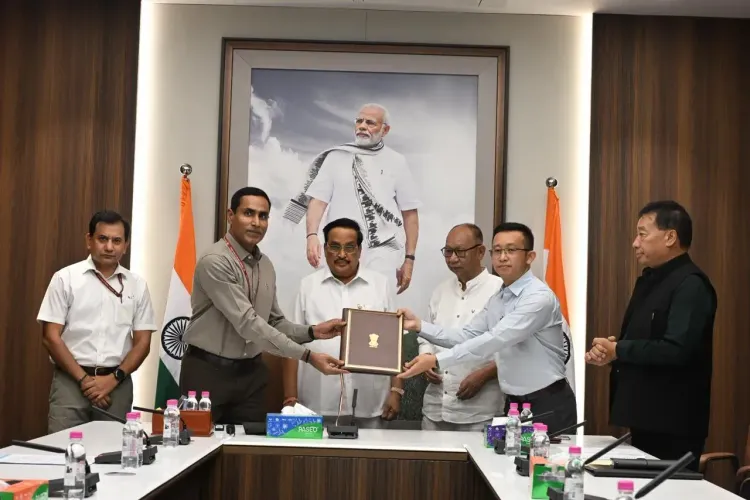
Manipur and the Union Ministry of Jal Shakti signed a JJM 2.0 MoU in New Delhi on 10 June .
Chief Minister Yumnam Khemchand Singh described the mission as a shift from infrastructure creation to sustainable service delivery.
Key features include the Sujalam Bharat digital framework, reform-linked funding, community ownership, and defined O&M policies.
Patil , Deputy CM Losii Dikho , and DDWS Secretary Ashok K.K.
Meena attended the signing ceremony.
JJM 2.0 ties disbursements to measurable service outcomes, departing from the infrastructure-count model of the original mission launched in 2019 .
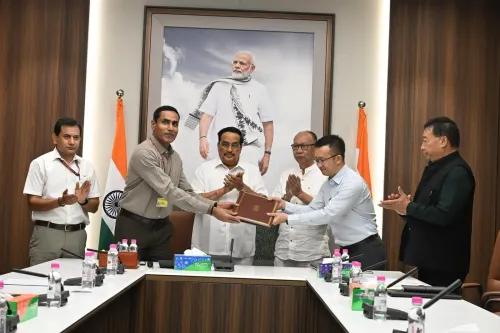
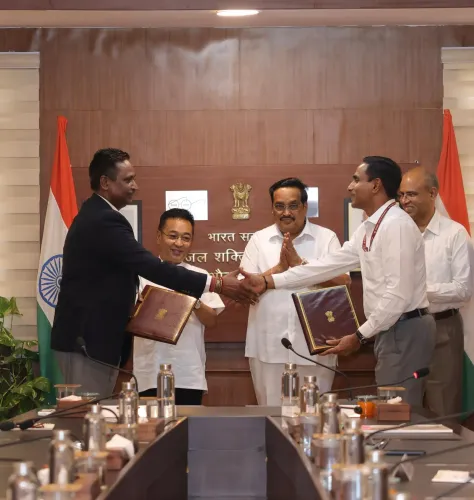
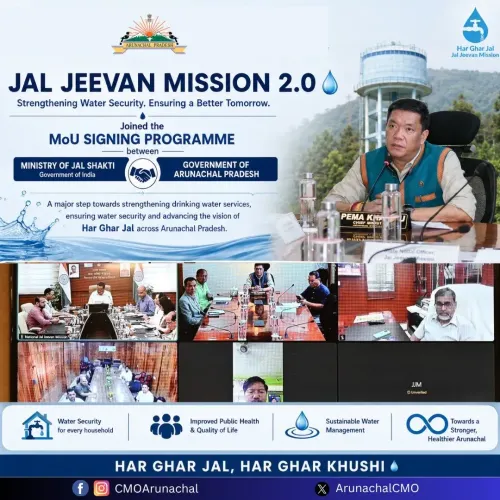
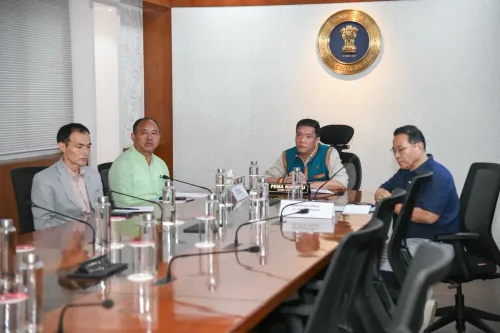
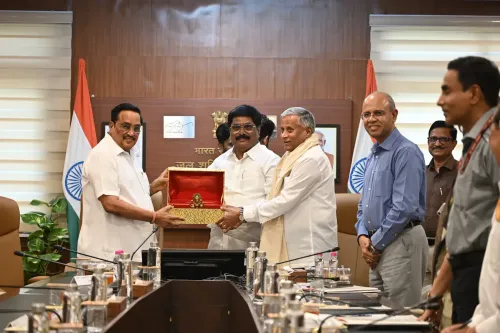
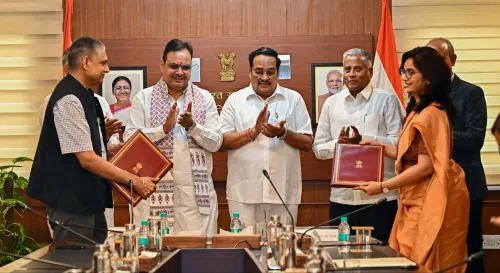
The Manipur government and the Union Ministry of Jal Shakti on Wednesday, 10 June signed a Memorandum of Understanding (MoU) in New Delhi to implement Jal Jeevan Mission (JJM) 2.0 in the state, marking a formal shift in the national rural drinking water programme from infrastructure creation to long-term service delivery.
What JJM 2.0 Changes
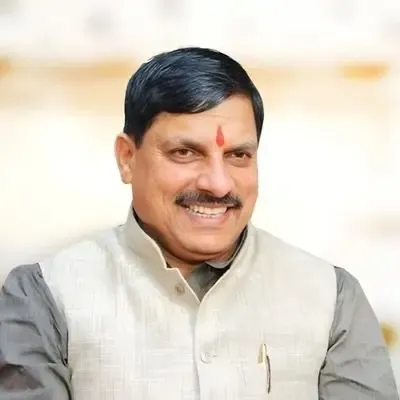
Chief Minister Yumnam Khemchand Singh, who attended the signing ceremony, described JJM 2.0 as a 'strategic restructuring' of the rural drinking water programme. 'Its primary focus has shifted from the rapid creation of infrastructure to ensuring long-term and sustainable service delivery,' Singh said.
The Chief Minister outlined the mission's key features: assured service delivery, the Sujalam Bharat digital framework, defined operation and maintenance (O&M) policies, source sustainability measures, reform-linked funding, and community ownership. Singh said these elements would transform JJM from a government scheme into a foundational instrument for the Viksit Bharat @ 2047 vision.
State Government's Commitment
Singh reaffirmed Manipur's full support for the mission's implementation, stating that the state would work towards achieving JJM 2.0's objectives 'in both letter and spirit.' He also praised the Ministry of Jal Shakti for formulating the mission's guidelines and acknowledged its continued support in strengthening rural water supply infrastructure across the state.
In a separate statement following the ceremony, Singh said the mission 'will play a vital role in advancing the vision of Viksit Bharat @ 2047' through its focus on source sustainability, community participation, strengthened O&M systems, and digital governance.
Key Officials at the Signing
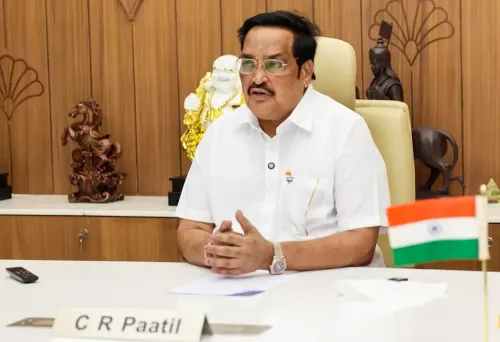
The MoU signing was attended by Union Minister of Jal Shakti C.R. Patil; Deputy Chief Minister and Minister-in-charge of Public Health Engineering (PHE) Losii Dikho; Secretary, Department of Drinking Water and Sanitation (DDWS), Ashok K.K. Meena; and other senior officials from both the Centre and the state.
Broader Context
JJM 2.0 builds on the original Jal Jeevan Mission, launched in 2019, which aimed to provide tap water connections to every rural household in India. The second phase pivots toward sustainability and accountability, introducing reform-linked funding mechanisms that tie disbursements to measurable service outcomes rather than physical infrastructure targets alone. This comes amid persistent concerns in several states, including conflict-affected Manipur, about the long-term functionality of water supply infrastructure created under the first phase.
With the MoU now signed, Manipur is expected to begin aligning its state water supply action plan with JJM 2.0 guidelines, with implementation timelines to be determined in consultation with the Centre.
Point of View
But reliable water flow was not always guaranteed. Manipur, still recovering from prolonged civil unrest, faces an added challenge: maintaining rural water infrastructure in areas where administrative reach has been disrupted. Reform-linked funding is the right structural move, but its credibility depends entirely on the robustness of the Sujalam Bharat digital monitoring layer. If that data pipeline is weak or manipulable, the funding reform becomes cosmetic. The real test will be whether Manipur's PHE department can operationalise community ownership in districts where institutional trust remains fragile.
NationPress
26 Oct 2026
Frequently Asked Questions
What is Jal Jeevan Mission 2.0?
Jal Jeevan Mission 2.0 is the second phase of India's national rural drinking water programme, which shifts focus from building tap water infrastructure to ensuring long-term, sustainable service delivery. It introduces reform-linked funding, the Sujalam Bharat digital framework, and community ownership as core pillars.
What did the Manipur-Centre MoU on JJM 2.0 cover?
The MoU signed on 10 June in New Delhi formalises Manipur's participation in JJM 2.0 under the Union Ministry of Jal Shakti. It commits the state to implementing assured service delivery, source sustainability measures, defined O&M policies, and digital governance under the Sujalam Bharat framework.
Who attended the JJM 2.0 MoU signing ceremony?
The ceremony was attended by Union Minister of Jal Shakti C.R. Patil, Manipur Chief Minister Yumnam Khemchand Singh, Deputy Chief Minister and PHE Minister Losii Dikho, DDWS Secretary Ashok K.K. Meena, and other senior officials from both governments.
How does JJM 2.0 differ from the original Jal Jeevan Mission?
The original JJM, launched in 2019, focused primarily on creating tap water connections in rural households. JJM 2.0 pivots to sustainability, tying funding disbursements to measurable service outcomes rather than infrastructure targets, and introducing digital monitoring and community-led maintenance systems.
What is the Sujalam Bharat framework mentioned in JJM 2.0?
Sujalam Bharat is a digital governance framework under JJM 2.0 designed to monitor and ensure the quality and continuity of rural water supply services. It is intended to bring transparency and accountability to operation and maintenance of water infrastructure across states.