CM Pema Khandu Signs JJM 2.0 MoU for Arunachal Water Security
Synopsis
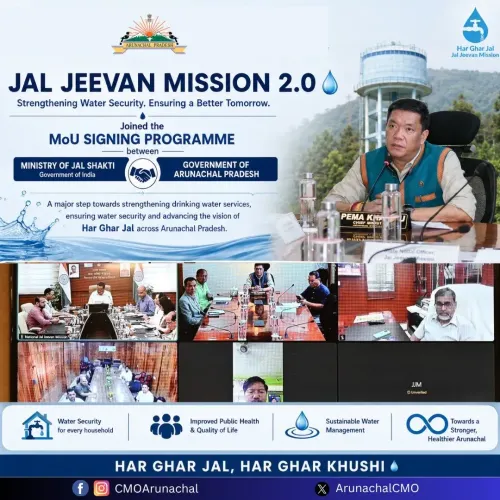
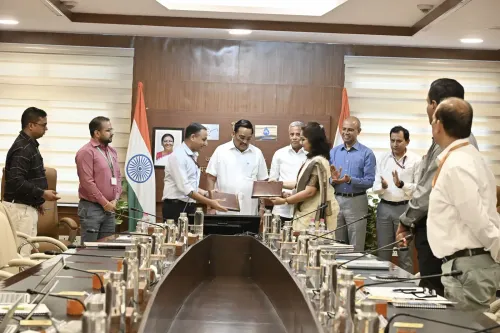
Arunachal Pradesh Chief Minister Pema Khandu joined the signing of a JJM 2.0 MoU between the Union Ministry of Jal Shakti and the state government on June 2, 2026, committing to strengthen and sustain drinking water services for rural and tribal households across the northeastern state.
Key Takeaways
An MoU under Jal Jeevan Mission 2.0 was signed between the Union Ministry of Jal Shakti and the Government of Arunachal Pradesh on June 2, 2026 .
Patil and Minister of State V.
Somanna represented the Centre at the signing.
CM Pema Khandu and PHED Minister Mama Natung represented Arunachal Pradesh.
The agreement aims to address water scarcity, improve service delivery, and ensure long-term water security for rural and tribal communities.
Jal Jeevan Mission was originally launched in August 2019 to provide functional tap water connections to all rural households in India.
The MoU aligns with the Viksit Bharat framework, which targets universal safe drinking water access by 2047 .
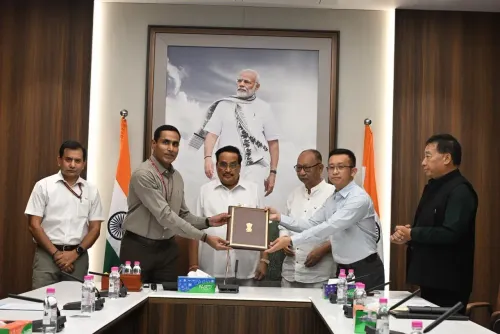
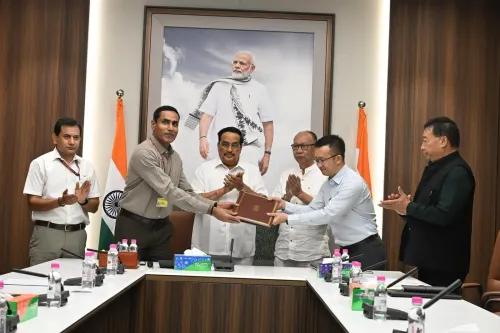
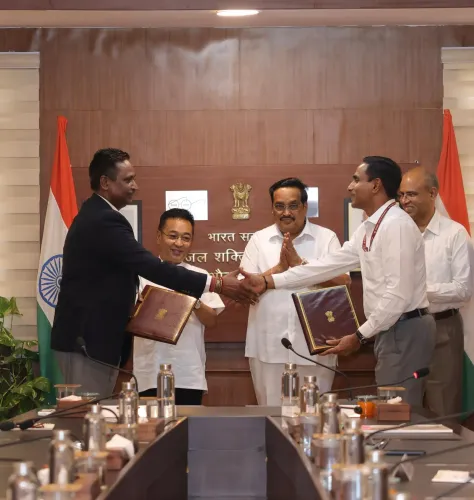
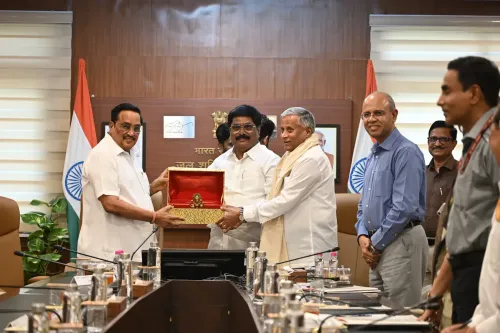
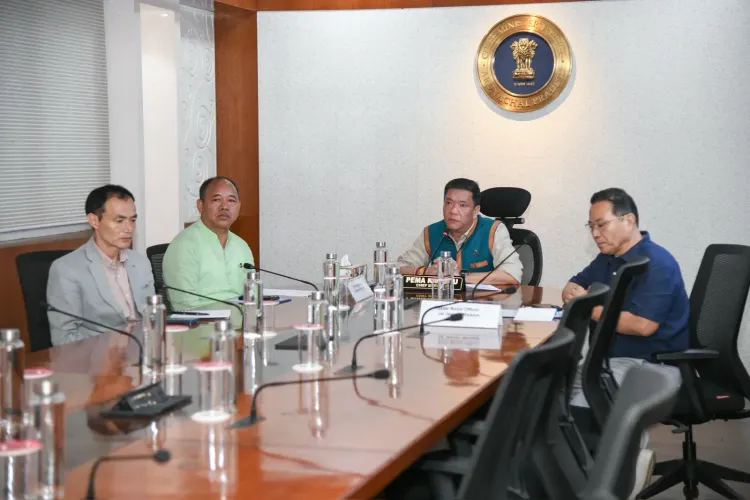
Arunachal Pradesh Chief Minister Pema Khandu joined a live programme on Tuesday, June 2, 2026, for the signing of a Memorandum of Understanding between the Union Ministry of Jal Shakti and the Government of Arunachal Pradesh under Jal Jeevan Mission (JJM) 2.0, marking a formal commitment to strengthen drinking water delivery across the state. The MoU was signed in the presence of Union Minister for Jal Shakti C. R. Patil and Minister of State V. S. Somanna, with Arunachal Pradesh PHED Minister Mama Natung also in attendance.
Context
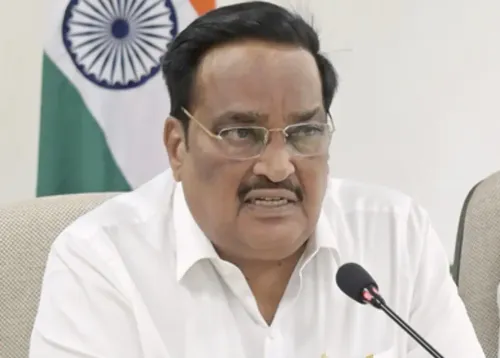
Chief Minister Khandu described the development as 'a significant step towards strengthening drinking water services and ensuring long-term water security across Arunachal Pradesh.' The MoU formalises the state's participation in the next phase of the centrally-driven water mission, tying state delivery infrastructure to national programme guidelines and funding frameworks. The signing was conducted as a live event, with both Union and state-level ministers participating to signal the programme's priority status.
Policy Backdrop
The Jal Jeevan Mission was launched in August 2019 under the Ministry of Jal Shakti with the objective of providing functional household tap water connections to every rural home in India. It subsumed the earlier National Rural Drinking Water Programme, which had operated since 2009. Successive phases have shifted emphasis from simply creating new connections toward ensuring source sustainability, service reliability, and operation-and-maintenance systems — areas that the JJM 2.0 framework is designed to address.
Arunachal Pradesh, a northeastern frontier state with a predominantly tribal population and difficult mountainous terrain, has historically faced chronic challenges in delivering piped drinking water to remote villages. Dedicated funding tranches under JJM have been directed at northeastern states to help overcome geographical and logistical barriers that standard infrastructure timelines do not account for.
Stakeholders and Impact
The primary beneficiaries of the MoU are rural and tribal households across Arunachal Pradesh who currently lack reliable access to safe tap water. Chief Minister Khandu stated the agreement 'will help address water scarcity, improve service delivery systems, and further the Prime Minister's vision of a Viksit Bharat with safe and reliable tap water for every home.' The PHED — the Public Health Engineering Department — will be the nodal state agency responsible for on-ground implementation, with Minister Mama Natung overseeing execution.
The agreement also carries significance for tribal communities in border districts, where water access intersects with broader development and connectivity goals outlined under the Viksit Bharat framework targeting 2047. Improved water infrastructure in these areas is expected to reduce the burden on women and children who travel long distances to collect water in hilly terrain.
What's Next
With the MoU now in place, attention will shift to state-level implementation: drawing up district-wise coverage plans, mobilising field teams, and establishing operation-and-maintenance mechanisms that keep connections functional beyond installation. Progress will be tracked against coverage and functionality metrics that the Union Ministry uses to assess state performance under JJM. Revised funding allocations in upcoming Union Budgets will determine the pace at which Arunachal Pradesh can scale delivery under the new agreement.
The MoU signals that both the Centre and the state government are aligned on prioritising drinking water security in one of India's most geographically challenging regions, with the political leadership of both sides present at the signing to underscore that commitment.
Point of View
The high-visibility signing alongside senior Union ministers reinforces Arunachal Pradesh's positioning as an active partner in the BJP-led Centre's flagship welfare infrastructure agenda. The northeastern states, long seen as lagging in JJM coverage due to geography, are now being brought into a structured second-phase framework, which carries both developmental and political significance ahead of future electoral cycles. Sustained implementation, rather than the MoU itself, will determine whether the agreement translates into measurable change for tribal households in border districts.
NationPress
20 Sept 2026
Frequently Asked Questions
What is JJM 2.0 and how is it different from the original Jal Jeevan Mission?
JJM 2.0 is the next phase of the Jal Jeevan Mission, which was originally launched in August 2019 to provide tap water connections to all rural households. While the first phase focused on creating new connections, JJM 2.0 places greater emphasis on source sustainability, service reliability, and long-term operation-and-maintenance systems.
What does the Arunachal Pradesh JJM 2.0 MoU mean for rural residents?
The MoU commits the state government and the Union Ministry of Jal Shakti to work together to expand and sustain safe tap water access for rural and tribal households in Arunachal Pradesh, aiming to address water scarcity and improve delivery systems in the state's difficult terrain.
Who signed the JJM 2.0 MoU for Arunachal Pradesh?
The MoU was signed in the presence of Union Minister for Jal Shakti C. R. Patil and Minister of State V. S. Somanna on the Centre's side, with Chief Minister Pema Khandu and PHED Minister Mama Natung representing Arunachal Pradesh.
When was the Jal Jeevan Mission launched in India?
The Jal Jeevan Mission was launched in August 2019 under the Union Ministry of Jal Shakti, with the goal of providing functional household tap water connections to every rural home in India.
Why does Arunachal Pradesh face drinking water challenges?
Arunachal Pradesh has a predominantly tribal population spread across mountainous and remote terrain, making it difficult to build and maintain piped water infrastructure. These geographical and logistical barriers have historically led to lower coverage compared to more accessible states.