Jal Shakti Minister Paatil Signs JJM 2.0 MoU With Jharkhand
Synopsis
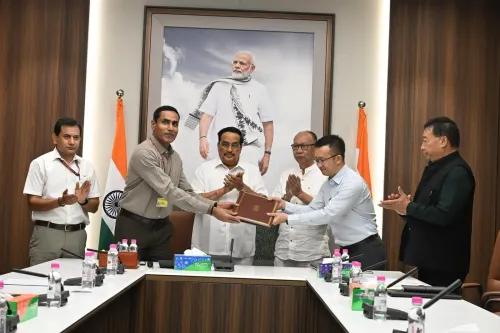
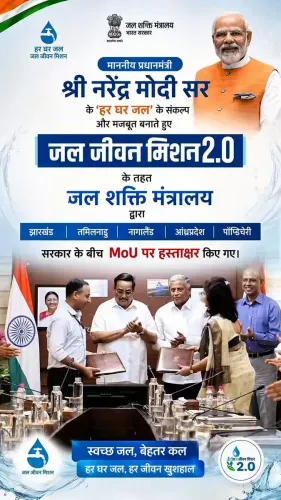
The Ministry of Jal Shakti and the Jharkhand government signed an MoU under Jal Jeevan Mission 2.0 on 2 June 2026, aiming to deliver safe, reliable drinking water to rural and tribal households through technical upgrades and community participation.
Key Takeaways
The Ministry of Jal Shakti and the Jharkhand government signed an MoU under Jal Jeevan Mission 2.0 on 2 June 2026 .
Jharkhand Chief Minister Hemant Soren , MoS Jal Shakti V.
Somanna , and PHED Minister Yogendra Prasad were present at the signing.
The agreement targets rural and tribal areas of Jharkhand with safe, reliable and sustainable drinking water services.
Key pillars include technical strengthening , water quality monitoring , capacity building , and community participation .
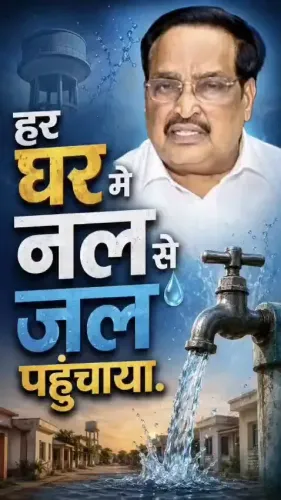
The MoU advances PM Modi's 'Har Ghar Jal' vision under the extended Jal Jeevan Mission framework.
The central-state MoU model is the standard mechanism for Jal Jeevan Mission 2.0 implementation across states.
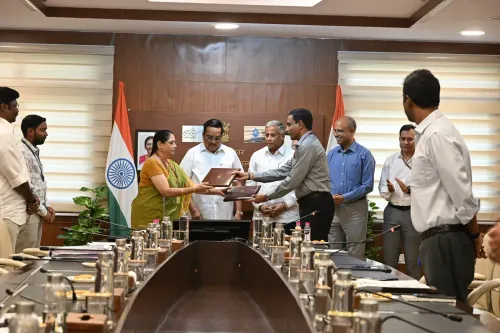
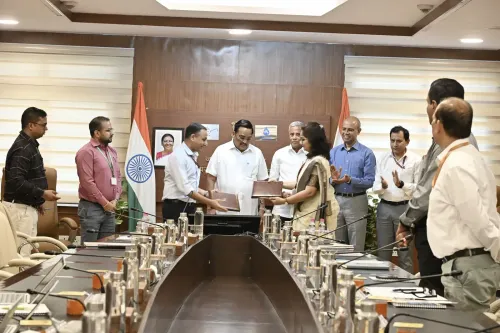
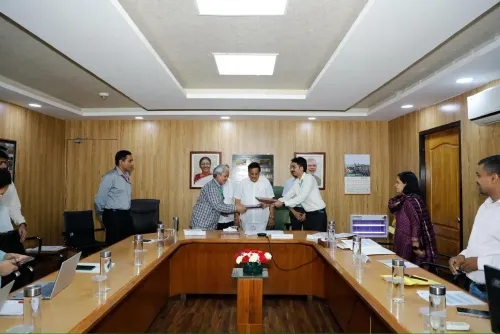
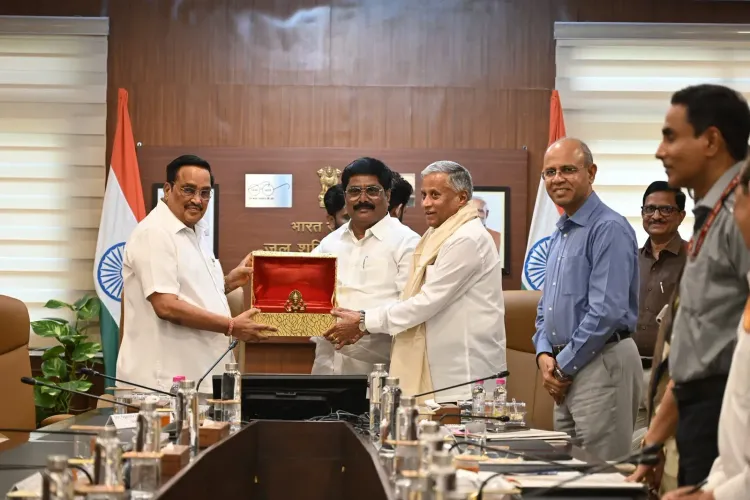
Union Jal Shakti Minister C. R. Paatil announced on Tuesday, 2 June 2026 that the Ministry of Jal Shakti and the Jharkhand government signed a Memorandum of Understanding under Jal Jeevan Mission 2.0, advancing Prime Minister Narendra Modi's 'Har Ghar Jal' vision of tap water for every household. The signing ceremony was attended by senior officials from both the central and state governments.
Context
Paatil posted in Hindi on X, stating: 'Jal Jeevan Mission 2.0 ke tahat Jal Shakti Mantralaya evam Jharkhand Sarkar ke beech MoU par hastakshar kiye gaye' ('An MoU was signed between the Ministry of Jal Shakti and the Jharkhand government under Jal Jeevan Mission 2.0'). He described the agreement as 'an important step towards ensuring safe, reliable and sustainable drinking water services in rural and tribal areas.' The signing reinforces the central government's commitment to the 'Jan Bhagidari se Har Ghar Jal' ('Har Ghar Jal through public participation') vision.
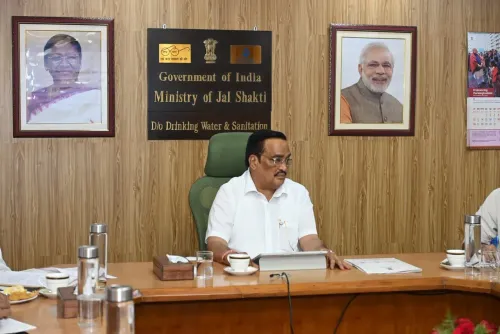
Present at the event were Jharkhand Chief Minister Hemant Soren, Union Minister of State for Jal Shakti V. Somanna, Jharkhand's PHED Minister Yogendra Prasad, and the Secretary of the Department of Drinking Water and Sanitation, along with senior officials from both governments.
Policy Backdrop
Jal Jeevan Mission was launched in August 2019 with the goal of delivering functional household tap connections to every rural home in India. The mission has since entered a new phase — Jal Jeevan Mission 2.0 — with state-level MoUs forming the operational backbone of continued implementation. The central-state MoU model has emerged as the standard mechanism to extend coverage and enforce quality benchmarks beyond the mission's initial timeline.
The fresh agreement with Jharkhand is particularly significant given the state's large rural and tribal population, which has historically faced challenges in accessing clean piped water. The MoU focuses on technical strengthening, water quality monitoring, capacity building, and community participation as the four pillars of delivery.
Stakeholders and Impact
The primary beneficiaries are rural and tribal households across Jharkhand, a state where a substantial share of the population depends on traditional or informal water sources. Under the framework, both the Ministry of Jal Shakti and the Jharkhand government commit to coordinated implementation, with the state's Public Health Engineering Department (PHED) serving as the nodal executing agency.
Community participation — a key pillar of the agreement — means village-level water and sanitation committees are expected to play an active role in monitoring service delivery and maintaining infrastructure. This decentralised model has been central to the broader Jal Jeevan Mission architecture across multiple states.
What's Next
Attention will now turn to the rollout of technical strengthening measures and the operationalisation of water quality monitoring systems across Jharkhand's districts under the new MoU. Central budget allocations for the state under Jal Jeevan Mission 2.0, as well as periodic review meetings between the ministry and state officials, will be key milestones to watch. The Jharkhand MoU is likely to be followed by similar agreements with other states, as the central government pushes to complete the 'Har Ghar Jal' target under the mission's extended framework.
Point of View
Shifting emphasis from raw connection targets to quality, sustainability, and community ownership. The presence of Chief Minister Hemant Soren — who leads a JMM-led opposition state government — at the signing is politically notable, suggesting the scheme retains cross-party buy-in at the state level. For the BJP-led Centre, such agreements serve a dual purpose: demonstrating delivery on a flagship welfare promise ahead of future electoral cycles and deepening federal partnerships in states not governed by the party. The focus on tribal belts in Jharkhand also aligns with the broader national priority of reaching the most underserved communities under the mission's extended timeline.
NationPress
22 Sept 2026
Frequently Asked Questions
What is Jal Jeevan Mission 2.0?
Jal Jeevan Mission 2.0 is the extended phase of the central government's flagship scheme, originally launched in August 2019, to provide functional household tap water connections to all rural homes in India. The new phase focuses on sustainability, water quality monitoring, technical upgrades, and community participation through state-level MoUs.
What does the Jharkhand Jal Jeevan Mission MoU cover?
The MoU signed on 2 June 2026 between the Ministry of Jal Shakti and the Jharkhand government covers safe and reliable drinking water for rural and tribal areas, with four key pillars: technical strengthening, water quality monitoring, capacity building, and community participation.
Who signed the Jal Jeevan Mission MoU for Jharkhand?
The MoU was signed between the Ministry of Jal Shakti, represented by Union Minister C. R. Paatil, and the Jharkhand government. Chief Minister Hemant Soren, MoS Jal Shakti V. Somanna, and PHED Minister Yogendra Prasad were present at the ceremony.
What is 'Har Ghar Jal' and who launched it?
'Har Ghar Jal' ('Water for Every Home') is Prime Minister Narendra Modi's vision to ensure every rural household in India has access to piped tap water. It is operationalised through the Jal Jeevan Mission, launched in August 2019 by the Ministry of Jal Shakti.
Why is Jharkhand significant for Jal Jeevan Mission?
Jharkhand has a large rural and tribal population that has historically faced difficulties accessing clean piped water. The state's tribal belts are a priority target for the mission, making the MoU a key step in extending safe drinking water coverage to underserved communities.