Paatil Shares Jal Jeevan Mission 2.0 MoU Signing With 5 States
Synopsis
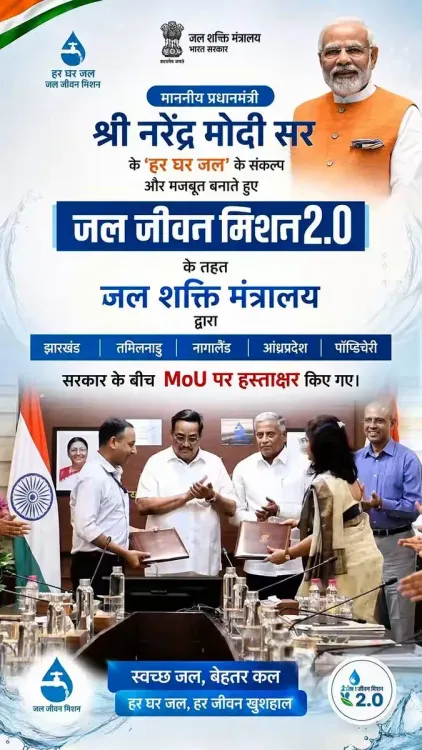
Union Jal Shakti Minister C. R. Paatil shared a video of Memoranda of Understanding signed between his ministry and the governments of Jharkhand, Tamil Nadu, Nagaland, Andhra Pradesh and Puducherry under Jal Jeevan Mission 2.0, describing the step as a strengthening of Prime Minister Narendra Modi's Har Ghar Jal resolution for rural tap-water access.
Key Takeaways
Union Jal Shakti Minister C.
Paatil posted a video of MoUs signed under Jal Jeevan Mission 2.0.
Signatory governments named are Jharkhand, Tamil Nadu, Nagaland, Andhra Pradesh and Puducherry.
Paatil tied the signing to PM Narendra Modi's 'Har Ghar Jal' rural tap-water resolution.
The original Jal Jeevan Mission was launched in August 2019 to cover all rural households.
States retain primary responsibility for execution; the Centre coordinates and co-funds.
Next markers to watch: state rollout timelines, fund utilisation, revised guidelines.
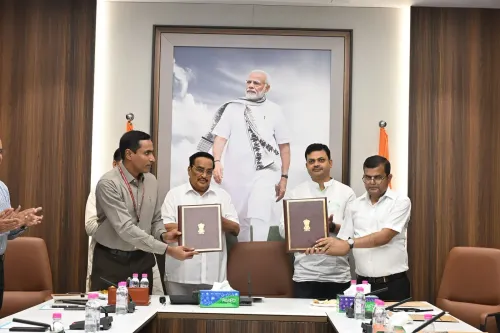
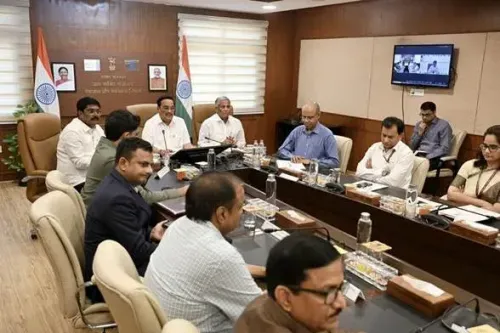
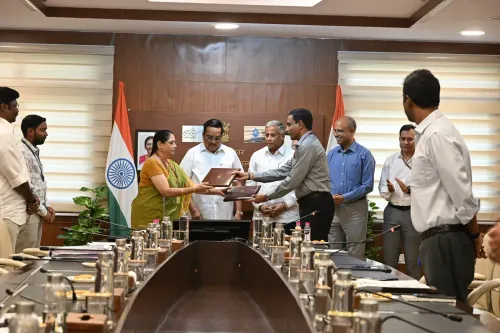
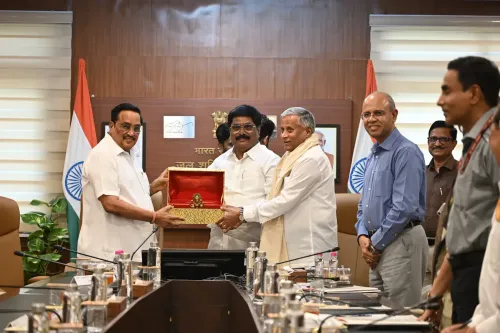
Union Jal Shakti Minister C. R. Paatil on Wednesday shared a video capturing the signing of Memoranda of Understanding between the Union Ministry of Jal Shakti and five state and union territory governments — Jharkhand, Tamil Nadu, Nagaland, Andhra Pradesh and Puducherry — under what he described as Jal Jeevan Mission 2.0. The minister framed the agreements as a continuation of Prime Minister Narendra Modi's 'Har Ghar Jal' (Water to Every Home) resolution.
In his post, Paatil wrote that the signing was 'a glimpse of the moment' when the five governments inked the MoUs, adding that the step further strengthened the Prime Minister's commitment to ensuring tap-water connectivity in every household. The post was accompanied by a short video of the signing ceremony.
Context
The Jal Jeevan Mission was launched in August 2019 as a flagship rural drinking-water programme, with the stated objective of delivering functional household tap connections to all rural homes. The initiative is anchored in the 'Har Ghar Jal' pledge announced by PM Modi from the ramparts of the Red Fort and is implemented jointly by the Centre and state governments under a shared-funding architecture.
The Ministry of Jal Shakti, formed in 2019 by merging the drinking-water and water-resources portfolios, serves as the nodal coordinator. State governments retain primary responsibility for on-the-ground execution, including pipeline laying, source augmentation and water-quality testing.
Policy backdrop
Since its launch, the mission has been operationalised through a series of bilateral agreements between the Centre and individual states, each specifying coverage targets, financial outlays and reporting protocols. Successive phases have moved beyond connection numbers to emphasise source sustainability, greywater management and water-quality surveillance across geographies ranging from arid plains to hilly tribal belts.
The five jurisdictions named by Paatil represent a diverse implementation map. Jharkhand has historically faced coverage gaps in its tribal districts; Tamil Nadu and Andhra Pradesh bring large rural populations and established public-health engineering departments; Nagaland raises last-mile delivery questions in difficult terrain; and Puducherry, as a union territory, follows a distinct administrative track.
Stakeholders and impact
The most immediate stakeholders are rural households in the five jurisdictions, for whom the MoUs are expected to translate into accelerated pipeline rollouts and continued central financial support. State public-health engineering departments and rural water-supply agencies will be tasked with translating the agreements into ground-level works.
For the Union government, the signings reinforce the federal model that has underpinned the mission since 2019 — central funding tied to performance benchmarks, with execution devolved to states. For state administrations, the MoUs typically lock in matching contributions and operational milestones over a defined period.
Paatil, a senior BJP leader and former Gujarat state unit president who took charge of the Jal Shakti portfolio in the current Union Cabinet, has used his social media channels to highlight a steady cadence of mission-related events, ribbon-cuttings and inter-governmental signings.
What's next
Attention will now turn to the state-level rollout timelines disclosed by the five governments, the release schedule of central tranches, and the utilisation certificates submitted against earlier allocations. Any revised guidelines or fresh budgetary commitments announced for the next financial year will indicate how the mission's next phase is scoped.
For households still awaiting a tap connection, the practical test of the latest MoUs will lie not in the signing ceremonies but in the pace at which pipelines, overhead tanks and quality-testing labs come online in the months ahead.
Point of View
However, lies less in signed documents than in the pace at which connections, source sustainability works and quality testing translate on the ground. The reference to a '2.0' phase will sharpen scrutiny of how the mission's next chapter is defined in budget and guideline terms.
NationPress
23 Oct 2026
Frequently Asked Questions
What is Jal Jeevan Mission 2.0?
It is the term used by Union Jal Shakti Minister C. R. Paatil to describe the next phase of the Jal Jeevan Mission, under which fresh Memoranda of Understanding have been signed with several state and union territory governments. The original Jal Jeevan Mission was launched in August 2019 to provide functional household tap connections to all rural homes.
Which states signed the latest Jal Jeevan Mission MoUs?
The governments of Jharkhand, Tamil Nadu, Nagaland, Andhra Pradesh and Puducherry signed the MoUs with the Union Ministry of Jal Shakti, according to the minister's post. The agreements were highlighted in a short video shared on his X timeline.
What is the 'Har Ghar Jal' goal?
'Har Ghar Jal', meaning 'Water to Every Home', is the resolution announced by Prime Minister Narendra Modi to deliver tap-water connections to every rural household in India. It is operationalised through the Jal Jeevan Mission, with the Centre and states sharing funding and implementation responsibilities.
Who is C. R. Paatil?
C. R. Paatil is the Union Minister of Jal Shakti and a senior BJP leader who earlier served as president of the party's Gujarat state unit. As Jal Shakti Minister, he oversees the central government's drinking-water and water-resources portfolios, including the Jal Jeevan Mission.
How is the Jal Jeevan Mission implemented?
The mission is implemented as a partnership between the Union government and the states, with the Centre providing funds and policy direction and state public-health engineering departments executing pipeline works, source augmentation and water-quality testing. MoUs typically formalise targets, financial commitments and reporting obligations between the two tiers.