Meghalaya: Three UDP MLAs set to join NPP, boosting ruling party to 36

Synopsis
Meghalaya's UDP is on the verge of near-extinction in the Assembly. Three of its last four MLAs are set to join the ruling NPP, days after eight others merged with BJP — leaving the once-significant regional party with potentially just one seat. The rapid redistribution of legislative weight within the ruling MDA coalition sets the stage for a transformed political landscape ahead of the 2028 state election.
Key Takeaways
Three UDP MLAs are expected to join the ruling NPP on 20 October 2025 , boosting NPP's Assembly tally from 33 to 36 in the 60-seat House .
The move would leave UDP president Metbah Lyngdoh as the party's sole MLA in the Meghalaya Assembly.
On 16 October , the Assembly Speaker recognised the merger of eight UDP MLAs with the BJP , raising BJP's strength from 2 to 10 .
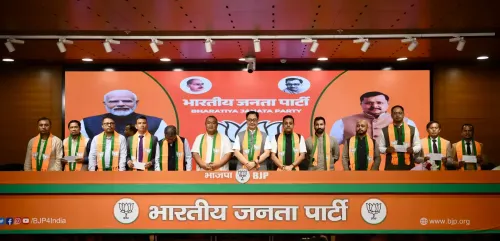
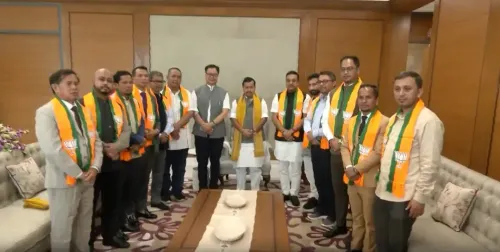
The eight BJP defectors joined the party at its New Delhi headquarters on 23 September ; the merger was recognised under Paragraph 4 of the Tenth Schedule .
All three parties — NPP , BJP , and UDP — are part of the ruling Meghalaya Democratic Alliance (MDA) led by CM Conrad K.
The realignments are expected to influence seat-sharing dynamics ahead of the 2028 Meghalaya Assembly election .
Three of the four remaining United Democratic Party (UDP) legislators in Meghalaya are set to join the ruling National People's Party (NPP) on Monday, 20 October 2025, a UDP leader confirmed. The move would lift Chief Minister Conrad K. Sangma's party from 33 to 36 seats in the 60-member Meghalaya Legislative Assembly, significantly consolidating NPP's position within the coalition government.
Key Developments
UDP leader Paul Lyngdoh stated that the three legislators are expected to formally join the NPP, leaving UDP president Metbah Lyngdoh as the regional party's sole surviving MLA in the Assembly. The defections follow a series of political shifts that have dramatically eroded UDP's legislative presence in recent weeks.
This comes shortly after the Meghalaya Assembly Speaker formally recognised the merger of eight UDP legislators with the Bharatiya Janata Party (BJP) on 16 October — a decision that slashed UDP's strength from 12 MLAs to just four, while boosting BJP's tally from two to 10.
The Eight Who Moved to BJP
The eight legislators who joined the BJP at its headquarters in New Delhi on 23 September were Lahkmen Rymbui, Pius Marwein, Kyrmen Shylla, Mayralborn Syiem, Matthew Beyondstar Kurbah, Ollan Singh Suin, Balajied Kupar Synrem, and Synshar Kupar Roy Lyngdoh Thabah. They subsequently informed the Assembly Secretariat of their merger, which the Speaker recognised under Paragraph 4 of the Tenth Schedule to the Constitution — the anti-defection provision that governs valid mergers.
Notably, the UDP had earlier initiated disciplinary action against some of these legislators before the merger was formalised, underscoring the bitter internal divisions the party was battling.
What This Means for the Ruling Coalition
All three parties — the NPP, BJP, and UDP — are constituents of the Meghalaya Democratic Alliance (MDA), the ruling coalition headed by Chief Minister Conrad Sangma. The reshuffling, while happening within the alliance, is redistributing legislative weight significantly: the BJP has quintupled its Assembly presence, and the NPP stands to gain three more seats.
If the three remaining UDP legislators complete their switch to the NPP, the once-influential regional party will be reduced to a single seat, marking what analysts describe as a near-collapse of UDP's formal legislative identity. The UDP has historically been a significant voice for regional interests in Meghalaya, where coalition politics and regional parties have defined every government since statehood.
Road to the 2028 Assembly Election
With the next Meghalaya Assembly election due in early 2028, the ongoing realignments are widely seen as positioning moves within the MDA. A stronger NPP and a numerically reinforced BJP could reshape how the coalition approaches seat-sharing negotiations. Critics, however, argue that the rapid legislative defections raise questions about political accountability and the stability of Meghalaya's regional party ecosystem — a cornerstone of the state's political culture for decades.
The coming weeks will test whether the UDP can reconstitute itself as a meaningful force ahead of 2028, or whether its effective marginalisation in the Assembly signals a more permanent shift in Meghalaya's political landscape.
Point of View
Yet bulk mergers have become a legally sanctioned route around it. For Meghalaya, where regional parties have historically been the voice of community-specific interests, the BJP's fivefold expansion in the Assembly and the NPP's growing dominance could homogenise a legislature that has traditionally been defined by pluralism. The real test arrives in 2028, when voters will decide whether these legislative migrations reflect genuine political convergence or simply the pull of incumbency advantage.
NationPress
19 Oct 2026
Frequently Asked Questions
Why are UDP MLAs joining the NPP and BJP in Meghalaya?
UDP legislators have been moving to the NPP and BJP amid shifting alignments within the ruling Meghalaya Democratic Alliance (MDA). Eight MLAs formally merged with the BJP in September 2025, a decision recognised by the Assembly Speaker on 16 October, and three of the four remaining UDP legislators are now set to join the NPP. The moves reflect the diminishing political weight of smaller regional parties within the coalition.
How does the Tenth Schedule apply to these mergers?
The Assembly Speaker recognised the merger of eight UDP MLAs with the BJP under Paragraph 4 of the Tenth Schedule to the Constitution, which permits a valid merger if at least two-thirds of a party's legislative members agree to it. This provision shields legislators from disqualification for defection when a formal merger is established, distinguishing it from individual floor-crossing.
What will UDP's Assembly strength be after these defections?
If the three MLAs join the NPP as expected, UDP will be reduced to a single MLA — its president Metbah Lyngdoh — down from 12 seats before the recent wave of defections began. The party will effectively lose its status as a meaningful legislative bloc.
Who are the eight UDP legislators who joined the BJP?
The eight are Lahkmen Rymbui, Pius Marwein, Kyrmen Shylla, Mayralborn Syiem, Matthew Beyondstar Kurbah, Ollan Singh Suin, Balajied Kupar Synrem, and Synshar Kupar Roy Lyngdoh Thabah. They joined the BJP at its New Delhi headquarters on 23 September 2025.
How does this affect Meghalaya ahead of the 2028 Assembly election?
The realignment within the ruling MDA strengthens both the NPP and BJP at the expense of the UDP, potentially reshaping coalition seat-sharing negotiations before the 2028 state election. A numerically dominant NPP and an expanded BJP could reduce the bargaining power of smaller regional constituents in any future electoral arrangement.