Mehbooba Mufti rejects NC's J&K statehood protest, demands Article 370 restoration
Synopsis
The split between J&K's two dominant regional parties is now in the open. Mehbooba Mufti's refusal to join the NC's Jantar Mantar protest is not a scheduling conflict — it is a direct ideological challenge, accusing the National Conference of quietly abandoning Article 370 and normalising the BJP's 2019 agenda while in government.
Key Takeaways
Mehbooba Mufti on 18 July formally declined Dr Farooq Abdullah 's invitation to join the NC 's statehood protest at Jantar Mantar on 20 July .
The PDP argues that a protest focused solely on statehood risks legitimising the abrogation of Article 370 on 5 August 2019 .
Mufti accused the Omar Abdullah government of being a 'mute spectator' to dismissals, arbitrary detentions, and action against Jamaat-e-Islami .
Both the PDP and NC had promised Article 370 restoration in their 2024 Assembly election manifestos .
Mufti called for an all-party meeting of regional parties and civil society to build a common road map on J&K 's constitutional issues.
She also demanded the release of political prisoners and lifting of restrictions on socio-political organisations.
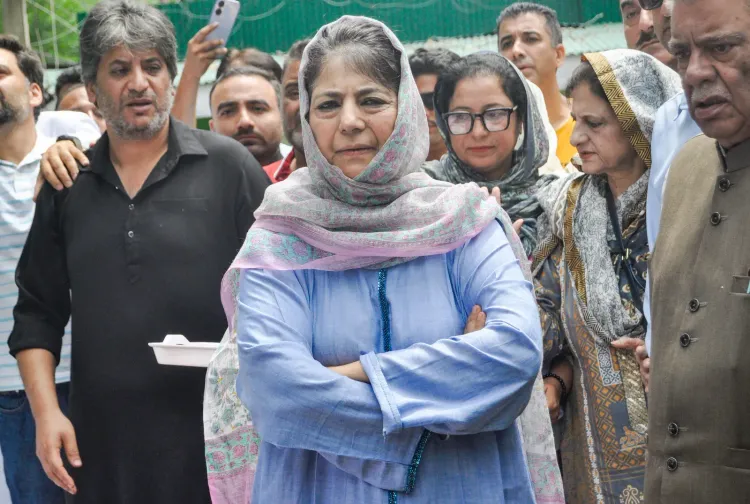
Peoples Democratic Party (PDP) President and former Jammu and Kashmir Chief Minister Mehbooba Mufti on Saturday, 18 July formally declined an invitation from National Conference (NC) President Dr Farooq Abdullah to join the party's statehood restoration protest at Jantar Mantar, New Delhi, scheduled for 20 July. In a sharply worded letter, Mufti argued that any agitation limited solely to the demand for statehood risks legitimising the abrogation of Article 370 on 5 August 2019.
Why the PDP Refused
Mufti stated that after consultations with senior PDP leaders, the party concluded it could not participate in a protest focused exclusively on restoring statehood. She contended that such a narrow framing 'echoes the BJP's narrative' by pushing Article 370 into the background and risks, in her words, 'whitewashing the illegal and unconstitutional actions of August 5, 2019.'
She reminded Dr Abdullah that both the PDP and the National Conference had explicitly promised the restoration of Article 370 in their 2024 Assembly election manifestos, and that the NC's strong electoral mandate reflected the people's faith in precisely that promise — not merely a return to statehood.
Broader Grievances Against the NC Government
Mufti's letter went beyond the protest dispute, levelling pointed criticism at the Omar Abdullah-led J&K government. She alleged the administration had remained a 'mute spectator' to a series of contentious developments, including the dismissal of government employees, action against Jamaat-e-Islami and its affiliated institutions, arbitrary detentions, restrictions on literature, and environmental degradation.
She also recalled writing to Farooq Abdullah earlier, proposing a united political initiative among regional parties — similar to the solidarity displayed by Ladakh's leaders in seeking constitutional safeguards — and said she had not received even a formal acknowledgement of that letter.
The Constitutional Argument
At the heart of Mufti's position is the assertion that the constitutional guarantees underpinning J&K's accession to India were removed 'in a single stroke' in 2019, and that the people of the region continue to bear the 'collective humiliation and dehumanisation' that followed. She warned that reducing the political struggle to statehood alone would be a 'grave injustice' and 'a betrayal' of their constitutional rights.
Notably, she cautioned that protesting solely for statehood could be interpreted as an implicit endorsement of the events of 5 August 2019 — a framing that underscores the ideological fault line now visible between the two largest regional parties in J&K.
What Mufti Is Calling For
Rather than joining the Jantar Mantar demonstration, Mufti urged Farooq Abdullah and Chief Minister Omar Abdullah to convene an all-party meeting involving regional political parties and civil society to chart a common road map on the political and constitutional issues confronting J&K. She also called for the release of political prisoners and the lifting of restrictions on socio-political organisations, including Jamaat-e-Islami, saying these demands must form part of any meaningful political engagement.
Despite her refusal to participate, Mufti extended her best wishes for the success of the National Conference's proposed protest — a diplomatic flourish that does little to mask the deepening strategic divergence between the two parties ahead of what could be a defining period for J&K's political future.
Point of View
Now in government, has structural incentives to moderate. Whether that posture translates into political traction, or simply keeps the PDP on the margins, will depend on whether public sentiment in the Valley still prioritises Article 370 over the more immediate question of statehood.
NationPress
17 Oct 2026
Frequently Asked Questions
Why did Mehbooba Mufti refuse to join the NC's statehood protest?
Mufti declined because she believes a protest limited to statehood restoration ignores the larger demand for Article 370 reinstatement, and could be seen as legitimising the abrogation of August 5, 2019. The PDP, after internal consultations, concluded that such a narrow framing effectively endorses the BJP's political agenda.
What is the NC's Jantar Mantar protest about?
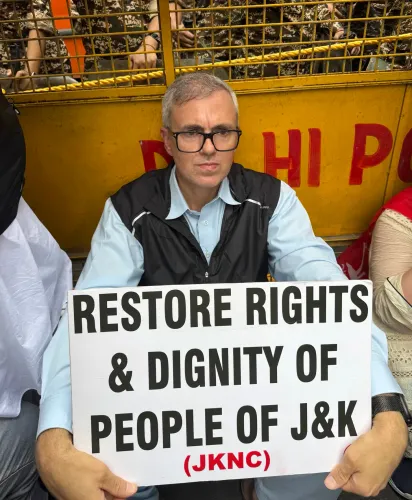
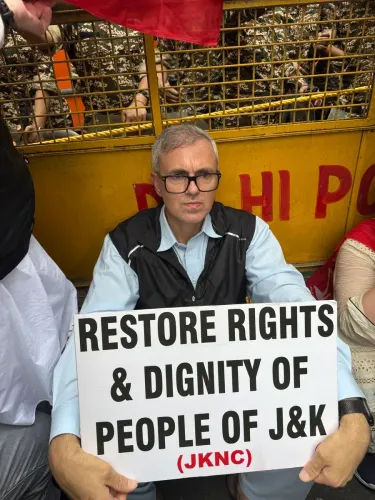
The National Conference planned a protest at Jantar Mantar in New Delhi on 20 July to demand the restoration of Jammu and Kashmir's statehood, which was revoked when J&K was downgraded to a Union Territory in August 2019. The protest was organised by NC President Dr Farooq Abdullah.
What did Mehbooba Mufti demand instead?
Mufti called on Farooq Abdullah and Chief Minister Omar Abdullah to convene an all-party meeting of regional parties and civil society to build a common road map on J&K's constitutional issues, including the restoration of Article 370. She also demanded the release of political prisoners and the lifting of restrictions on organisations such as Jamaat-e-Islami.
How does this split affect J&K politics?
The public disagreement exposes a strategic fault line between the two largest regional parties in J&K. Both the PDP and NC had promised Article 370 restoration in their 2024 Assembly election manifestos, and Mufti is now publicly holding the NC accountable for what she characterises as a retreat from that commitment since coming to power.
What did Mufti say about the Omar Abdullah government?
Mufti alleged that the Omar Abdullah-led J&K government had remained a 'mute spectator' to several contentious decisions, including the dismissal of government employees, action against Jamaat-e-Islami and its affiliated institutions, arbitrary detentions, restrictions on literature, and environmental degradation.