Meitei, Naga groups rally in Manipur, demand SoO abrogation and Dy CM's exit
Synopsis
Meiteis and Nagas — communities not always on the same side — marched together in Manipur on 31 October, demanding the scrapping of a 16-year-old ceasefire deal with Kuki militant groups that expired in September without renewal. With three Meitei men killed in a recent ambush and a cadre headcount discrepancy at a designated camp, the rally signals that cross-community patience with the status quo has run out.
Key Takeaways
Thousands from Meitei , Naga , and Meitei Pangal communities rallied across Manipur on 31 October , demanding immediate abrogation of the SoO agreement.
The SoO covers 23 underground outfits — 8 under UPF and 15 under KNO — with 2,266 cadres in designated camps since August 2008 ; the agreement lapsed on 4 September without renewal.
Protesters also demanded the resignation of Deputy Chief Minister Nemcha Kipgen , withdrawal of Assam Rifles , resettlement of IDPs , and NRC updation with 1951 as the base year.
The rally followed an ambush on 14 Meitei men in which three were killed , sparking fresh demands for accountability.
A reported discrepancy between registered and actual cadre strength at a designated camp has raised compliance concerns over the SoO framework.
COCOMI convenor Y.K.
Dhiren and former convenor Khuraijam Athouba addressed the gathering, calling the government's response over more than three years inadequate.
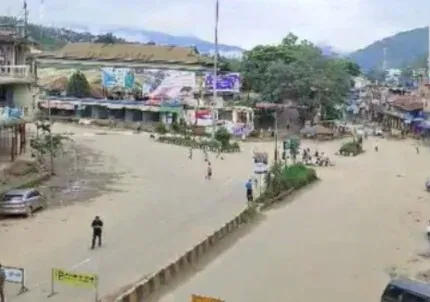
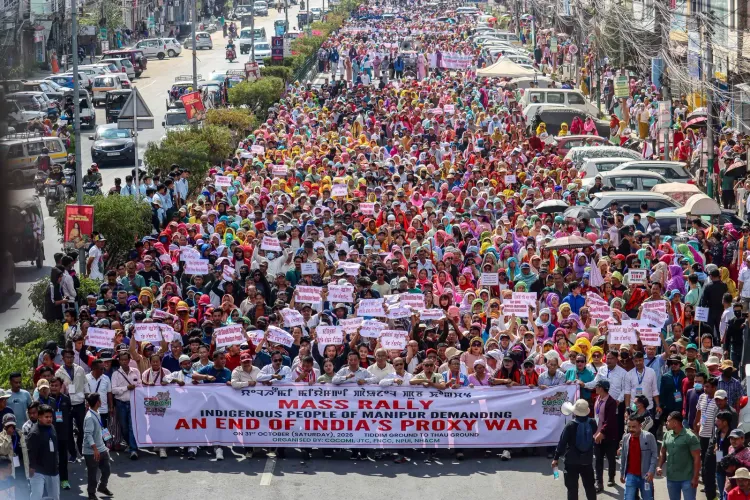
Thousands of people from multiple indigenous communities — including Meiteis, Nagas, and Meitei Pangals — marched across Manipur on Saturday, 31 October, demanding the immediate abrogation of the Suspension of Operations (SoO) agreement with Kuki militant groups, the resignation of the state government, and an end to the prolonged ethnic violence gripping the state. The demonstration, one of the largest cross-community mobilisations since the conflict escalated, signals a significant shift in the political landscape of the northeast.
Scale and Organisation of the Rally
The protest was organised in Imphal by the Coordinating Committee on Manipur Integrity (COCOMI) in collaboration with several Naga civil society bodies. Demonstrators gathered at Tiddim Ground in Kwakeithel, Imphal West district, before marching to THAU Ground, where a public meeting was convened. Placards reading 'Abrogate SoO', 'We Want Peace, Not Proxy War', and 'Save Manipur' were prominently displayed throughout the march.
Participating Naga organisations included the Joint Tribe Council Manipur, Naga Humanitarian Aids Committee Manipur, Foothill Naga Co-ordination Committee, Naga Peoples' Union, and Inpui Naga Union. The United Naga Council (UNC) and the All Naga Students' Association Manipur (ANSAM) extended support by holding simultaneous sit-in demonstrations at various Naga district headquarters. A separate rally was also held in Chandel district, where Naga civil society groups specifically demanded the resignation of Deputy Chief Minister Nemcha Kipgen.
Key Demands Raised
Beyond the abrogation of the SoO agreement, demonstrators called for the withdrawal of Assam Rifles, protection of indigenous communities and their properties, early resettlement of ethnically displaced Internally Displaced Persons (IDPs), and the updation of the National Register of Citizens (NRC) with 1951 as the base year before the next Census.
What Speakers Said
COCOMI convenor Y.K. Dhiren demanded the resignation of the present government, alleging it had 'failed to protect the lives and properties of indigenous people and restore normalcy in the state.' He further alleged that Kuki militant groups operating under the SoO arrangement were being used to pursue a larger political agenda.
Former COCOMI convenor Khuraijam Athouba said indigenous communities had 'suffered for more than three years' and that repeated appeals to both the state and Central governments for termination of the SoO agreement had gone unaddressed. He described the joint mobilisation of Meitei and Naga organisations as a significant expression of collective concern over the prevailing crisis.
Background: The SoO Agreement and Its Collapse
The SoO agreement has been in force since August 2008, covering a total of 23 underground outfits — 8 under the United People's Front (UPF) and 15 under the Kuki National Organisation (KNO). Under the arrangement, 2,266 Kuki cadres have been residing in designated camps across Manipur, with ground rules requiring them to refrain from violence and maintain weapons under prescribed security arrangements.
The agreement, however, expired on 4 September without renewal, and its legitimacy has been under sustained challenge since ethnic violence erupted in May 2023. Recent security concerns have deepened the crisis: authorities reportedly discovered a significant discrepancy between the registered strength and actual presence of cadres at one designated camp, raising serious questions over compliance.
The rally also comes in the immediate aftermath of an ambush on a group of 14 Meitei men in which three were killed, an incident that triggered widespread protests and intensified demands for security and accountability from both state and Central authorities.
What Comes Next
With the SoO agreement already lapsed and cross-community pressure mounting, the Central and state governments face renewed urgency to articulate a clear political roadmap for Manipur. The convergence of Meitei and Naga voices — historically not always aligned — adds considerable weight to the demands and is likely to increase pressure on New Delhi to revisit its engagement with all armed groups in the region.
Point of View
Combined with a cadre headcount discrepancy at a designated camp, has handed critics a concrete compliance failure to point to, not merely an ideological grievance. New Delhi's silence on renewal or termination is itself a policy choice, and the ambush killing of three Meitei men has made that silence politically untenable. The real question is whether the Centre will treat this as a law-and-order escalation requiring more security deployment, or as a political crisis requiring a renegotiated framework — the two responses lead to very different outcomes for Manipur's long-term stability.
NationPress
1 Nov 2026
Frequently Asked Questions
What is the Suspension of Operations (SoO) agreement in Manipur?
The SoO agreement is a ceasefire arrangement between the Government of India and 23 Kuki underground outfits — 8 under the United People's Front (UPF) and 15 under the Kuki National Organisation (KNO) — in force since August 2008. Under it, 2,266 Kuki cadres reside in designated camps and are required to refrain from violence, with the goal of facilitating a negotiated political settlement. The agreement lapsed on 4 September without renewal.
Why are Meitei and Naga groups demanding the abrogation of the SoO agreement?
Protesters argue that Kuki militant groups operating under the SoO have not complied with the agreement's ground rules and allege the arrangement is being used to pursue a broader political agenda. The demand has intensified following the outbreak of ethnic violence in May 2023, a recent ambush in which three Meitei men were killed, and reports of a discrepancy between registered and actual cadre strength at a designated camp.
Who organised the 31 October rally in Imphal?
The rally was organised by the Coordinating Committee on Manipur Integrity (COCOMI) in collaboration with several Naga civil society organisations. Participating groups included the Joint Tribe Council Manipur, Naga Peoples' Union, Inpui Naga Union, United Naga Council (UNC), and All Naga Students' Association Manipur (ANSAM), among others.
Why are protesters demanding the resignation of Deputy Chief Minister Nemcha Kipgen?
Naga civil society organisations at a parallel rally in Chandel district specifically called for Deputy Chief Minister Nemcha Kipgen's resignation. COCOMI convenor Y.K. Dhiren broadly alleged that the state government had failed to protect the lives and properties of indigenous people and restore normalcy, and demanded the resignation of the present government as a whole.
What other demands were raised at the Manipur rally?
Beyond SoO abrogation and government resignations, demonstrators demanded the withdrawal of Assam Rifles, protection of indigenous communities and their properties, early resettlement of Internally Displaced Persons (IDPs) affected by ethnic violence, and updation of the National Register of Citizens (NRC) with 1951 as the base year before the next Census.