Minister Pralhad Joshi Greets Nation on Tulsi Vivah
Synopsis
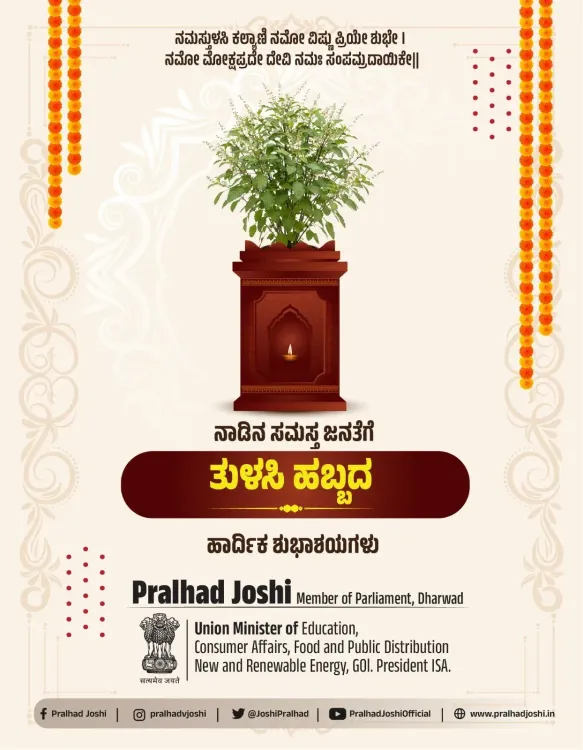
Union Minister Pralhad Joshi marked Tulsi Vivah on 21 November 2026 with a Kannada devotional post on X, reciting a Sanskrit shloka and praying that worship of Tulsi Maate bring well-being to all families across India.
Key Takeaways
Union Minister Pralhad Joshi posted Tulsi Vivah greetings in Kannada on 21 November 2026 .
He opened with a Sanskrit shloka invoking Tulsi as a remover of illness and bestower of auspiciousness.
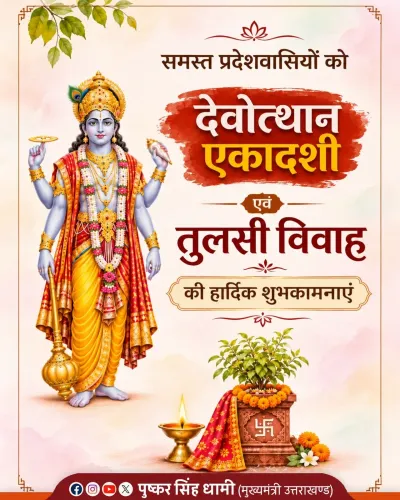
Tulsi Vivah is observed in the Hindu month of Kartika and marks the ceremonial marriage of the Tulsi plant to Lord Vishnu .
The festival is widely seen as the beginning of the auspicious wedding season in Hindu households.
Senior Indian political leaders routinely mark major Hindu festivals with public greetings, especially those with deep regional cultural roots.
On the auspicious occasion of Tulsi Vivah, Union Consumer Affairs Minister Pralhad Joshi offered devotional greetings to the nation on Saturday, 21 November 2026, invoking the sacred Tulsi plant as a symbol of piety, family welfare, and India's spiritual heritage.
Posting in Kannada, the senior BJP leader from Karnataka opened with a traditional Sanskrit shloka — 'Mahaprasada janani sarva saubhagya vardhini, Aadi vyaadhi hara nityam Tulasi tvam namostute' — a verse that translates to: 'O Tulasi, mother of the great offering, bestower of all auspiciousness, eternal remover of illness and sorrow, I bow to you.' He went on to describe Tulsi Vivah as a symbol of 'bhakti, pavitrata mattu kutumbada mangala' — devotion, purity, and family well-being — and prayed that the worship of Tulsi Maate bring goodness to all.
Tulsi Vivah: What the Festival Marks
Tulsi Vivah is an annual Hindu festival observed during the sacred month of Kartika in the Hindu lunar calendar. It marks the ceremonial marriage of the Tulsi plant — revered as a form of Goddess Lakshmi — to Lord Vishnu, and is widely regarded as the event that opens the auspicious wedding season across Hindu households in India.
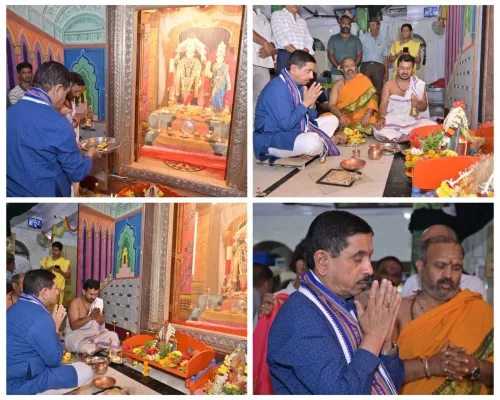
The festival carries deep cultural resonance in Karnataka and across the country, with families performing the ritual at home shrines and in temples, lighting lamps around the Tulsi plant and chanting devotional hymns well into the evening.
Leaders Across India Mark Kartika Observances
Minister Joshi's post is part of a well-established pattern in Indian public life: senior political figures from across the spectrum publicly acknowledge major traditional and spiritual festivals, particularly those rooted in Hindu practice, as expressions of shared cultural identity. The Kartika month, considered among the holiest in the Hindu calendar, draws greetings and observances from ministers, chief ministers, and state leaders alike.
That a Union Minister offered these greetings in Kannada — his home state's language — adds a regional warmth to the message, speaking directly to Karnataka's large devotee community ahead of the day's rituals.
As temple bells ring and lamps are lit in Tulsi courtyards from Hubli to Hubballi and beyond, the festival is a reminder that India's political calendar and its spiritual calendar have always, quietly, moved together.
Point of View
They form part of the party's sustained cultural-outreach strategy, reinforcing the BJP's self-positioning as the custodian of Hindu traditions in Indian public life.
NationPress
21 Nov 2026
Frequently Asked Questions
What is Tulsi Vivah and when is it celebrated?
Tulsi Vivah is an annual Hindu festival observed during the month of Kartika in the Hindu lunar calendar. It marks the ceremonial marriage of the sacred Tulsi plant to Lord Vishnu and is considered the beginning of the Hindu wedding season.
What did Minister Pralhad Joshi say on Tulsi Vivah 2026?
Union Minister Pralhad Joshi posted a Kannada message on X on 21 November 2026, reciting a Sanskrit shloka in praise of Tulsi and praying that the worship of Tulsi Maate bring well-being and auspiciousness to all.
What does the Sanskrit shloka in Joshi's post mean?
The shloka translates to: 'O Tulasi, mother of the great offering, bestower of all auspiciousness, eternal remover of illness and sorrow, I bow to you.' It is a traditional devotional verse honouring the Tulsi plant.
Why is Tulsi Vivah significant in Karnataka?
Tulsi Vivah holds deep cultural and spiritual significance across Karnataka, with families and temples performing the ritual marriage ceremony of the Tulsi plant, lighting lamps, and chanting hymns as part of Kartika-month observances.
Why do Indian political leaders post festival greetings on social media?
Indian political leaders from across parties regularly acknowledge major Hindu and other religious festivals publicly as a way of connecting with cultural traditions, engaging their home-state communities, and signalling respect for India's spiritual heritage.