CM Himanta's vision: MMC Hospital to become 800-bed super speciality hub
Synopsis
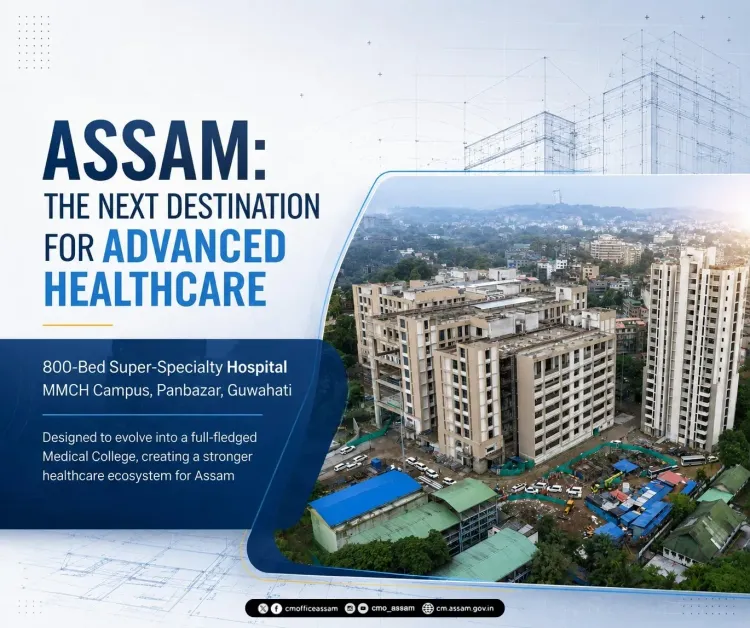
Assam's Chief Minister's Office announced the conversion of Mahendra Mohan Choudhury Hospital in Guwahati into an 800-bed Super Speciality Hospital and Medical College, citing CM Himanta Biswa Sarma's vision to make Assam a healthcare hub for Northeast India.
Key Takeaways
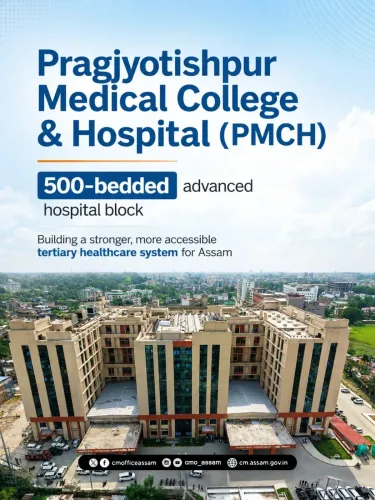
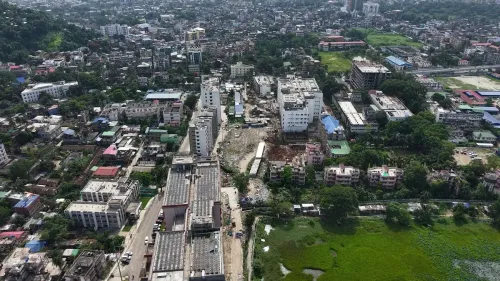
Mahendra Mohan Choudhury Hospital in Guwahati is being upgraded into an 800-bed Super Speciality Hospital .
A full-fledged Medical College will be established alongside the upgraded hospital.
The project is attributed to the vision of Chief Minister Dr.
Himanta Biswa Sarma .
The upgrade aims to reduce patient outflow from Northeast India to distant metros for specialist treatment.
Key pending steps include National Medical Commission approval for medical college seats and completion of civil works.
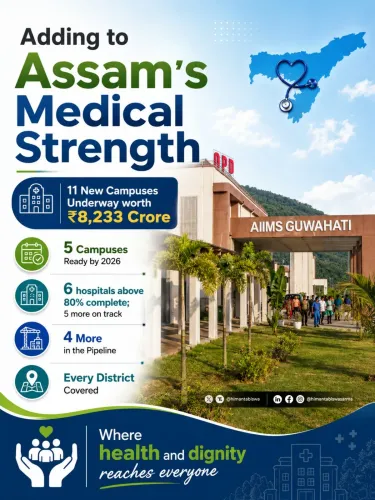
The initiative is part of a broader Assam government programme of hospital modernisation launched since 2021 .
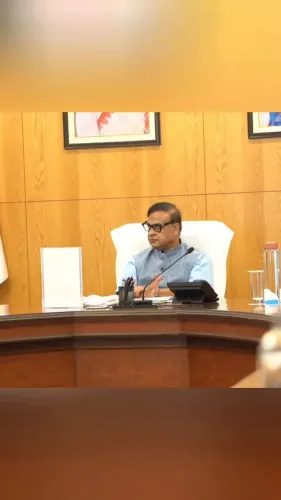
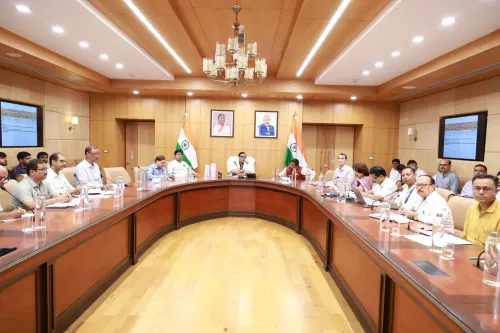
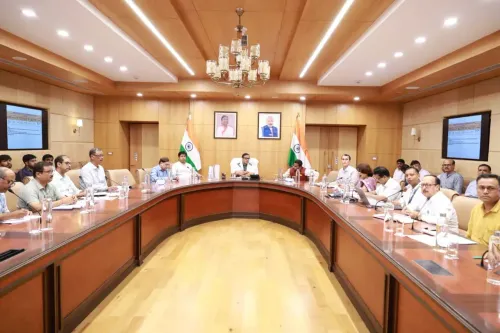
The Chief Minister's Office of Assam announced on Saturday, 4 July 2026, that Mahendra Mohan Choudhury Hospital in Guwahati is being transformed into an 800-bed Super Speciality Hospital and a full-fledged Medical College, describing the project as a landmark in the state's healthcare trajectory.
Context
Mahendra Mohan Choudhury Hospital, one of Guwahati's major government hospitals, was originally established in the 1970s and named after former Chief Minister Mahendra Mohan Choudhury. The facility has long served as a primary referral centre for patients across Assam and neighbouring northeastern states, but its infrastructure had not kept pace with rising patient loads and evolving medical needs.
The CMO's post states the upgraded institution will feature 'world-class infrastructure, advanced medical care and a strong focus on education,' positioning it as a dual-purpose facility serving both clinical and academic functions. The announcement credits Chief Minister Dr. Himanta Biswa Sarma as the driving vision behind the project.
Policy Backdrop
Since 2021, when Dr. Himanta Biswa Sarma assumed office as Chief Minister, the Assam government has pursued an accelerated programme of hospital modernisation and new medical college creation. The broader goal has been to reduce the outflow of patients — and the associated financial burden on families — to facilities in Vellore, Chennai, Delhi, and other metros.
These upgrades have drawn on both state budget outlays and central government schemes aimed at strengthening tertiary and super-speciality care in underserved regions. The addition of a full medical college to the MMC Hospital campus would expand the pipeline of trained doctors serving the northeastern region, addressing a long-standing shortage of specialist physicians.
The National Medical Commission's approval process for new medical college seats, along with civil works timelines, will be critical milestones before the facility becomes fully operational.
Stakeholders and Impact
The primary beneficiaries are the estimated several crore residents of Assam and the wider Northeast India region, who currently travel long distances for advanced procedures such as cardiac surgery, oncology, and neurology. A super-speciality hospital of this scale within Guwahati could substantially reduce out-of-pocket costs and travel hardship for patients from remote districts.
Medical students and aspiring doctors stand to benefit from the new college, which would add undergraduate and potentially postgraduate seats to a region where competition for medical education places is intense. Healthcare workers already employed at MMC Hospital are also stakeholders, as the upgrade implies expanded departments, new equipment, and revised staffing structures.
The project also carries economic implications for Guwahati, reinforcing the city's emerging role as a medical-tourism and healthcare services hub for the entire northeast.
What's Next
Key milestones to watch include the completion of civil construction for the expanded 800-bed facility, regulatory clearances from the National Medical Commission for the attached medical college, and the phased launch of individual super-speciality departments. The government's stated ambition is to make Assam a 'leading hub for healthcare excellence' — a benchmark that will be tested as the project moves from announcement to operational delivery.
Observers will track whether the facility's opening timeline aligns with the current government's electoral cycle, and whether the medical college achieves full academic affiliation within the projected period.
Point of View
However, lies in execution: regulatory clearances, staffing, and equipment procurement in the northeast have historically lagged behind groundbreaking ceremonies. If delivered on schedule, the upgraded MMC Hospital could meaningfully shift Guwahati's standing as a medical hub for the entire northeastern region.
NationPress
3 Oct 2026
Frequently Asked Questions
What is Mahendra Mohan Choudhury Hospital in Guwahati?
Mahendra Mohan Choudhury Hospital is a major government hospital in Guwahati, Assam, established in the 1970s and named after former Chief Minister Mahendra Mohan Choudhury. It serves as a key referral centre for patients across Assam and neighbouring northeastern states.
How many beds will the new super speciality hospital in Guwahati have?
According to the Assam Chief Minister's Office, the upgraded Mahendra Mohan Choudhury Hospital will have 800 beds as a Super Speciality Hospital.
Will a new medical college open at MMC Hospital Guwahati?
Yes, the Assam government has announced that a full-fledged Medical College will be established as part of the MMC Hospital upgrade, expanding medical education capacity in the state.
What is CM Himanta Biswa Sarma's role in the MMC Hospital upgrade?
Chief Minister Dr. Himanta Biswa Sarma is credited by the CMO's announcement as the driving vision behind the project, which is part of his government's broader push to make Assam a leading healthcare hub in Northeast India.
How does the MMC Hospital upgrade benefit patients in Northeast India?
The 800-bed super speciality facility is intended to provide advanced medical care locally, reducing the need for patients from Assam and neighbouring northeastern states to travel to distant cities like Chennai, Vellore, or Delhi for specialist treatment.