PM Modi Highlights Viksit Bharat Rozgar Yojana for Youth Jobs
Synopsis
Prime Minister Narendra Modi on June 19, 2026, spotlighted the PM Viksit Bharat Rozgar Yojana, framing it as a pillar of India's youth employment strategy and the broader Viksit Bharat 2047 vision to achieve developed-economy status.
Key Takeaways
Prime Minister Narendra Modi promoted the PM Viksit Bharat Rozgar Yojana on June 19, 2026 , via an X post.
The scheme is positioned as a tool for employment generation and workforce empowerment under the Viksit Bharat 2047 roadmap.
The government's employment strategy builds on earlier programmes including Skill India (2015) , PM Rojgar Protsahan Yojana (2016) , and the Atmanirbhar Bharat package of 2020 .
Primary beneficiaries are Indian youth and first-time jobseekers, with MSMEs likely to serve as key implementation partners.
Union Budget 2026-27 allocations and quarterly employment data releases will be the next key indicators of the scheme's scale and impact.
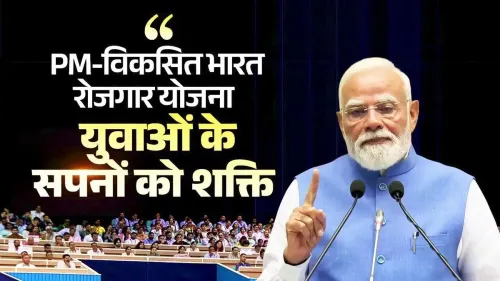
Prime Minister Narendra Modi on Friday, June 19, 2026, reaffirmed the government's commitment to employment generation through the PM Viksit Bharat Rozgar Yojana, describing the scheme as central to empowering India's youth and building a future-ready workforce.
Context
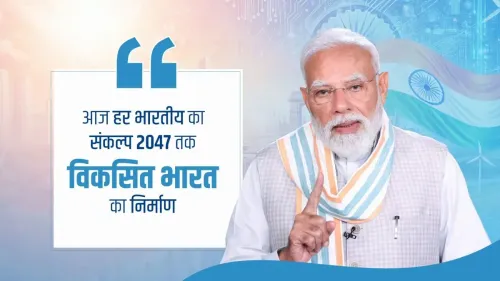
In his post on X, Prime Minister Modi stated: 'Through PM Viksit Bharat Rozgar Yojana, we are supporting employment generation, empowering youth and building a stronger workforce for the future.' The message situates the scheme within the government's broader Viksit Bharat 2047 vision — a long-term roadmap to transform India into a developed economy within the next two decades.
The Viksit Bharat framework has been a recurring anchor in policy speeches and budget documents since 2022, with successive announcements in labour, manufacturing, and skills development framed as stepping stones toward that goal.
Policy Backdrop
The Modi government has pursued a layered employment strategy across its tenure. The Skill India Mission, launched in 2015, aimed to equip millions of young Indians with industry-relevant competencies. This was followed by the PM Rojgar Protsahan Yojana in 2016, which offered employers incentives — including government contributions to provident fund accounts — to bring workers into the formal economy.
The Atmanirbhar Bharat package announced in 2020 extended support to micro, small and medium enterprises (MSMEs) and infrastructure sectors, both significant sources of new jobs. Production-linked incentive schemes across more than a dozen sectors have since added a manufacturing dimension to the employment push.
The PM Viksit Bharat Rozgar Yojana appears to carry forward this lineage, explicitly tying job creation to the Viksit Bharat brand — a signal that employment outcomes are being positioned as a headline metric for the 2047 development target.
Stakeholders and Impact
Indian youth and first-time jobseekers are the stated primary beneficiaries of the scheme. India's working-age population is among the largest in the world, and harnessing this demographic dividend has been a consistent policy priority across administrations.
Employers — particularly in the formal sector — stand to play a central role if the scheme follows the incentive-linked model of its predecessors. MSMEs, which account for a substantial share of non-agricultural employment in India, are likely to be key implementation partners.
What's Next
Attention will now turn to the Union Budget 2026-27, where allocations for employment-linked schemes are expected to reflect the government's stated priorities. Parliamentary questions on quarterly employment data and formal enrolment figures under the new scheme will offer the first measurable gauge of its reach.
As India moves deeper into its election cycle and economic planning horizon, the framing of job creation as a Viksit Bharat deliverable signals that labour-market performance will remain a central political and policy benchmark in the months ahead.
Point of View
Anchoring a jobs scheme to the 'Viksit Bharat' label — a move that converts an abstract 2047 aspiration into a tangible, nameable programme voters can associate with his administration. The pattern mirrors earlier rebranding cycles, where employment incentives were refreshed and relaunched under new nomenclature to signal renewed political intent. With the Union Budget approaching, the communication serves as a pre-budget signal that labour-market outcomes will be a headline priority. The real test, however, will be in auditable enrolment and formal-employment numbers, which opposition benches are certain to scrutinise.
NationPress
19 Sept 2026
Frequently Asked Questions
What is PM Viksit Bharat Rozgar Yojana?
PM Viksit Bharat Rozgar Yojana is an employment generation scheme highlighted by Prime Minister Narendra Modi as part of the government's Viksit Bharat 2047 vision to build a stronger, future-ready workforce in India.
What is the Viksit Bharat 2047 vision?
Viksit Bharat 2047 is the Indian government's long-term roadmap to transform India into a developed economy by the centenary of its independence, anchoring a wide range of policy initiatives in infrastructure, skills, and employment.
How does the new scheme relate to earlier Modi government employment programmes?
It continues a lineage that includes the Skill India Mission (2015), PM Rojgar Protsahan Yojana (2016), and Atmanirbhar Bharat measures (2020), each of which targeted formal job creation through training, employer incentives, or MSME support.
Who benefits from PM Viksit Bharat Rozgar Yojana?
The scheme is aimed primarily at Indian youth and first-time jobseekers, with MSMEs and formal-sector employers expected to play a key role in implementation.
When will more details about the scheme's budget and scale be available?
The Union Budget 2026-27 is the next major milestone where funding allocations for employment schemes are expected to be disclosed, alongside parliamentary data on formal enrolment figures.