PM Modi at Auckland Business Event: India a Launchpad for Global Growth
Synopsis
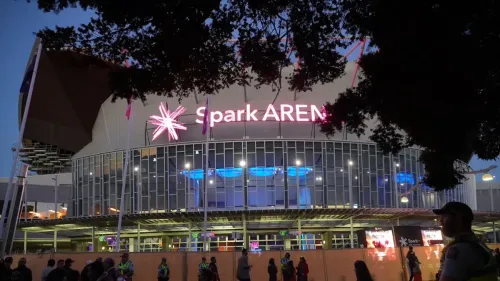
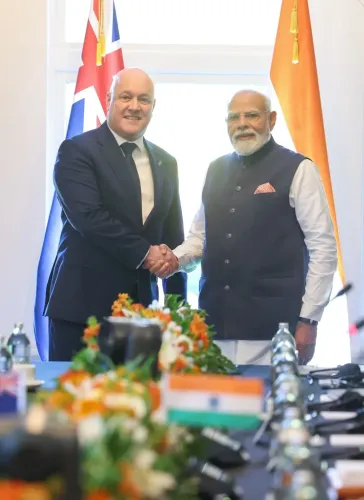
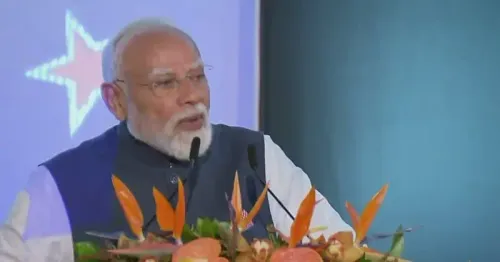
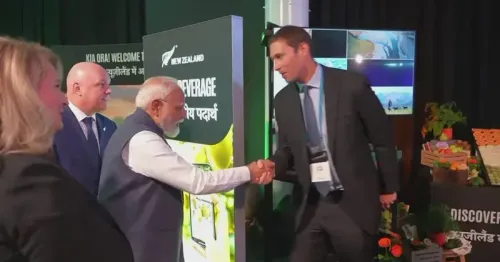
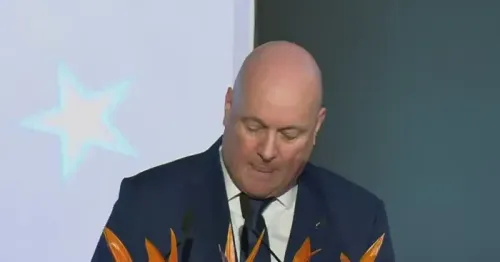
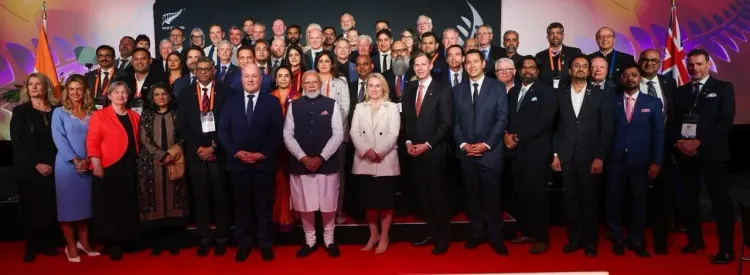
Prime Minister Narendra Modi, speaking alongside New Zealand PM Chris Luxon at a business event in Auckland on 11 July 2026, declared India 'a launchpad for global growth' and called on business leaders from both nations to elevate the economic partnership to new heights.
Key Takeaways
PM Modi addressed an India-New Zealand business event in Auckland on 11 July 2026 alongside NZ PM Chris Luxon .
He declared that India is 'not only a market' but 'a launchpad for global growth.' The visit marks a significant high-level bilateral engagement, following Modi 's previous visit to New Zealand in 2016 .
India-New Zealand CECA negotiations, first launched in 2010 , remain a key unresolved item on the bilateral agenda.
Key stakeholders include Indian exporters in IT and pharma and New Zealand agricultural and dairy investors eyeing the Indian market.
Follow-up on trade agreement talks and new investment commitments will be closely watched in the coming weeks.
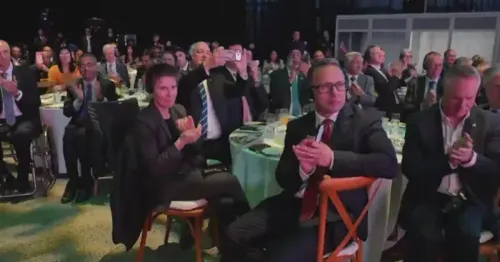
Prime Minister Narendra Modi addressed business leaders at an India-New Zealand business event in Auckland on Saturday, 11 July 2026, alongside New Zealand Prime Minister Chris Luxon, calling India a 'launchpad for global growth' and urging both nations to elevate their economic partnership.
Context
Speaking at the bilateral business event, PM Modi told assembled business leaders that 'India is not only a market' but rather 'a launchpad for global growth.' The remarks came during what appears to be a state or official visit to New Zealand — the first such high-level engagement between the two countries in a decade, following Modi's earlier visit to Auckland in 2016.
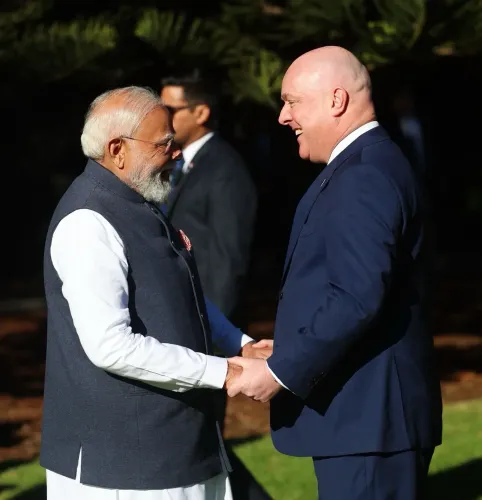
PM Modi directly addressed the assembled executives alongside PM Luxon, signalling the importance both governments attach to deepening commercial ties. The joint appearance at a business forum underscores a shared intent to move the relationship beyond diplomatic pleasantries into concrete economic outcomes.
Policy Backdrop
India and New Zealand have long-standing but underutilised economic ties spanning dairy, education, and services. Negotiations for a Comprehensive Economic Cooperation Agreement (CECA) between the two countries were first launched in 2010 and have seen multiple restarts over the intervening years without reaching conclusion.
The Modi government has pursued an active agenda of bilateral economic outreach, positioning India as both a manufacturing hub and a services powerhouse through free trade agreements and high-level business diplomacy. New Zealand fits naturally into this Indo-Pacific strategy, given its complementary strengths in agriculture and technology and its growing interest in diversifying supply chains.
The two sides had previously signed agreements on trade, education, and defence cooperation during Modi's 2016 visit, providing a foundation on which the current engagement seeks to build.
Stakeholders and Impact
Indian exporters in sectors such as pharmaceuticals, information technology, and textiles stand to benefit from any deepening of the bilateral relationship, while New Zealand investors and agricultural exporters — particularly in dairy — see India's vast and fast-growing consumer base as a high-priority destination.
Business councils on both sides have consistently called for the conclusion of the long-pending CECA, arguing that a formal agreement would reduce tariff and non-tariff barriers and provide greater regulatory certainty. PM Modi's framing of India as a 'launchpad' rather than merely a 'market' is a deliberate pitch to New Zealand firms to use India as a base for reaching other emerging economies in South Asia and beyond.
What's Next
Attention will now turn to whether the Auckland business event produces tangible follow-up — including a potential resumption or conclusion of India-New Zealand CECA talks, new investment commitments, or the establishment of a formal business council mechanism.
The bilateral momentum generated by a joint prime-ministerial appearance at a business forum typically creates pressure for bureaucratic follow-through. For India's broader Indo-Pacific economic strategy, a reinvigorated partnership with Wellington would add another node to a network that already includes trade agreements with Australia, the UAE, and other partners.
Frequently Asked Questions
Why did PM Modi visit New Zealand in July 2026?
PM Modi visited New Zealand in July 2026 for a bilateral engagement that included a joint business event in Auckland with NZ PM Chris Luxon , aimed at deepening economic ties between the two countries.
What did PM Modi say at the India-New Zealand business event in Auckland?
PM Modi told business leaders that India is 'not only a market' but 'a launchpad for global growth,' urging both sides to take the economic partnership to new heights.
What is the India-New Zealand CECA?
The India-New Zealand Comprehensive Economic Cooperation Agreement (CECA) is a proposed free trade deal whose negotiations were launched in 2010 . Talks have seen periodic restarts but have not yet been concluded.
When did PM Modi last visit New Zealand before 2026?
PM Modi last visited New Zealand in 2016 , when the two countries signed agreements covering trade, education, and defence cooperation.
How does India's relationship with New Zealand fit into its Indo-Pacific strategy?
New Zealand is a complementary partner for India in the Indo-Pacific, with strengths in dairy, education, and technology. The Modi government views such partnerships as part of a broader push to position India as a manufacturing and services hub through free trade agreements and high-level business diplomacy.