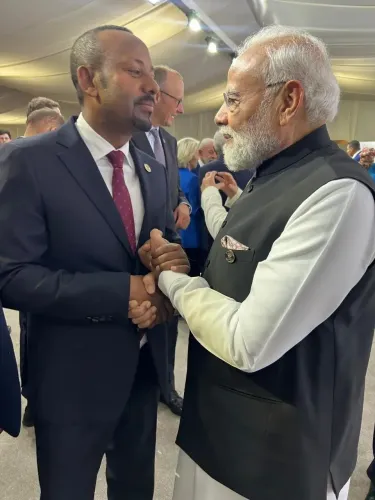
PM Modi Congratulates Ethiopia's Abiy Ahmed on Re-election
Synopsis
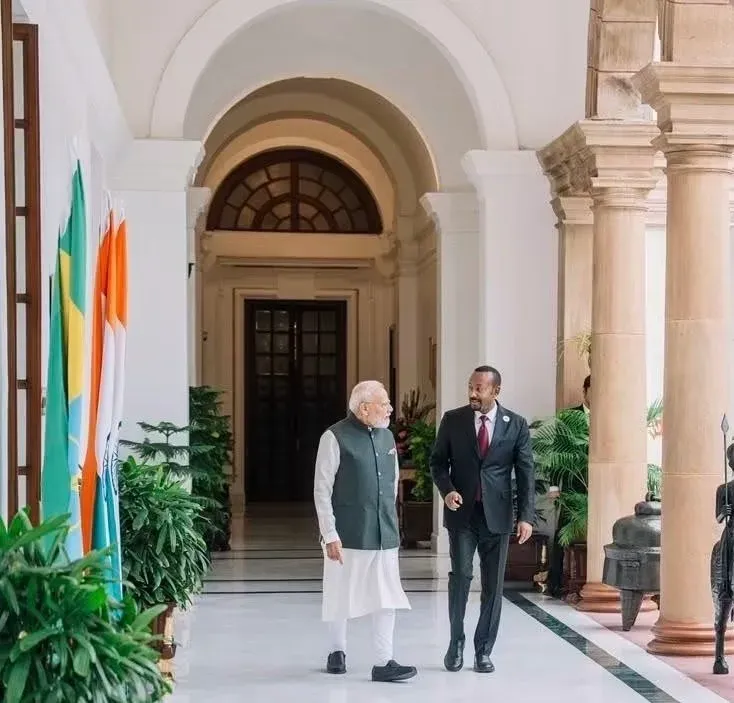
Prime Minister Narendra Modi publicly congratulated Ethiopian PM Abiy Ahmed Ali on his re-election on October 8, 2026, recalling a December visit to Ethiopia and a New Delhi meeting, and reaffirming India's Strategic Partnership with the East African nation.
Key Takeaways
PM Modi responded to Abiy Ahmed Ali's congratulatory wishes on October 8, 2026 , and offered his own congratulations on Abiy's assumption of office for another term.
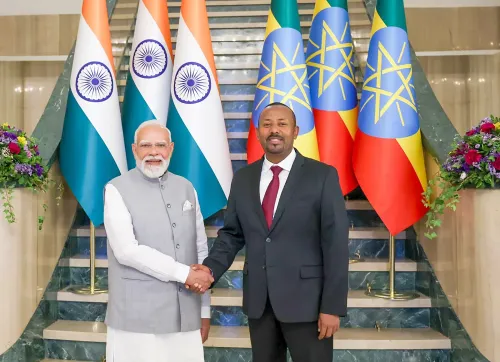
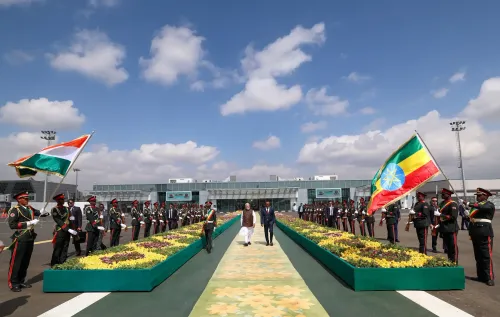
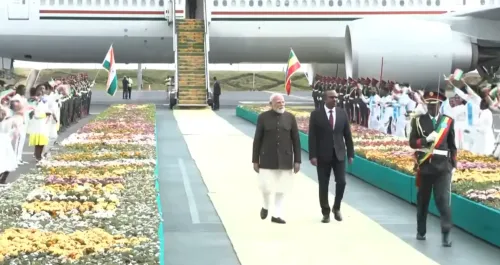
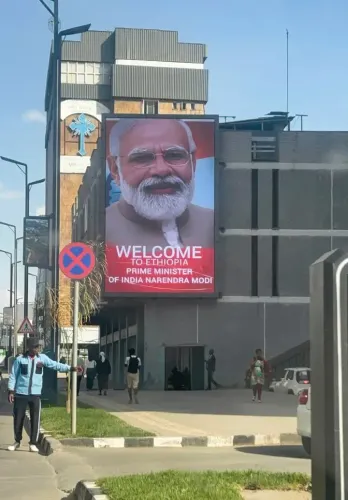
Modi referenced a personal visit to Ethiopia in December 2025 and a subsequent meeting in New Delhi as the basis of the bilateral relationship.
India formally designates its relationship with Ethiopia a Strategic Partnership , a relatively selective distinction in India's Africa engagement.
Ethiopia is East Africa's most populous nation and one of the continent's fastest-growing economies, making it a significant partner in India's broader Africa strategy.
The exchange signals New Delhi's intent to maintain and deepen cooperation with Addis Ababa under Abiy Ahmed's continued leadership.
A diplomatic exchange between two nations that share a Strategic Partnership moved briefly into public view on Thursday, October 8, 2026, when Prime Minister Narendra Modi responded to congratulatory wishes from Ethiopian Prime Minister Abiy Ahmed Ali — and turned the reply into a reaffirmation of bilateral ties that stretch from New Delhi to Addis Ababa.
Modi congratulated Abiy Ahmed on assuming office for another term, writing: 'I fondly recall my visit to Ethiopia last December and our recent meeting in New Delhi. India greatly values its Strategic Partnership with Ethiopia and I look forward to working closely with you to further deepen our cooperation and friendship.'
A relationship rooted in recent personal diplomacy
The warmth in Modi's message is grounded in recent face-to-face engagement. The Indian Prime Minister's visit to Ethiopia — referenced as occurring in December 2025 — and a subsequent bilateral meeting in New Delhi signal that the India-Ethiopia relationship has been actively tended at the highest level. Personal diplomacy of this frequency is not routine; it reflects deliberate investment in the partnership.
Ethiopia is East Africa's most populous nation and one of the continent's fastest-growing economies. Its significance to India's Africa engagement — spanning trade, development cooperation, and strategic positioning on the Horn of Africa — makes the continuity of Abiy Ahmed's leadership a factor of direct relevance to New Delhi's long-term foreign-policy calculus.
India's Strategic Partnership with Ethiopia — what it signals
The term 'Strategic Partnership' carries diplomatic weight. India has used this designation selectively with African nations, and its invocation here underlines that the relationship is framed as a long-horizon commitment — not merely transactional trade or aid. With Abiy Ahmed now confirmed for another term, New Delhi has both the familiarity of an established counterpart and the continuity to build on agreements already in motion.
Modi's public message also serves a broader signal: that India's engagement with Africa is durable across election cycles, and that New Delhi positions itself as a steady partner in a region where major powers are competing for influence.
With personal rapport already established and a strategic framework in place, the question now is which specific pillars — connectivity, defence, digital infrastructure, or people-to-people ties — the two leaders choose to advance first.
Point of View
New Delhi is signalling that its Africa engagement is leader-to-leader and long-term, not transactional. Abiy Ahmed's re-election gives India a known, tested interlocutor in the Horn of Africa — a region of growing maritime and economic significance. The next test is whether the diplomatic warmth translates into concrete deliverables on trade, infrastructure, or defence cooperation.
NationPress
8 Oct 2026
Frequently Asked Questions
Why did PM Modi congratulate Abiy Ahmed Ali in October 2026?
PM Modi congratulated Ethiopian Prime Minister Abiy Ahmed Ali on assuming office for another term after Abiy had sent Modi warm wishes. Modi also used the occasion to reaffirm the India-Ethiopia Strategic Partnership.
When did PM Modi visit Ethiopia?
PM Modi visited Ethiopia in December 2025, an engagement he referenced fondly in his October 2026 message to Abiy Ahmed Ali.
What is the India-Ethiopia Strategic Partnership?
India and Ethiopia share a Strategic Partnership, a formal diplomatic designation that frames their bilateral relationship as a long-term commitment covering areas such as trade, development cooperation, and strategic engagement in East Africa.
Why is Ethiopia important to India's foreign policy?
Ethiopia is East Africa's most populous country and one of its fastest-growing economies. Its location on the Horn of Africa gives it strategic importance for maritime routes and regional stability, making it a key node in India's Africa engagement strategy.
Did Modi and Abiy Ahmed meet in New Delhi?
Yes. In addition to Modi's December 2025 visit to Ethiopia, the two leaders also held a meeting in New Delhi, which Modi cited as part of the foundation for the bilateral relationship.