Modi critics face voter rejection: Kejriwal, Mamata, Akhilesh all suffer setbacks
Synopsis
From Delhi to West Bengal to Tamil Nadu, the anti-Modi front is unravelling seat by seat. Kejriwal lost his own constituency, Mamata lost Bhabanipur, and DMK lost power — all in quick succession. With the INDIA bloc fractured and no national Opposition face in sight, the electoral math increasingly favours the BJP heading into Uttar Pradesh's crucial 2026 polls.
Key Takeaways
Arvind Kejriwal lost his Assembly seat in Delhi in 2025 , with AAP reduced to just 22 seats .
Mamata Banerjee lost her Bhabanipur constituency as TMC was cut to 80 seats in the 294-seat West Bengal Assembly.
DMK lost power in Tamil Nadu , winning only 59 of 223 seats where elections were held.
The INDIA bloc has splintered following consecutive defeats, with allies exiting over seat-sharing disputes.
No single Opposition leader has emerged as a credible national alternative to PM Modi .
Uttar Pradesh heads to polls next year, with Akhilesh Yadav reportedly recalibrating his PDA coalition strategy.
Several prominent Opposition leaders who positioned themselves as the sharpest critics of Prime Minister Narendra Modi — including Arvind Kejriwal, Mamata Banerjee, and Akhilesh Yadav — have faced major electoral setbacks in recent state elections, with the Bharatiya Janata Party (BJP) making significant inroads into their traditional strongholds. The trend, analysts say, reflects a broader pattern of voter rejection of anti-Modi positioning as a stand-alone political strategy.
Key Electoral Setbacks
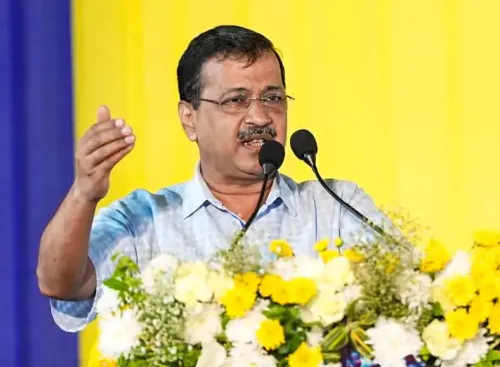
Aam Aadmi Party (AAP) Convenor Arvind Kejriwal lost his own Assembly seat in Delhi in 2025, with his party reduced to a mere 22 seats. The BJP capitalised on anti-incumbency sentiment and fractures within the INDIA bloc alliance to reclaim the capital decisively.
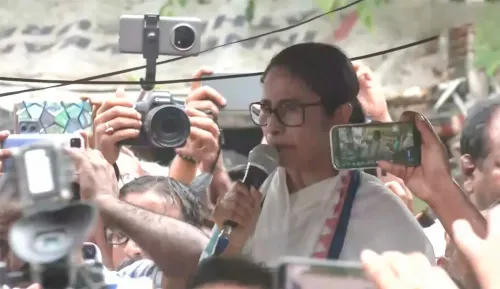
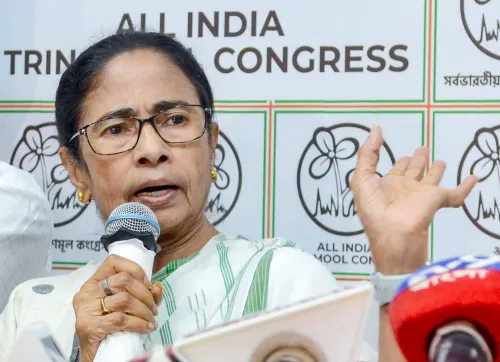
In the recently-concluded West Bengal Assembly election, the Trinamool Congress (TMC) was reduced to 80 seats in the 294-seat House, and party supremo Mamata Banerjee lost her own constituency of Bhabanipur. Anti-incumbency, minority-focused politics, and the BJP's consolidation of Hindu votes are cited as contributing factors.
In Tamil Nadu, the M.K. Stalin-led Dravida Munnetra Kazhagam (DMK) bowed out of power following a fractured mandate, managing to win only 59 of the 223 seats where elections were held. The Tamil Nadu Assembly comprises 234 members.
The INDIA Bloc's Unravelling
Notably, Kejriwal, Banerjee, and Yadav were all part of the INDIA bloc alliance formed to jointly challenge Prime Minister Modi in the 2024 Lok Sabha election. The three were widely regarded as a troika that functioned as a pressure group within the coalition. The bloc has since splintered, with several allies exiting over seat-sharing disputes.
The Samajwadi Party (SP) leader Akhilesh Yadav notably avoided campaigning in West Bengal during last month's Assembly election, sparking sharp debate. Reports suggest he may be recalibrating his strategy — balancing ties with the Indian National Congress (Congress) while refocusing on his PDA (Pichhda, Dalit, Alpsankhyak) coalition of backward classes, Dalits, and minorities. The SP suffered a heavy defeat in 2017, clawed back partially in 2022, but failed to unseat the Yogi Adityanath-led National Democratic Alliance (NDA) government in Uttar Pradesh. The state goes to the polls again next year.
Why the BJP Is Gaining Ground
According to political observers, voters are increasingly resonating with Prime Minister Modi's narrative of development, nationalism, and aspirational growth, while Opposition parties are perceived as anchored in welfare and freebie politics. The BJP's heavy reliance on infrastructure projects and welfare schemes — including Ujjwala and PM-Kisan — alongside digital governance initiatives gives it tangible achievements to showcase on the campaign trail.
Critics argue that the Opposition's heavy reliance on minority vote banks has enabled the BJP to consolidate Hindu votes, particularly across northern and eastern states. The BJP's strategy is described as centralised and disciplined, while the INDIA bloc's approach is seen as fragmented, reactive, and personality-driven.
The Opposition's Leadership Vacuum
No single Opposition leader has emerged as a credible national face against Prime Minister Modi. Regional leaders such as Mamata Banerjee and M.K. Stalin struggle to extend their influence beyond their home states. The Congress, considered the only party with a national footprint, is itself reportedly grappling with a leadership crisis. Without a unifying leader and a coherent economic and social vision, the Opposition risks further marginalisation — reduced to regional players with diminishing influence on national politics.
With Uttar Pradesh heading to the hustings next year and the BJP's alliance architecture holding firm, the pressure on the fractured Opposition to regroup around a credible alternative is only set to intensify.
Point of View
But the framing of 'voter rejection of Modi critics' obscures a more complex reality. Each defeat has distinct local drivers — anti-incumbency in Delhi, governance fatigue in West Bengal, a fractured mandate in Tamil Nadu — that cannot be reduced to a single national narrative. What is genuinely significant is the INDIA bloc's structural failure: it was assembled as an electoral vehicle but never developed a shared policy platform or agreed on a leadership hierarchy. The Congress, which should anchor any national Opposition, remains paralysed by its own internal dynamics. Unless the Opposition transitions from personality-led resistance to programmatic politics with a credible economic alternative, the BJP's organisational and welfare-delivery advantages will continue to compound at the state level.
NationPress
22 Sept 2026
Frequently Asked Questions
Which Opposition leaders have faced major electoral defeats recently?
Arvind Kejriwal lost his Delhi Assembly seat in 2025 with AAP reduced to 22 seats, Mamata Banerjee lost her Bhabanipur constituency in West Bengal, and the DMK under M.K. Stalin lost power in Tamil Nadu, winning only 59 of 223 contested seats.
What happened to the INDIA bloc alliance?
The INDIA bloc, formed to jointly challenge PM Modi in the 2024 Lok Sabha election, has since splintered with several allies exiting over seat-sharing disputes. The troika of Kejriwal, Banerjee, and Yadav — once considered a pressure group within the bloc — has been weakened by consecutive electoral losses.
Why is Akhilesh Yadav avoiding the West Bengal campaign trail?
Reports suggest Akhilesh Yadav skipped campaigning in West Bengal to recalibrate his strategy, focusing instead on the PDA (Pichhda, Dalit, Alpsankhyak) coalition and balancing his ties with the Congress ahead of the Uttar Pradesh elections due next year.
How has the BJP been gaining ground in Opposition strongholds?
The BJP has capitalised on anti-incumbency, fractures within the INDIA bloc, and the consolidation of Hindu votes. Its welfare schemes like Ujjwala and PM-Kisan, infrastructure push, and disciplined alliance management have given it tangible achievements to campaign on.
Who is the Opposition's national face against PM Modi?
Currently, no single Opposition leader has emerged as a credible national alternative to PM Modi. Regional leaders like Mamata Banerjee and M.K. Stalin have limited cross-state appeal, while the Congress is reportedly dealing with its own leadership challenges.