PM Modi forgives Jantar Mantar protesters; Acharya Pramod Krishnam hails act
Synopsis
PM Modi publicly forgave students who allegedly abused him and his late mother at Jantar Mantar — and spiritual leader Acharya Pramod Krishnam responded by likening the gesture to Lord Buddha's philosophy of unconditional love. In a polarised political climate, the episode is being read as a deliberate attempt to reframe dissent as a moment for national moral instruction.
Key Takeaways
PM Modi released a video on Friday forgiving youth who made allegedly objectionable remarks against him and his late mother at a Jantar Mantar protest.
Modi called the youth 'misguided' and said punishing or harassing them 'will not change the situation.' Spiritual leader Acharya Pramod Krishnam praised the gesture on Saturday, 1 August , comparing it to the philosophies of Lord Buddha , Lord Mahavir , and Mahatma Gandhi .
Krishnam narrated a Buddhist parable in which Lord Buddha hugged a person who had spat on him, saying 'I can never hate you because love is all I have to give.' Krishnam framed Modi's act as rooted in India's cultural and spiritual tradition , urging those involved to reflect on it.
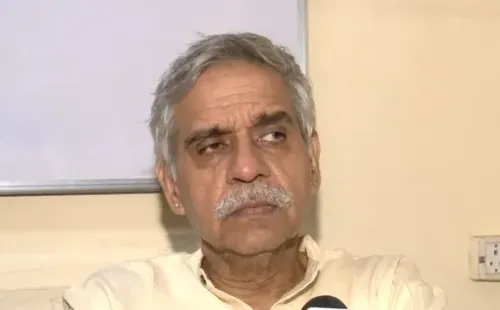
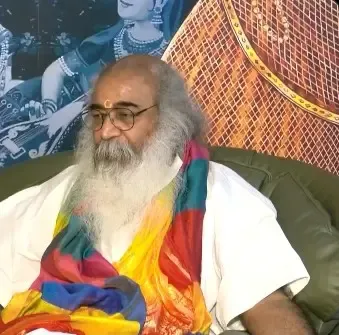
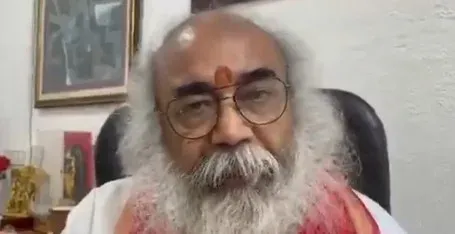
Spiritual leader Acharya Pramod Krishnam on Saturday, 1 August praised Prime Minister Narendra Modi for publicly forgiving students who allegedly made objectionable remarks against him and his late mother during a protest at Jantar Mantar in New Delhi, calling the Prime Minister's gesture a historic example of compassion in Indian public life.
PM Modi's Video Message
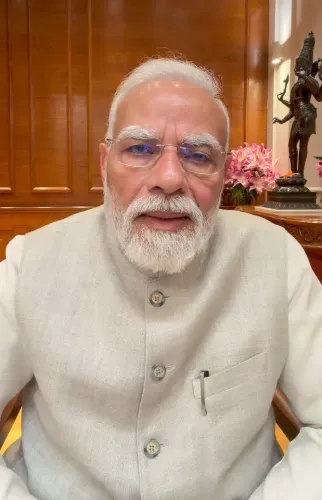
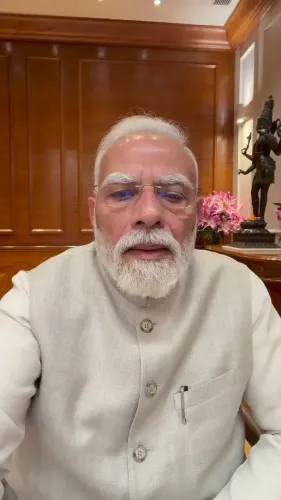
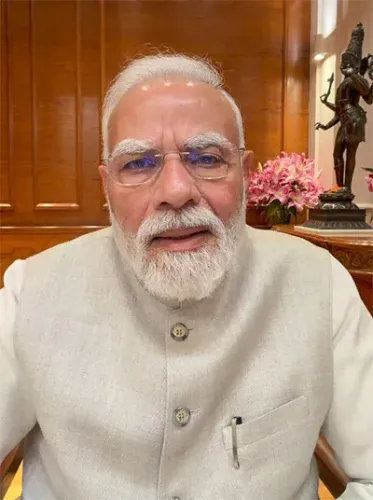
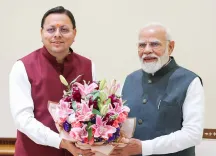
In a video message released on Friday, Prime Minister Modi stated that he wished to forgive all those who had abused him, including remarks directed at his late mother. Modi described the youth involved as 'misguided', emphasising that the government's responsibility was to guide them rather than punish them. 'It is our duty to guide them. Punishing them, dragging them through court proceedings, or harassing them in society will not change the situation,' the Prime Minister said.
Acharya Krishnam Draws Parallels With Buddha and Gandhi
Responding through a self-recorded video, Acharya Pramod Krishnam drew direct parallels between Modi's act of forgiveness and the philosophies of Lord Buddha, Lord Mahavir, and Mahatma Gandhi. He narrated a parable in which a person spat on Lord Buddha out of hatred, only to be embraced in return. According to Acharya Krishnam, the person broke down in tears, fearing that the Lord would now despise him. Lord Buddha's response, as recounted by Krishnam, was: 'I can never hate you because love is all I have to give.'
'The way Prime Minister Modi was abused during the protest at Jantar Mantar, and still he forgave all of them considering them his own children, I was reminded of a story of Gautam Buddha,' Acharya Krishnam said in his video.
A Message Rooted in Indian Culture
Acharya Krishnam stressed that Modi's response was not merely a political statement but a reflection of India's deeper cultural and spiritual tradition. He argued that those who had abused the Prime Minister and his mother needed to understand this tradition. 'This matter is connected to India's culture and tradition,' he said, adding that spreading love was essential for the country's future.
Context: The Jantar Mantar Protest
The remarks at Jantar Mantar — a prominent protest site in central New Delhi — had drawn significant public attention after videos of alleged abusive sloganeering against the Prime Minister and his late mother surfaced. Modi's decision to publicly forgive the protesters, framed as an appeal to guide rather than penalise the youth, marked a notable departure from the adversarial political responses that typically follow such incidents. Notably, this is not the first time a sitting Prime Minister's public act of restraint has been invoked as a civilisational statement — but the explicit invocation of Buddhist and Gandhian parables by a religious figure adds a distinct dimension to the episode.
As debate continues over the appropriate response to political dissent among youth, Modi's message and Acharya Krishnam's endorsement together signal an attempt to reframe the incident as a moment of national moral instruction rather than political confrontation.
Point of View
Which suits the ruling party's cultural messaging. What mainstream coverage underplays is that framing dissenting youth as 'misguided children' in need of guidance, rather than as citizens exercising protest rights, carries its own ideological weight. The episode reveals how spiritual and political authority can be mutually reinforcing in India's public discourse — and how a moment of apparent magnanimity can also function as a soft rebuke.
NationPress
16 Sept 2026
Frequently Asked Questions
What did PM Modi say about the Jantar Mantar protesters?
PM Modi, in a video message released on Friday, said he wished to forgive all those who had abused him and his late mother during the Jantar Mantar protest. He called the youth 'misguided' and said the government's duty was to guide them, not punish or harass them.
Who is Acharya Pramod Krishnam and why did he praise Modi?
Acharya Pramod Krishnam is a spiritual leader who praised PM Modi on Saturday, 1 August, for his public act of forgiveness toward the Jantar Mantar protesters. He compared Modi's gesture to the compassion shown by Lord Buddha, Lord Mahavir, and Mahatma Gandhi.
What was the Buddhist parable Acharya Krishnam narrated?
Acharya Krishnam narrated a story in which a person spat on Lord Buddha out of hatred, and the Lord responded by embracing him. The person wept, fearing the Lord would now hate him, to which Buddha replied: 'I can never hate you because love is all I have to give.' Krishnam drew a parallel between this story and Modi's response to the protesters.
What happened at the Jantar Mantar protest?
During a protest at Jantar Mantar in New Delhi, some individuals allegedly made objectionable remarks against Prime Minister Modi and his late mother. Videos of the alleged abusive sloganeering drew public attention, prompting Modi to release a video message publicly forgiving those involved.
What did PM Modi say about punishing the youth involved?
PM Modi said that 'punishing them, dragging them through court proceedings, or harassing them in society will not change the situation.' He stressed that guiding misguided youth was the government's primary responsibility.