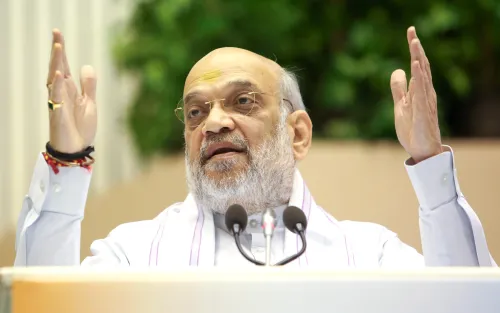
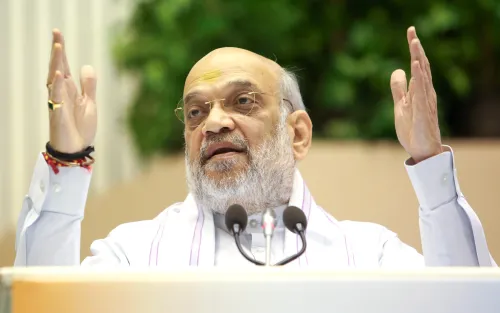
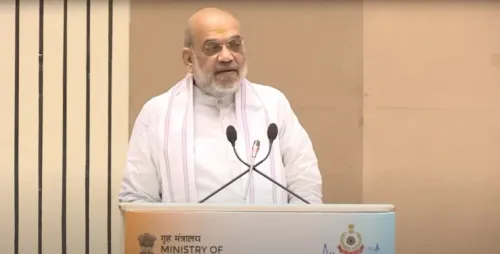
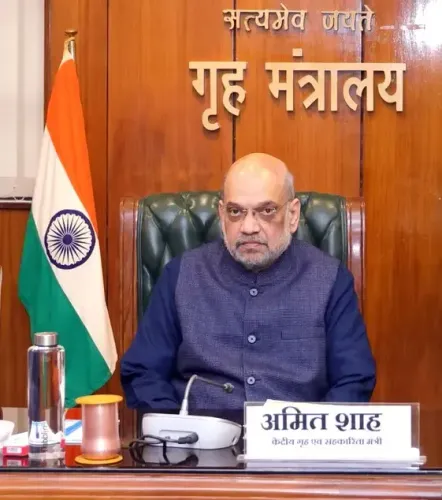
Amit Shah inaugurates NDRF 12th Battalion in Itanagar, hails zero-casualty shift

Synopsis
Home Minister Amit Shah's Itanagar visit was more than a ribbon-cutting — it was a full-throated defence of the Modi government's disaster management overhaul. With NDRF now deployed at over 70 locations, cyclone warnings stretched to seven days, and India sending rescue teams abroad rather than receiving them, Shah's claim of a 'zero-casualty' doctrine shift carries real institutional weight.
Key Takeaways
Union Home Minister Amit Shah inaugurated the NDRF 12th Battalion Campus at Hollongi, Itanagar on 22 November 2026 .
Shah said the Modi government shifted India's disaster management from a relief-centric model to a zero-casualty strategy focused on early warning and prevention.
The NDRF now has an operational footprint at more than 70 locations across India, up significantly since 2014 .
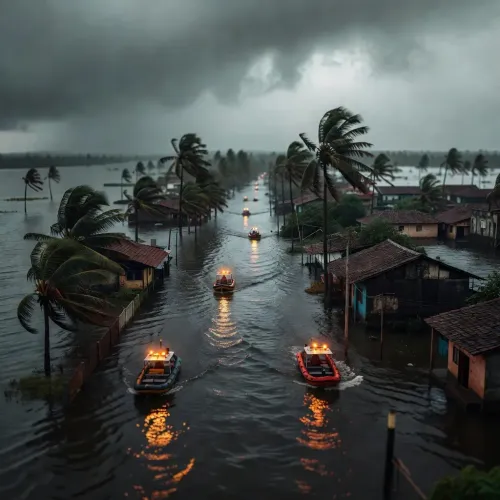
Cyclone early warnings have been extended from 24–48 hours to up to seven days in advance through improved forecasting technology.
The Hollongi campus is built to earthquake-resistant standards and includes an Olympic-size swimming pool and diving tank for specialised rescue training.
The pool will also be available free of charge to athletes from Arunachal Pradesh , with Shah expressing hope it could produce a 2036 Olympics medallist.
Union Home Minister Amit Shah on 22 November 2026 declared that the Modi government has fundamentally reoriented India's disaster management doctrine — moving away from a reactive, relief-centric framework toward a proactive zero-casualty strategy built on early warning, prevention, mitigation, and preparedness. Shah made the remarks while inaugurating the 12th Battalion Campus of the National Disaster Response Force (NDRF) at Hollongi, near Itanagar in Arunachal Pradesh.
A Doctrine Shift Since 2014
Shah outlined a clear before-and-after narrative: prior to 2014, disaster management in India was largely reactive — governments mobilised relief and repair only after a calamity struck. Under the current dispensation, he said, the emphasis has moved decisively to advance action. 'As soon as an alert is received through the early warning system, NDRF and State Disaster Response Force (SDRF) personnel reach out to assist people in vulnerable areas,' Shah said, adding that evacuations now cover not just citizens but also livestock.
'I can confidently say that between 2014 and 2026, the NDRF, SDRF and all state governments, working together, have saved the lives of millions of people,' the Home Minister stated. He attributed this to coordinated policy formulation involving the National Disaster Management Authority (NDMA), NDRF, SDRF, the Ministry of Home Affairs (MHA), and even village-level Patwaris.
Key Features of the Hollongi Campus
The newly inaugurated 12th Battalion Campus at Hollongi has been constructed to earthquake-resistant standards, reflecting the Northeast region's well-documented seismic vulnerability. The campus includes an Olympic-size swimming pool and a dedicated diving tank to train NDRF personnel in water-rescue operations. Shah announced that the pool would also be opened free of charge to swimmers and sporting athletes from Itanagar and across Arunachal Pradesh.
'I am confident that if any swimmer wins a medal at the 2036 Olympics, the journey to that achievement will begin with the waves created in this very pool,' Shah said. The campus is expected to serve as a training hub for NDRF personnel drawn from all Northeastern states, strengthening coordinated disaster response across the region.
Early Warning Systems and Cyclone Preparedness
Shah highlighted a marked improvement in India's forecasting infrastructure, noting that cyclone warnings — which were once issued only 24 to 48 hours in advance — can now be generated up to seven days ahead of landfall. He claimed that several cyclones over the past four years had struck without claiming a single life, attributing this to advanced preparedness and timely evacuations. 'This is the outcome of our advanced preparedness,' he said.
NDRF's Growing Global Footprint
The Home Minister underscored the NDRF's expanding international role, noting that its personnel have been deployed in disaster-relief operations in Japan, Nepal, Türkiye, and Sri Lanka, among others. He framed this as a reversal of historical norms: 'Earlier, whenever a disaster struck, disaster response agencies from across the world would come to India to provide assistance. Today, whenever a disaster strikes anywhere in the world, our NDRF personnel proudly represent India and go there to rescue people.' The force now has an operational deployment footprint at more than 70 locations across the country, up significantly since 2014.
Officials Present
The event was attended by Arunachal Pradesh Chief Minister Pema Khandu, Union Minister of Parliamentary Affairs Kiren Rijiju, Deputy Chief Minister Chowna Mein, Union Home Secretary Govind Mohan, NDRF Director General Piyush Anand, and senior officials from the Home and Cooperation Ministries. The inauguration signals both a physical expansion of NDRF infrastructure in the Northeast and a reaffirmation of the government's stated priority of building disaster resilience at the grassroots level.
Point of View
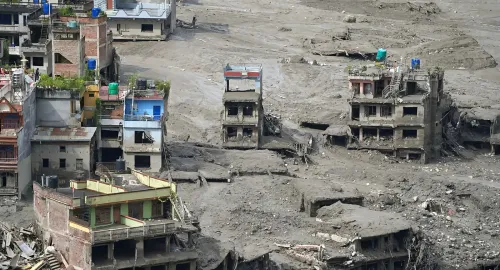
But it invites scrutiny: flood and landslide death tolls in states like Himachal Pradesh, Uttarakhand, and Assam have remained stubbornly high in recent years, suggesting the doctrine shift is uneven in practice. The Northeast's seismic exposure makes the earthquake-resistant construction at Hollongi genuinely significant — but a single battalion campus cannot substitute for the broader infrastructure resilience gaps that amplify disaster mortality in the region. The NDRF's international deployments are a credible metric of institutional growth; the harder, less visible test is whether the last-mile coordination with Patwaris that Shah cited actually functions when a flash flood strikes at 3 am in a remote valley.
NationPress
22 Nov 2026
Frequently Asked Questions
What was inaugurated by Amit Shah in Itanagar on 22 November 2026?
Union Home Minister Amit Shah inaugurated the 12th Battalion Campus of the National Disaster Response Force (NDRF) at Hollongi, near Itanagar in Arunachal Pradesh. The campus includes earthquake-resistant buildings, an Olympic-size swimming pool, and a dedicated diving tank for water-rescue training.
What is India's zero-casualty disaster management strategy?
It is an approach championed by the Modi government that prioritises early warning, prevention, preparedness, and risk reduction over post-disaster relief. The goal is to evacuate people — and their livestock — before a disaster strikes, eliminating casualties rather than simply managing them after the fact.
How has India's cyclone early warning system improved?
According to Shah, cyclone warnings that were previously issued only 24 to 48 hours in advance can now be issued up to seven days ahead of landfall, thanks to modern forecasting technology. He claimed that several cyclones over the past four years struck without claiming a single life as a result.
How many locations does the NDRF now cover across India?
The NDRF has expanded its operational deployment to more than 70 locations across India between 2014 and 2026, up significantly from its earlier footprint. This expansion is designed to enable faster, region-specific disaster response.
Will the new NDRF campus swimming pool be open to the public?
Yes. Shah announced that the Olympic-size swimming pool at the Hollongi campus will be opened free of charge to swimmers and sporting athletes from Itanagar and other parts of Arunachal Pradesh, alongside its primary role in training NDRF personnel for water-rescue operations.