CM Pema Khandu Launches Arunachal Cooperative Vision 2047
Synopsis
Arunachal Pradesh CM Pema Khandu and Union Home Minister Amit Shah unveiled the Cooperative Vision 2047 at Itanagar, distributing loan certificates, seed kits, a NABARD Micro-ATM, and a registration certificate to a women-SHG-born cooperative — anchoring state rural policy to India's Viksit Bharat 2047 framework.
Key Takeaways
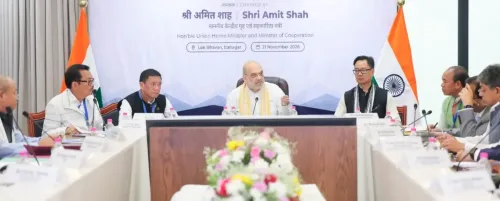
Arunachal Pradesh Cooperative Vision 2047 was unveiled at an Itanagar conference attended by Union Home and Cooperation Minister Amit Shah on 22 November 2026 .
Loan certificates were issued to Laguna Multipurpose Cooperative Society and Wakro LAMPS to expand rural credit access.
BBSSL distributed 25 vegetable seed minikits to primary cooperative societies for smallholder farmers.
NABARD provided a Micro-ATM to Poma Jute Dairy and Livestock Cooperative Society , extending financial infrastructure to remote areas.
Khamayer Aane Multipurpose Cooperative Society , formed from a federation of women SHGs, received its formal registration certificate.
Four cooperatives — Namsai Dairy , Lower Subansiri Fishermen , Kemli LAMPS , and Zhang LAMPS — were recognised for outstanding performance.
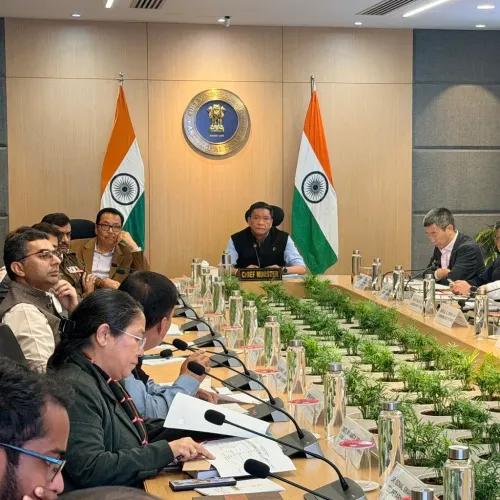
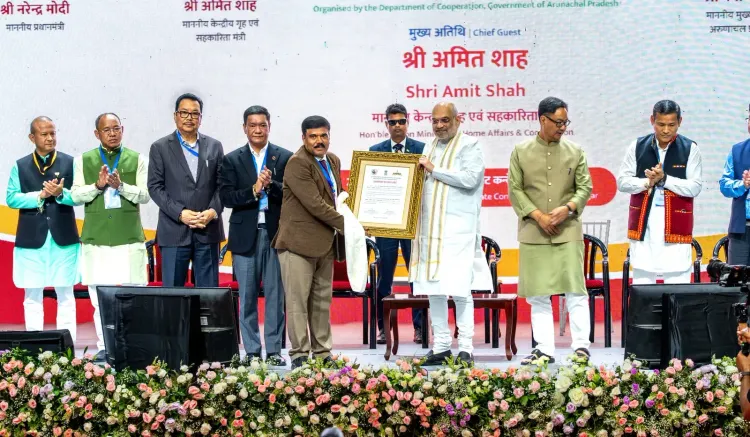
A landmark cooperative conference in Itanagar on 22 November 2026 put Arunachal Pradesh on a new developmental trajectory — with Arunachal Pradesh Chief Minister Pema Khandu and Union Home Minister and Minister of Cooperation Amit Shah jointly unveiling the state's Arunachal Pradesh Cooperative Vision 2047, a blueprint for cooperative-led rural transformation timed precisely to India's centenary of independence.
What the Itanagar Conference Delivered on the Ground
The conference was not just ceremonial. A string of concrete interventions were executed on the spot, reaching communities directly. Loan certificates were disbursed to Laguna Multipurpose Cooperative Society and Wakro LAMPS, injecting formal credit into two grassroots institutions. Bharatiya Beej Sahakari Samiti Limited (BBSSL) distributed 25 vegetable seed minikits to primary societies, giving smallholder farmers access to quality inputs. NABARD handed over a Micro-ATM to Poma Jute Dairy and Livestock Cooperative Society — a small device with an outsized meaning in a state where banking infrastructure is still sparse.
Perhaps the most symbolically resonant moment: a formal registration certificate for Khamayer Aane Multipurpose Cooperative Society, born from a federation of women self-help groups. It signals that the cooperative framework is now actively absorbing the existing SHG network rather than running parallel to it.
Four Cooperatives Recognised for Achievement
The conference also looked back before it looked forward. Four institutions received formal recognition for performance: Namsai Dairy Cooperative Society, Lower Subansiri Fishermen Cooperative Society, Kemli LAMPS (handloom, textiles and weavers), and Zhang LAMPS (PACS/LAMPS category). The spread — dairy, fisheries, handloom, credit — maps almost exactly onto Arunachal's core rural livelihood sectors.
Cooperative Vision 2047 and the National Framework It Fits
The Ministry of Cooperation, created in July 2021 under Amit Shah's charge, was India's most significant structural bet on the cooperative sector in decades. It was designed to modernise primary agricultural credit societies, reduce dormancy, and integrate cooperatives into the Atmanirbhar Bharat framework. The Arunachal Pradesh Cooperative Vision 2047 document unveiled today slots neatly into that national architecture — the 2047 timeline explicitly mirrors the Centre's Viksit Bharat 2047 goal.
Northeastern states have historically lagged in cooperative density compared to Gujarat or Maharashtra. Targeted LAMPS support and NABARD-linked credit facilities have been part of the Centre's corrective push for the region. Arunachal's decision to anchor a state-level vision document to the same centenary horizon is a deliberate alignment signal — both political and administrative.
CM Khandu framed it plainly: 'A strong cooperative movement is essential to transforming our rural economy, empowering communities and building a self-reliant Arunachal Pradesh.' That framing — rural economy, community empowerment, self-reliance — is virtually identical to the language of the central cooperative ministry. The vocabulary is shared; the execution now needs to be local.
What the Rollout Needs to Deliver Next
The real test of Vision 2047 will come in the registration pipeline — how many new societies are formed, how many existing LAMPS are revived, and whether NABARD credit actually reaches the last mile in districts like Anjaw, Dibang Valley, and other remote interiors. The Micro-ATM handed to Poma Jute Dairy is a proof-of-concept; scaling that model across the state's difficult terrain is the harder act.
Amit Shah's presence at a state-level cooperative conference in the Northeast is itself a signal worth reading: other states in the region are likely watching Itanagar today for a template to replicate.
Point of View
Reinforcing BJP's cooperative-sector narrative with tangible on-ground deliverables. Amit Shah's personal presence at a state-level event in the Northeast elevates its visibility well beyond routine policy — it functions as a signal to other northeastern governments that the cooperative ministry's attention and resources are available to states that build institutional frameworks. The inclusion of a women-SHG-born cooperative in the registration list also suggests a deliberate strategy to convert the existing SHG ecosystem into the formal cooperative structure, which could significantly expand the sector's reach. Whether the Vision 2047 document translates into measurable credit disbursal and cooperative revival in Arunachal's most remote districts will determine whether today's conference is remembered as a turning point or a well-photographed ceremony.
NationPress
22 Nov 2026
Frequently Asked Questions
What is the Arunachal Pradesh Cooperative Vision 2047?
It is a state-level vision document unveiled on 22 November 2026 that lays out a roadmap for cooperative-led rural transformation in Arunachal Pradesh by 2047, aligned with India's Viksit Bharat 2047 national goal.
Who attended the cooperative conference in Itanagar in November 2026?
Union Home Minister and Minister of Cooperation Amit Shah and Arunachal Pradesh Chief Minister Pema Khandu were the key figures at the Itanagar cooperative conference held on 22 November 2026.
What is LAMPS in the context of Arunachal Pradesh cooperatives?
LAMPS stands for Large-sized Adivasi Multipurpose Societies, which serve tribal communities in states like Arunachal Pradesh by providing credit, agricultural inputs, and market linkages through the cooperative network.
What did NABARD provide at the Itanagar cooperative conference?
NABARD provided a Micro-ATM to Poma Jute Dairy and Livestock Cooperative Society at the conference, extending basic banking infrastructure to a rural cooperative in Arunachal Pradesh.
What is the Ministry of Cooperation and when was it formed?
India's Ministry of Cooperation was established in July 2021 to modernise and promote the country's cooperative sector, with Amit Shah as its minister. It aims to revive primary agricultural credit societies and integrate cooperatives into the Atmanirbhar Bharat framework.