CM Pema Khandu hails NDRF 12th Battalion campus inauguration at Hollongi
Synopsis
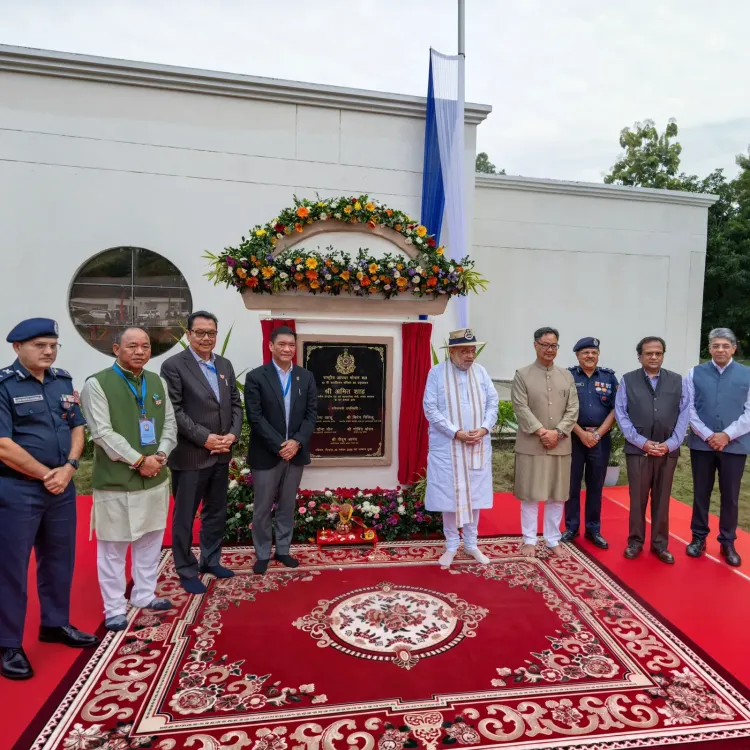
Arunachal Pradesh CM Pema Khandu welcomed the inauguration of the permanent 12th NDRF Battalion campus at Hollongi by Union Home Minister Amit Shah, eight years after its foundation stone was laid in December 2018, calling it a major boost to the state's disaster preparedness.
Key Takeaways
Union Home Minister Amit Shah inaugurated the permanent campus of the 12th Battalion NDRF at Hollongi, Arunachal Pradesh .
The foundation stone was laid in December 2018 when Kiren Rijiju was Union Minister of State for Home Affairs.
CM Pema Khandu credited PM Modi , Amit Shah , and Kiren Rijiju for making the project a reality.
The 12th NDRF Battalion is the Northeast-focused unit of the National Disaster Response Force, operating under the Ministry of Home Affairs .
A permanent campus replaces earlier temporary deployments, enabling faster mobilisation in Arunachal's remote, seismically active terrain.
Eight years after a foundation stone was laid in Hollongi, Arunachal Pradesh, a vision for stronger disaster response in India's most seismically active frontier has become concrete — and Arunachal Pradesh Chief Minister Pema Khandu wants the country to know exactly who made it happen.
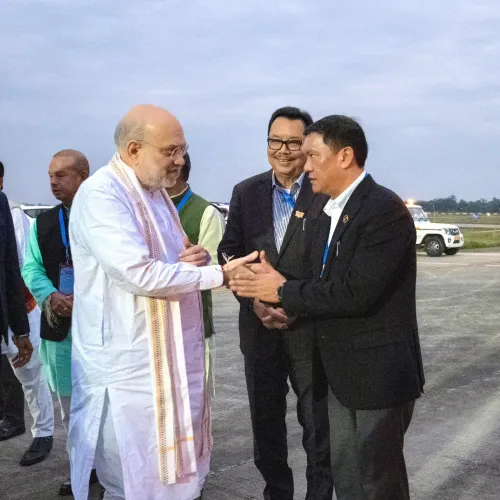
Taking to X on Sunday, November 22, 2026, CM Khandu thanked Prime Minister Narendra Modi and Union Home Minister Amit Shah for their 'continued support in strengthening Arunachal Pradesh's disaster management infrastructure.' The immediate trigger: Amit Shah's inauguration of the permanent campus of the 12th Battalion of the National Disaster Response Force (NDRF) at Hollongi — a facility that now gives the Northeast a dedicated, full-scale disaster response base.
From foundation stone to full campus: the Hollongi journey
The story of this campus begins in December 2018, when the foundation stone was laid during the tenure of Kiren Rijiju as Union Minister of State for Home Affairs. Khandu was explicit in his credit, noting that Rijiju — now a Union Cabinet Minister — was 'instrumental in bringing this project to Arunachal Pradesh.' That political ownership, spanning governments and ministerial portfolios over nearly eight years, is itself a signal about how long large infrastructure bets in the Northeast take to mature.
The NDRF's 12th Battalion is the force's Northeast-oriented unit, operating under the Ministry of Home Affairs. Its permanent campus at Hollongi, near the state capital region, replaces what had been a temporary deployment arrangement — a shift that matters enormously in terrain where rapid response can mean the difference between a manageable rescue and a catastrophe.
Why Arunachal's geography makes this campus non-negotiable
Arunachal Pradesh sits at the intersection of multiple seismic zones and experiences severe annual flooding. Remote valleys, limited road connectivity, and weather windows that close fast make pre-positioned disaster response assets critical. A permanent base means trained NDRF teams are co-located with their heavy equipment, can conduct regular joint exercises with State Disaster Management Authority personnel, and can mobilise faster than any unit airlifted from outside the region.
The broader federal push to build permanent NDRF campuses — rather than rotate temporary deployments — reflects a hard lesson from past Northeast disasters: response time is infrastructure too. The Hollongi campus locks in that lesson in steel and concrete.
Modi government's Northeast disaster push
The inauguration fits a wider pattern under the Modi government of expanding NDRF presence in flood- and earthquake-prone states in India's Northeast, reducing the dependency on battalions based in distant plains cities. For Arunachal Pradesh, a state sharing a long and sensitive border with China and prone to glacial lake outburst floods, having sovereign, well-equipped disaster response capacity is as much a strategic asset as a humanitarian one.
The next question for Arunachal watchers: how quickly the new campus reaches full operational capacity, and whether this inauguration is followed by announcements on additional equipment allocations or new NDRF units for the broader Northeast corridor.
Point of View
Logistics-ready bases across the disaster-prone Northeast — a strategy with both humanitarian and strategic dimensions given Arunachal Pradesh's sensitive border geography. CM Khandu's careful attribution of credit to Rijiju (the 2018 architect), Shah (the 2026 inaugurator), and Modi (the overarching political patron) reflects the BJP's deliberate effort to frame federal infrastructure investment as a party-wide achievement ahead of any future state electoral cycle. The eight-year gestation also quietly underscores how infrastructure timelines in remote Himalayan states remain stubbornly long, even with political will in place. The real test now is operationalisation speed and whether the Northeast gets a broader NDRF expansion in its wake.
NationPress
22 Nov 2026
Frequently Asked Questions
What is the 12th Battalion NDRF and where is it located?
The 12th Battalion of the National Disaster Response Force (NDRF) is the Northeast-focused disaster response unit under India's Ministry of Home Affairs. Its permanent campus has been established at Hollongi in Arunachal Pradesh, near the state capital region.
Who inaugurated the NDRF permanent campus at Hollongi?
Union Home Minister Amit Shah inaugurated the permanent campus of the 12th Battalion NDRF at Hollongi, Arunachal Pradesh.
When was the foundation stone of the Hollongi NDRF campus laid?
The foundation stone was laid in December 2018 when Kiren Rijiju was serving as Union Minister of State for Home Affairs, and he is credited with bringing the project to Arunachal Pradesh.
Why is a permanent NDRF campus important for Arunachal Pradesh?
Arunachal Pradesh lies in a high seismic zone and faces severe annual flooding. Its remote terrain and limited road connectivity make pre-positioned disaster response assets critical. A permanent campus allows faster mobilisation and better coordination with state authorities compared to temporary deployments.
What did CM Pema Khandu say about the NDRF Hollongi inauguration?
CM Pema Khandu thanked PM Narendra Modi, Home Minister Amit Shah, and Kiren Rijiju for their roles in making the project a reality, calling the inauguration a significant boost to Arunachal Pradesh's disaster preparedness and emergency response capabilities.