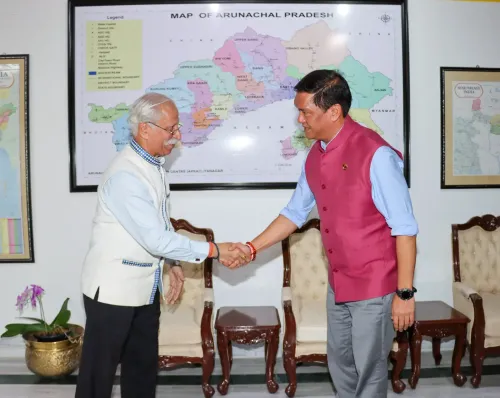
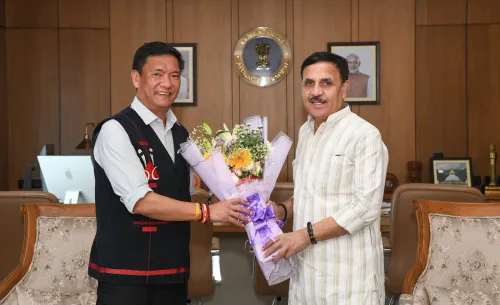
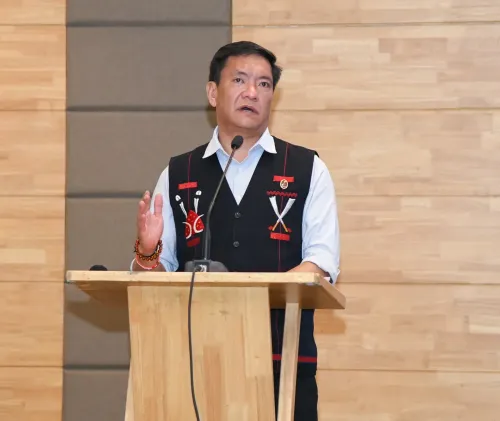
CM Pema Khandu reviews prep for Amit Shah's Arunachal visit
Synopsis
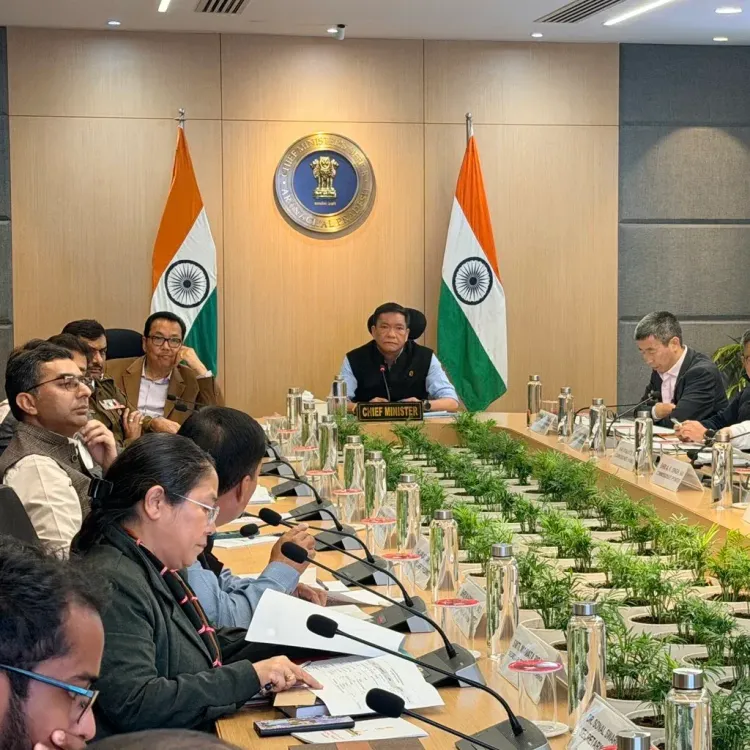
Arunachal Pradesh CM Pema Khandu and DyCM Chowna Mein held a senior-officer review meeting on November 19 to finalise arrangements for Union Home Minister Amit Shah's scheduled visit to the strategically vital border state.
Key Takeaways
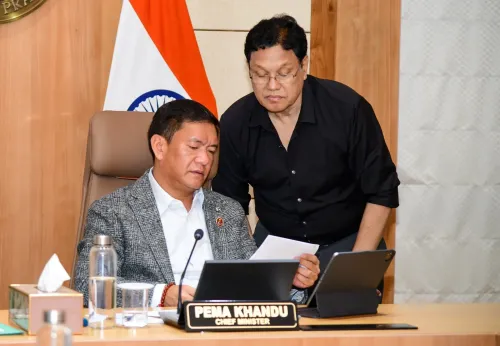
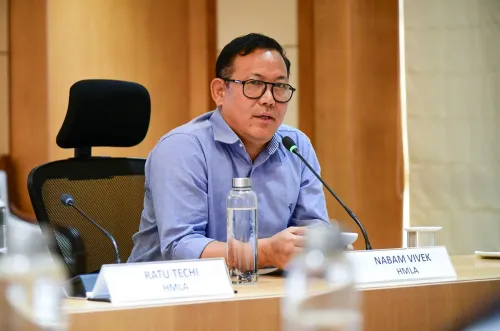
CM Pema Khandu chaired the coordination meeting with Deputy CM Chowna Mein present alongside senior state officers.
The meeting was called specifically to review arrangements for Union Home Minister Amit Shah's upcoming visit to Arunachal Pradesh .
All concerned departments were directed to work in close coordination for a smooth and successful visit.
Arunachal Pradesh shares borders with China, Myanmar, and Bhutan , making high-level Central visits strategically significant.
Amit Shah holds the dual portfolio of Home Minister and Minister of Cooperation , widening the potential scope of his visit's agenda.
Arunachal Pradesh Chief Minister Pema Khandu chaired a high-level coordination meeting on Thursday, November 19, bringing together senior state officers to lock down every logistical and protocol detail ahead of a scheduled visit by Union Home Minister Amit Shah — a visit that carries particular weight for a frontier state that shares borders with China, Myanmar, and Bhutan.
Deputy Chief Minister Chowna Mein was present at the meeting as Khandu directed all concerned departments to work 'in close coordination' and ensure arrangements are 'smooth and successful.' The joint presence of both the CM and DyCM signals the state government's intent to treat the visit as a priority event at the highest level.
Why a Home Minister's visit to Arunachal carries strategic weight
Arunachal Pradesh is not a routine state visit destination. As India's largest northeastern state by area, it sits at the intersection of live border sensitivities — the Line of Actual Control with China runs along its entire northern flank — and an ongoing push to accelerate infrastructure and development connectivity in the region. High-level Central visits here routinely produce announcements on security posture, road and tunnel projects, or Centre-state cooperation frameworks.
Shah holds a dual portfolio as Minister of Cooperation as well, meaning the visit's agenda could span internal security, border management, and cooperative development initiatives in the same breath. That breadth makes advance coordination across departments — from security agencies to public works to district administration — essential rather than ceremonial.
Routine protocol, non-routine stakes
Indian state governments routinely hold such preparatory meetings ahead of Union minister visits, but the Arunachal context elevates the drill. Central security agencies and state machinery must synchronise on a terrain that is geographically complex and strategically sensitive. The meeting Khandu chaired is the visible tip of that coordination pyramid.
With BJP holding power both at the Centre and in Itanagar, the political temperature around the visit is cooperative rather than competitive — which typically allows such preparatory processes to move faster and with fewer friction points between state and Central teams.
All eyes now turn to what Amit Shah's visit actually delivers: whether it brings a new infrastructure commitment, a security review, or a signal on the Northeast's place in the broader national policy agenda.
Point of View
Infrastructure push, or Centre-Northeast relations. With BJP holding power at both levels, the visit is likely to be choreographed for maximum political and policy dividend. The dual cooperation portfolio Shah carries means any announcements could cut across security and development simultaneously, reinforcing the Centre's 'Viksit Poorvottar' (developed Northeast) narrative. Watch whether the visit produces a concrete commitment — a project, a framework, a review directive — or remains largely symbolic.
NationPress
19 Nov 2026
Frequently Asked Questions
Why is Amit Shah visiting Arunachal Pradesh?
The specific agenda of Amit Shah's scheduled visit to Arunachal Pradesh has not been officially announced. High-level Union minister visits to the state typically cover internal security, border management, and development coordination given its strategic location.
Who is the Deputy Chief Minister of Arunachal Pradesh?
Chowna Mein is the Deputy Chief Minister of Arunachal Pradesh. He was present alongside CM Pema Khandu at the November 19 coordination meeting.
What portfolios does Amit Shah hold?
Amit Shah serves as the Union Home Minister and also holds the portfolio of Minister of Cooperation in the Government of India.
Why is Arunachal Pradesh strategically important for the central government?
Arunachal Pradesh shares borders with China, Myanmar, and Bhutan , making it one of India's most sensitive frontier states. It is a focal point for internal security, border infrastructure development, and China policy discussions.
What is Pema Khandu's role in Arunachal Pradesh?
Pema Khandu has been the Chief Minister of Arunachal Pradesh since 2016 and is a senior leader of the Bharatiya Janata Party (BJP) .