CM Pema Khandu Marks Janjatiya Gaurav Divas, Inaugurates TRI in Itanagar
Synopsis
On Janjatiya Gaurav Divas, CM Pema Khandu joined PM Modi's programme honouring Birsa Munda and inaugurated Arunachal's new Tribal Research Institute in Itanagar, invoking the state's pre-1857 Tai Khamti resistance as proof of tribal India's earliest anti-colonial courage.
Key Takeaways
Janjatiya Gaurav Divas , observed on 15 November every year, marks the birth anniversary of tribal icon Birsa Munda (born 1875 ) and was instituted by the central government in 2021 .
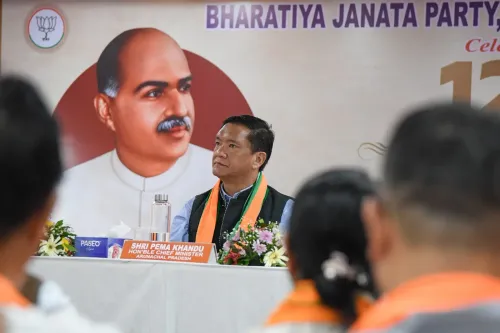
CM Pema Khandu attended PM Modi 's national programme from Gadchiroli, Maharashtra before proceeding to Itanagar for state-level events.
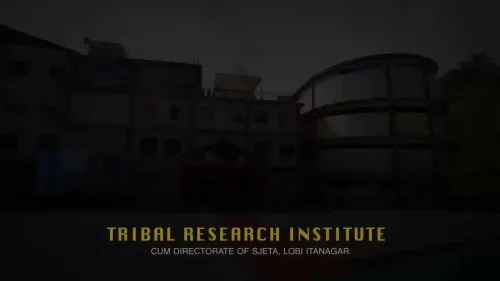
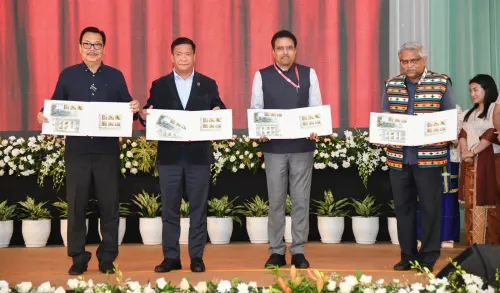
The Tribal Research Institute (TRI)-cum-Office of the Directorate of SJETA was inaugurated at Itanagar to consolidate tribal research and welfare administration in Arunachal Pradesh .
Khandu highlighted the Tai Khamti resistance of 1839 — predating the Revolt of 1857 by eighteen years — as evidence of Arunachal's early anti-colonial struggle.
The Anglo-Abor Wars were also cited as part of the state's tribal freedom-fighter legacy that the new TRI is expected to document.
Central government policy since 2014 has increasingly foregrounded pre-1857 tribal resistance movements, with the Northeast as a key focus.
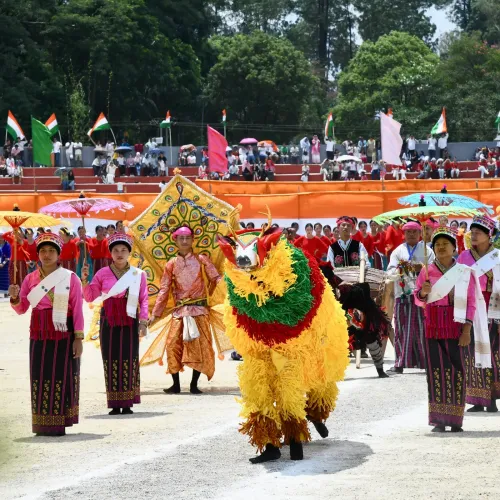
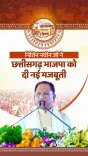
A national day of tribal pride took on special weight in Arunachal Pradesh on Sunday, 15 November 2026, as Chief Minister Pema Khandu joined Prime Minister Narendra Modi's programme honouring Bhagwan Birsa Munda from Gadchiroli, Maharashtra — and then returned home to cut the ribbon on a landmark institution for his own state's indigenous communities.
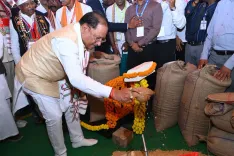
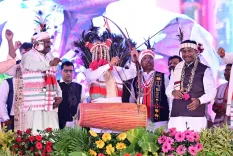
Khandu posted on X that the day unfolded in two acts: participation in the Prime Minister's national Janjatiya Gaurav Divas event, followed by the inauguration of the Tribal Research Institute (TRI)-cum-Office of the Directorate of SJETA at Itanagar. The new institute is designed to anchor research, documentation, and welfare administration for Arunachal Pradesh's diverse tribal communities under a single roof.
Birsa Munda's birth anniversary and the making of a national observance
Janjatiya Gaurav Divas is observed every 15 November — the birth anniversary of Birsa Munda, the revered Munda tribal leader born in 1875 whose resistance against British colonial rule made him a symbol of indigenous defiance. The central government instituted the observance in 2021 specifically to lift unsung tribal freedom fighters out of the footnotes of history and into the national mainstream.
The Ministry of Tribal Affairs has anchored the day with events across states, connecting a broader policy arc that — since 2014 — has systematically elevated pre-1857 tribal resistance movements into the official independence narrative. The Northeast, with its layered histories of indigenous armed resistance, has been a particular focus of that effort.
The Tai Khamti uprising of 1839: older than the Revolt of 1857
Khandu used the occasion to make a pointed historical argument. He invoked the Tai Khamti resistance against the British in 1839 — nearly two decades before the Revolt of 1857 — and the Anglo-Abor Wars, placing Arunachal Pradesh's tribal ancestors squarely within the first line of India's anti-colonial struggle. 'Our tribal ancestors fought to defend their land, identity and freedom,' he wrote, calling Janjatiya Gaurav Divas 'the right occasion and platform to remember our unsung cultural heroes.'
The reference to 1839 is deliberate and historically significant. It pre-dates the conventionally taught watershed of 1857 by eighteen years, reinforcing the government's argument that tribal resistance was not peripheral to the freedom movement — it was its earliest chapter.
A new research home for Arunachal's tribal heritage
The inauguration of the TRI at Itanagar gives that historical argument an institutional backbone. Tribal Research Institutes, funded by the Ministry of Tribal Affairs, have operated across Indian states since the 1980s, tasked with documenting indigenous histories and supporting welfare scheme delivery. Arunachal Pradesh, home to more than 26 major tribes speaking dozens of languages, presents one of the richest — and most under-documented — research fields in the country.
Combining the TRI with the Directorate of SJETA (Social Justice, Empowerment and Tribal Affairs) under one roof is a structural move: it places research capacity directly alongside the administrative machinery that disburses tribal welfare programmes, with the potential to make policy more responsive to documented community realities.
The stories the new institute chooses to tell first — and whose voices it amplifies — will signal just how seriously that mandate is taken.
Point of View
The party positions itself as a corrective force in the writing of Indian history, a framing that resonates especially in states like Arunachal Pradesh where indigenous identity and sovereignty have always been politically charged. The TRI inauguration is the more durable of the two acts: institutions outlast ceremonies, and how the new body funds and frames its research will ultimately determine whether tribal heritage becomes living policy or decorative commemoration. The Northeast's tribal constituencies, long sensitive to questions of historical erasure, will be watching.
NationPress
15 Nov 2026
Frequently Asked Questions
What is Janjatiya Gaurav Divas and when is it observed?
Janjatiya Gaurav Divas is a national day observed every 15 November to honour tribal freedom fighters and cultural heritage. It was instituted by the central government in 2021 on the birth anniversary of tribal icon Birsa Munda , who was born on 15 November 1875.
What did CM Pema Khandu inaugurate on Janjatiya Gaurav Divas 2026?
CM Pema Khandu inaugurated the Tribal Research Institute (TRI)-cum-Office of the Directorate of SJETA at Itanagar on 15 November 2026, a new institution meant to support research on Arunachal Pradesh's tribal communities and streamline welfare administration.
What is the Tai Khamti resistance of 1839 that Pema Khandu mentioned?
The Tai Khamti resistance of 1839 refers to an uprising by the Tai Khamti tribal community of present-day Arunachal Pradesh against British colonial forces — occurring nearly 18 years before the Revolt of 1857 . CM Khandu cited it to establish that Arunachal's tribal ancestors were among India's earliest anti-colonial fighters.
What are the Anglo-Abor Wars?
The Anglo-Abor Wars were a series of conflicts between British colonial forces and the Adi (Abor) tribal people of present-day Arunachal Pradesh. CM Khandu invoked them alongside the 1839 Tai Khamti resistance as examples of tribal freedom struggles that predate or parallel the mainstream independence movement.
What does SJETA stand for in the context of the new Itanagar institute?
SJETA stands for Social Justice, Empowerment and Tribal Affairs , the directorate in Arunachal Pradesh responsible for implementing tribal welfare schemes. The new TRI shares its premises with the SJETA Directorate to link research directly with administrative and policy functions.