CM Pema Khandu joins PM Modi's TRI inauguration on Janjatiya Gaurav Divas
Synopsis
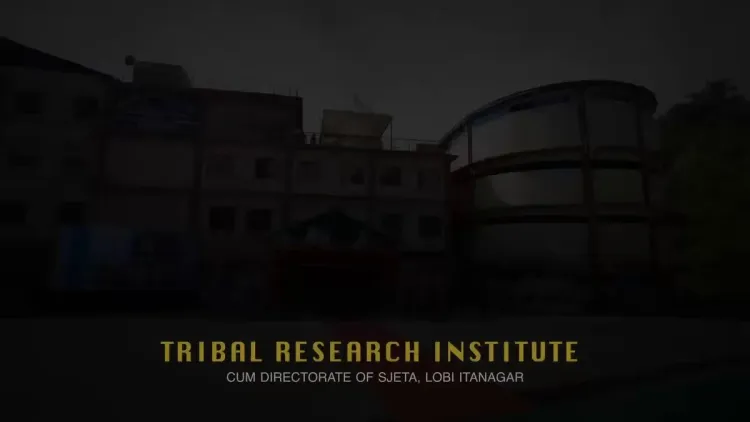
Prime Minister Narendra Modi inaugurated the Tribal Research Institute-cum-SJETA Directorate office at Itanagar on Janjatiya Gaurav Divas. CM Pema Khandu joined virtually, emphasising its importance for documenting the histories of Arunachal Pradesh's many distinct tribal communities.
Key Takeaways
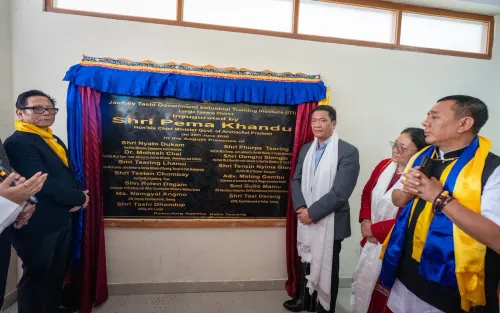
Prime Minister Narendra Modi inaugurated the Tribal Research Institute (TRI)-cum-Office of the Directorate of SJETA at Itanagar on 15 November 2026 .
The inauguration was held on Janjatiya Gaurav Divas , observed annually on 15 November to honour tribal leaders including Birsa Munda .
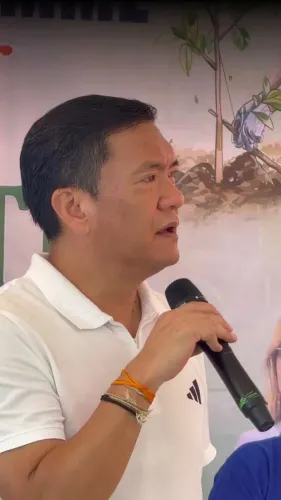
CM Pema Khandu participated virtually and described the institution as of 'immense significance' for Arunachal Pradesh.
The TRI is mandated to research, document, and promote the histories and contributions of the state's numerous Scheduled Tribes .
The facility co-locates the TRI with the Directorate of SJETA , linking academic research directly to tribal welfare administration.
The Ministry of Tribal Affairs has supported similar TRI launches across states with large tribal populations as part of a national tribal heritage drive.
On Janjatiya Gaurav Divas, 15 November 2026, Prime Minister Narendra Modi inaugurated the Tribal Research Institute (TRI)-cum-Office of the Directorate of SJETA at Itanagar — giving Arunachal Pradesh's dozens of distinct tribal communities an institutional home for the first time. Arunachal Pradesh Chief Minister Pema Khandu joined the ceremony live, calling the institution one of 'immense significance' for a state that is, by any measure, one of India's most ethnically diverse.
A landmark in Itanagar on tribal heritage day
Janjatiya Gaurav Divas has been observed nationally since 2021, anchored on 15 November — the birth anniversary of tribal icon Birsa Munda — to honour the contributions of India's indigenous peoples and their leaders. Choosing this occasion for the Itanagar inauguration is a deliberate signal: the new TRI is not just administrative infrastructure, it is a statement about whose histories get institutionally recorded.
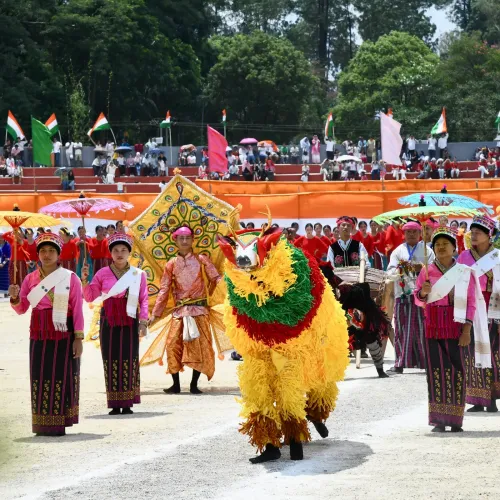
Arunachal Pradesh is home to one of the highest concentrations of Scheduled Tribes in any Indian state, with communities whose oral traditions, land-use practices, and governance systems remain only partially documented. For years, tribal leaders and scholars have flagged the absence of a dedicated state-level research body. The TRI is designed to fill that gap.
TRI and SJETA: research meets welfare under one roof
The new facility pairs the Tribal Research Institute with the Directorate of Social Justice, Empowerment and Tribal Affairs (SJETA) — combining academic documentation with the administrative machinery that delivers welfare schemes on the ground. That pairing matters: research findings can directly inform policy, and SJETA's field reach can supply the TRI with community data that no library alone could provide.
CM Khandu underlined exactly this potential, noting that the TRI can provide 'an institutional platform to research, document and bring these histories and contributions to wider recognition.' The Ministry of Tribal Affairs has supported similar institute launches across states with large tribal populations, part of a broader national push to mainstream indigenous heritage through dedicated infrastructure.
What the TRI means for Arunachal's tribal communities
The stakes are concrete. Arunachal Pradesh's tribal communities span a remarkable range of languages, rituals, and ecological knowledge systems — many of which exist only in living memory. Without systematic documentation, that knowledge is one generation away from irretrievable loss. A functioning TRI changes the calculus: it creates an archive, a research mandate, and — crucially — a budget line.
What comes next will define whether the inauguration is a turning point or a ribbon-cutting. The TRI's first research agenda, its publication pipeline, and its links to central tribal-affairs funding will tell the real story.
Point of View
Launching such infrastructure on Birsa Munda's birth anniversary reinforces the party's claim to being the custodian of tribal identity, a positioning with direct electoral relevance across India's tribal belt. For Arunachal Pradesh specifically, the co-location of a research body with the welfare directorate is a structural bet: that evidence-based policy can accelerate outcomes for communities that formal administration has long underserved. Whether the TRI develops genuine research independence or remains largely ceremonial will be the measure of that bet.
NationPress
15 Nov 2026
Frequently Asked Questions
What is the Tribal Research Institute inaugurated at Itanagar?
The Tribal Research Institute (TRI) is a new state-level institution in Itanagar set up to research, document, and promote the histories and cultural contributions of Arunachal Pradesh's many distinct tribal communities. It is co-located with the Directorate of SJETA.
What is Janjatiya Gaurav Divas and why is it celebrated on 15 November?
Janjatiya Gaurav Divas is an annual national observance on 15 November , the birth anniversary of tribal freedom fighter Birsa Munda , to honour the contributions of India's indigenous and tribal peoples. It has been observed nationally since 2021 .
Why did CM Pema Khandu call the TRI significant for Arunachal Pradesh?
Arunachal Pradesh is home to one of the highest concentrations of Scheduled Tribes in any Indian state. CM Khandu said the TRI gives these communities an institutional platform for research and documentation of their histories, which have largely lacked such formal recognition.
What does SJETA stand for and what does it do?
SJETA stands for Social Justice, Empowerment and Tribal Affairs. It is the Arunachal Pradesh government directorate responsible for administering welfare schemes and empowerment programmes for the state's tribal communities.
Has the central government set up similar tribal research institutes in other states?
Yes. The Ministry of Tribal Affairs has supported the establishment of Tribal Research Institutes across multiple states with large tribal populations as part of a broader national effort to document indigenous heritage and strengthen tribal welfare delivery.