PM Modi praises Kerala swimmer Saji Valasheril for training 15,000 in Mann Ki Baat
Synopsis
A boat accident that killed students years ago pushed Saji Valasheril of Aluva, Kerala, to start a free river-based swimming club. More than 15,000 people — including specially-abled children — have since learned to swim. PM Modi used the 134th Mann Ki Baat to tell that story to the nation.
Key Takeaways
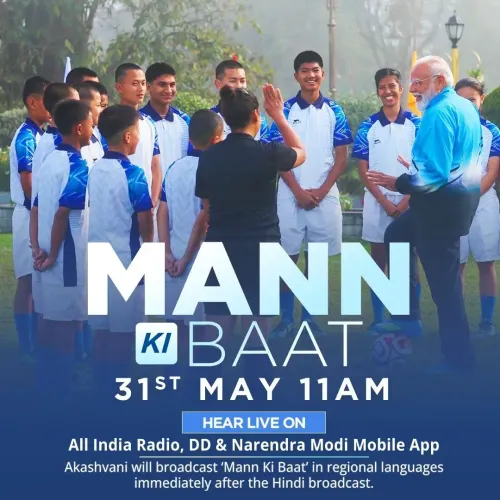
PM Modi highlighted Saji Valasheril's free swimming club in Aluva, Kerala during the 134th Mann Ki Baat episode on 31 May .
More than 15,000 people have been trained to swim at the club, including Divyang (specially-abled) children .
The initiative was sparked by a boat accident in which several students lost their lives, motivating Valasheril to act.
The club charges no fees and operates from a river , with no formal building or classroom infrastructure.
Modi drew a broader lesson: 'Service doesn't require vast resources; what's needed is a good intent and consistent effort.'
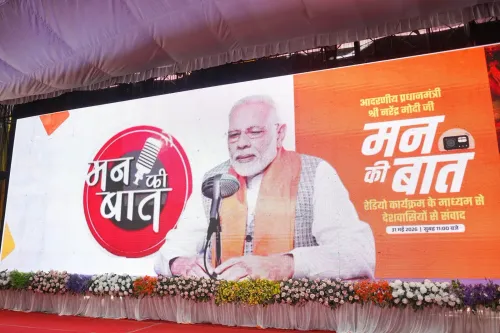
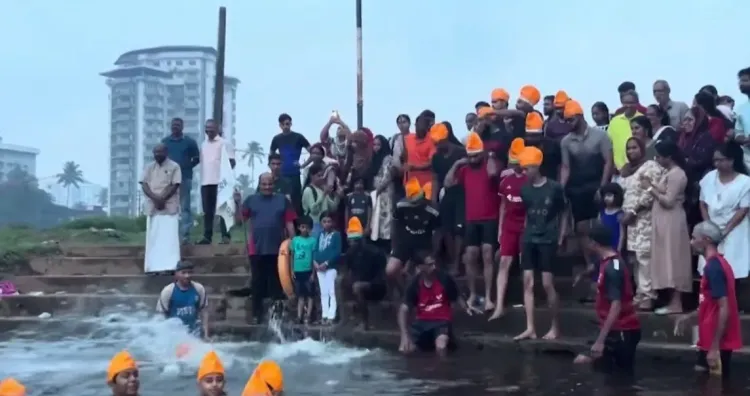
Prime Minister Narendra Modi on Sunday, 31 May lauded a grassroots swimming initiative in Aluva, Kerala, spotlighting how one man's resolve — born from tragedy — has equipped more than 15,000 people, including specially-abled children, with a life-saving skill. The tribute came during the 134th episode of Modi's monthly radio programme, Mann Ki Baat.
The Man Behind the Mission
Saji Valasheril, a resident of Aluva, runs a free swimming club on the banks of a river, charging no fees and requiring no formal infrastructure. His students range from young children to adults, and the club has notably extended its reach to Divyang (specially-abled) children — a segment rarely served by conventional swimming programmes.
The initiative traces its origins to a personal shock. According to Prime Minister Modi, a boat accident some years ago claimed the lives of several students. That tragedy, Modi recounted, prompted Valasheril to ask a simple but consequential question: could those lives have been saved if the victims had known how to swim?
What PM Modi Said
Describing the club to his radio audience, Modi painted a vivid picture: 'Imagine a school where children, both young and old, attend, where there are no fees, no large buildings, no classrooms, and, most interestingly, classes are held in a river,' he said.
He was careful to underscore that the account was not allegorical. 'This isn't a story. This is a true effort. In Aluva, Kerala, Saji Valasheril runs one such swimming club. More than 15,000 people have learned to swim here,' Modi told listeners.
Drawing out the broader lesson, the Prime Minister added: 'Service doesn't require vast resources; what's needed is a good intent and consistent effort. On the strength of these alone, the lives of thousands can be transformed.'
Why the Initiative Matters
Drowning remains a significant public health concern in India, particularly in riverine states like Kerala, where water bodies are woven into daily life. Community-level swimming literacy programmes directly address a gap that formal school curricula rarely fill, especially in rural and semi-urban areas.
Valasheril's model — free, river-based, inclusive of differently-abled participants — is notable for its near-zero cost structure. It demonstrates that scalable social impact does not always require institutional funding or government backing.
Mann Ki Baat as a Platform for Grassroots Stories
Modi has consistently used Mann Ki Baat, which completed its 134th episode this month, to amplify unsung citizen efforts. The programme's format — a direct address to radio listeners across the country — gives national visibility to local changemakers who would otherwise remain outside mainstream media coverage.
Notably, the Prime Minister chose to highlight this story during the summer vacation period, framing Valasheril's river school as an alternative model of learning at a time when children are away from formal classrooms.
What Comes Next
No government scheme or formal recognition for Valasheril was announced alongside the mention, but past Mann Ki Baat spotlights have often translated into wider attention and, in some cases, institutional support for featured individuals. Whether Valasheril's model will attract replication in other water-adjacent states remains to be seen.
Point of View
Apolitical citizen hero. But the story also quietly indicts a systemic gap: drowning prevention is not a mandated part of school curricula in most Indian states, and river-adjacent communities remain disproportionately vulnerable. Valasheril's model works because it is hyper-local and zero-cost, which also means it is hard to replicate at scale without structural support. The national shoutout is welcome; the harder question is whether it prompts any policy follow-through on water safety education.
NationPress
25 Sept 2026
Frequently Asked Questions
Who is Saji Valasheril and what did he do?
Saji Valasheril is a resident of Aluva, Kerala, who runs a free, river-based swimming club that has trained more than 15,000 people, including specially-abled children. He started the initiative after a boat accident killed several students, believing swimming literacy could have saved lives.
What did PM Modi say about Saji Valasheril on Mann Ki Baat?
PM Modi praised Valasheril during the 134th episode of Mann Ki Baat on 31 May, calling his club a real example of social commitment. Modi quoted him as proof that 'service doesn't require vast resources — what's needed is a good intent and consistent effort.'
What is Mann Ki Baat and why does it matter?
Mann Ki Baat is Prime Minister Narendra Modi's monthly radio programme, broadcast across India, in which he addresses citizens directly and highlights grassroots stories. The 134th episode aired on 31 May and featured Valasheril's swimming initiative among its key segments.
Where is Saji Valasheril's swimming club located?
The club operates in Aluva, a town in Kerala, and conducts its sessions in a river — with no fees, no formal building, and no classrooms.
What tragedy inspired Saji Valasheril to start the swimming club?
According to PM Modi, a boat accident some years ago claimed the lives of several students. That incident deeply affected Valasheril, who concluded that swimming knowledge could have prevented those deaths and resolved to teach the skill free of charge to his community.