Mann Ki Baat turns 12: PM Modi calls journey 'no less than a pilgrimage'
Synopsis
Twelve years and 139 episodes in, PM Modi called 'Mann Ki Baat' a pilgrimage — not a broadcast. Launched on Vijayadashami 2014, the show has run without interruption and remains one of the most consistent direct-communication exercises by any sitting Indian Prime Minister.
Key Takeaways
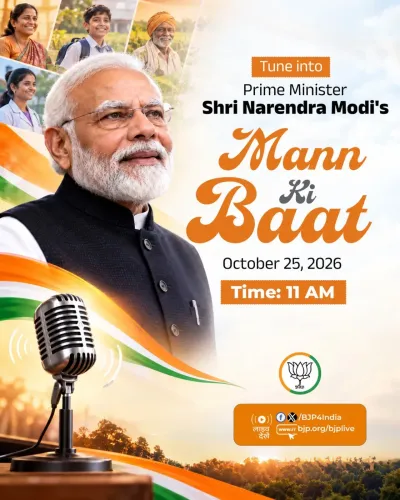
PM Modi marked 12 years of 'Mann Ki Baat' on 25 October 2026 , speaking during the 139th episode .
The programme first aired on 3 October 2014 , coinciding with Vijayadashami , on All India Radio (Akashvani) and Doordarshan .
Modi called the journey 'not less than a pilgrimage,' framing it as a tribute to unsung Indians across sectors.
He said the show has given him an opportunity to spotlight 'extraordinary work' that often goes unnoticed by society.
Listeners' 'warmth and affection' were described by the Prime Minister as a 'truly invaluable asset.'
Prime Minister Narendra Modi on Sunday, 25 October 2026, marked 12 years of his monthly radio address 'Mann Ki Baat', describing the programme as akin to a 'pilgrimage' — a deeply personal tribute to the everyday contributions of ordinary Indians that often go unrecognised by mainstream society. Speaking during the 139th episode of the show, Modi reflected on the journey with characteristic warmth, crediting listeners as both fellow travellers and inspiration.
How It All Began
The first episode of 'Mann Ki Baat' was broadcast on 3 October 2014, coinciding with the festival of Vijayadashami. Aired across All India Radio (Akashvani) and Doordarshan networks, the programme was conceived as a direct conversational channel between the Prime Minister and citizens. Over 12 uninterrupted years, it has aired 139 episodes without a single break — an unusual consistency for any long-running government initiative.
What the Prime Minister Said
'Twelve years ago, on the auspicious occasion of Vijayadashami, we began 'Mann Ki Baat'. Since then, our journey has continued uninterrupted. All of you have been both fellow travellers and inspiration of this journey,' Modi said.
He elaborated on the programme's personal significance: 'Our country has had a tradition of pilgrimages for centuries. For me, 'Mann Ki Baat' is not less than a pilgrimage to closely understand the efforts of people of the country and to pay tributes to their contributions. People who live for society and country are themselves like places of pilgrimage.'
Modi also noted the human connection the show fosters: 'I receive hundreds of such messages in which people tell me that after listening to 'Mann Ki Baat', they feel as though I am sitting among them like a family member and speaking to them.'
Celebrating Unsung Indians
A recurring theme of the programme has been amplifying stories of grassroots changemakers — individuals whose work in education, environment, health, and community service rarely makes headlines. Modi reiterated this mission, saying he uses the platform to 'pay homage to the power of the people of our country' and to spotlight 'extraordinary work' that society would otherwise overlook.
Over the years, the show has featured sanitation workers, farmers using innovative techniques, tribal artisans, and young scientists — presenting what the Prime Minister frames as a counter-narrative to the dominance of celebrity and crisis in mainstream media.
Reach and Reception
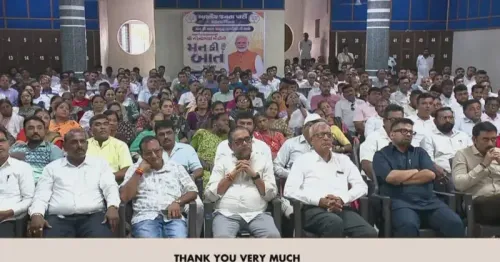
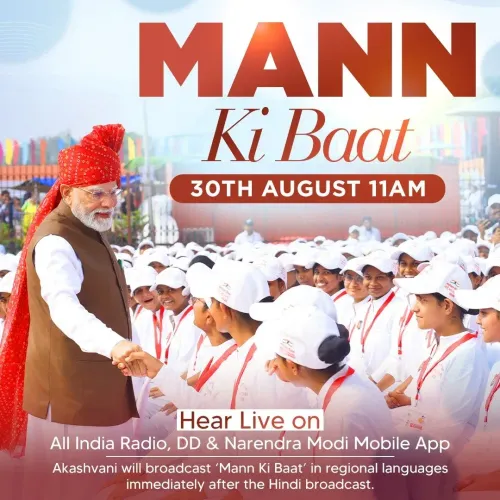
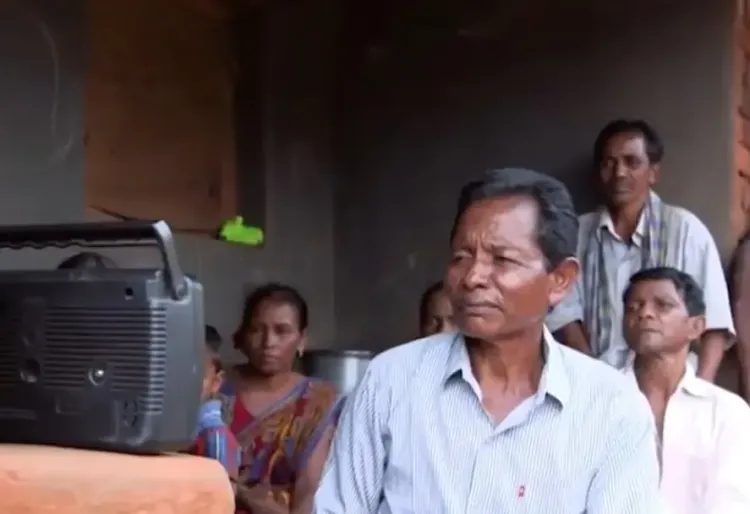
Broadcast in multiple languages across All India Radio and Doordarshan, 'Mann Ki Baat' has one of the widest radio footprints of any government programme in Indian history. The show is also streamed on digital platforms, giving it reach beyond traditional radio audiences. Modi expressed gratitude to listeners, calling their 'warmth and affection' a 'truly invaluable asset.'
As 'Mann Ki Baat' enters its 13th year, the programme shows no sign of slowing — with its format, frequency, and emotional register remaining largely unchanged from the debut episode aired under Vijayadashami skies more than a decade ago.
Point of View
Raising a quiet question: does consistency reflect a communication philosophy or an unwillingness to evolve the medium? The show's emphasis on uplifting individual stories has undeniable soft-power value, but it has also been critiqued for curating a selective, uniformly positive portrait of India. That tension — between genuine grassroots amplification and managed national narrative — is what '12 years of Mann Ki Baat' really invites us to examine.
NationPress
25 Oct 2026
Frequently Asked Questions
What is Mann Ki Baat and when did it start?
'Mann Ki Baat' is Prime Minister Narendra Modi's monthly radio address to the nation, first broadcast on 3 October 2014 on the occasion of Vijayadashami. It airs on All India Radio (Akashvani) and Doordarshan and has run without interruption for 12 years.
Which episode of Mann Ki Baat was aired on 25 October 2026?
The episode aired on 25 October 2026 was the 139th edition of 'Mann Ki Baat,' marking the programme's 12th anniversary.
Why did PM Modi call Mann Ki Baat a pilgrimage?
PM Modi used the pilgrimage metaphor to convey that the programme is, for him, a deeply meaningful exercise in understanding citizens' contributions and paying tribute to their efforts — much like a spiritual journey. He said people who live for society and country are 'themselves like places of pilgrimage.'
Who is the target audience of Mann Ki Baat?
The show is aimed at a broad national audience and is broadcast in multiple languages across All India Radio and Doordarshan, as well as digital streaming platforms. It is designed to reach citizens in every part of India, from urban centres to rural communities.
What kind of stories does Mann Ki Baat highlight?
The programme regularly features grassroots changemakers — including sanitation workers, innovative farmers, tribal artisans, and young scientists — whose contributions Modi says are often overlooked by mainstream media and society.