Modi Inaugurates Viveka Smaraka in Mysuru, Invokes Vivekananda on Language
Synopsis
PM Modi inaugurated the Viveka Smaraka youth centre in Mysuru on 1 August 2026, invoking Swami Vivekananda's vision of equality to champion Indian-language education as a tool for equal opportunity — with Union Minister Pralhad Joshi amplifying the message.
Key Takeaways
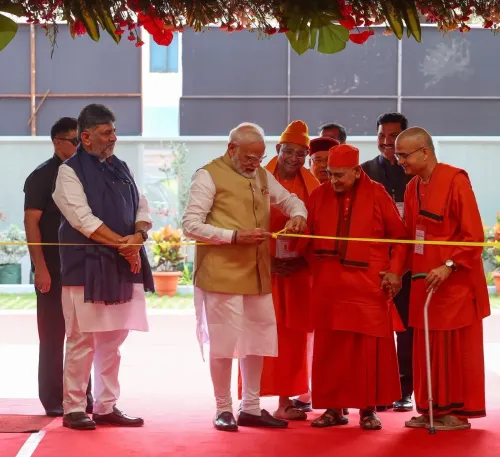
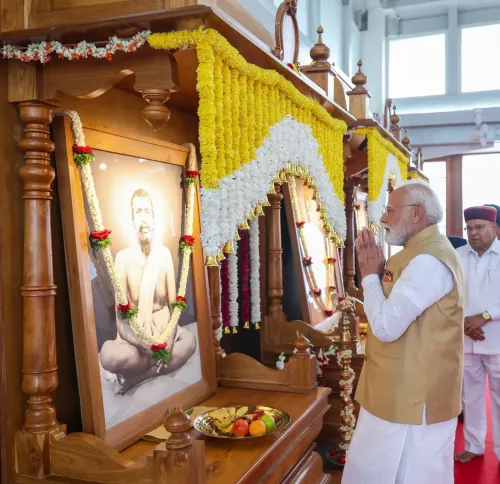
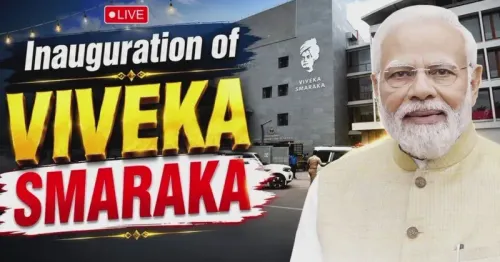
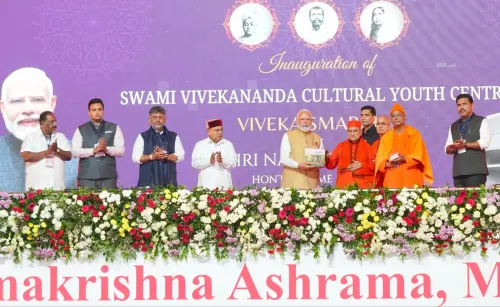
PM Narendra Modi inaugurated the Swami Vivekananda Cultural Youth Centre — Viveka Smaraka in Mysuru on 1 August 2026 .
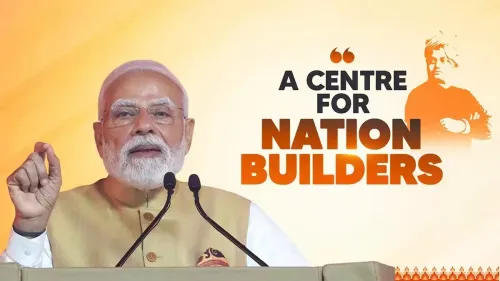
Modi cited Swami Vivekananda's philosophy of equality and education as the foundation of nation-building.
The PM framed instruction in Indian languages as a means of ensuring equal opportunity, free from language barriers.
The initiative aligns with the National Education Policy 2020 , which promotes mother-tongue instruction to improve access and equity.
Mysuru, Karnataka was chosen as the site, a city with strong cultural and educational heritage.
Union Minister Pralhad Joshi highlighted the inauguration and Modi's remarks on his official X account.
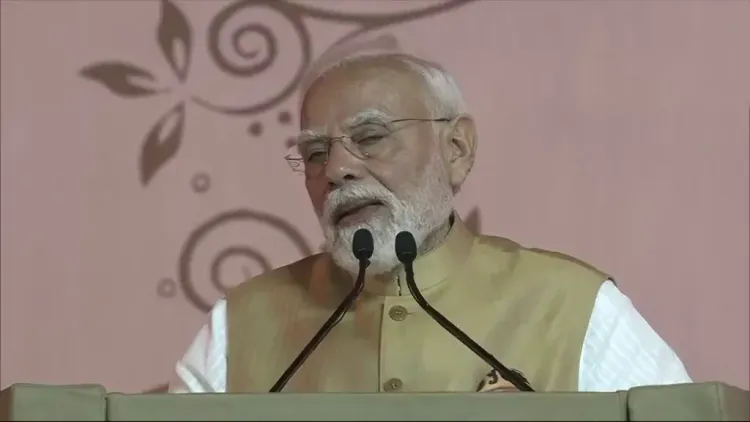
In the heart of Mysuru, Prime Minister Narendra Modi on Saturday, 1 August 2026 inaugurated the Swami Vivekananda Cultural Youth Centre — Viveka Smaraka, turning a cultural milestone into a sharp statement on education equity: that the language a child learns in should never be the wall that keeps opportunity out.
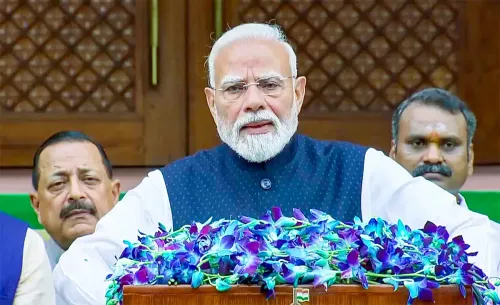
Union Minister Pralhad Joshi, who shared the moment on X, noted that the Prime Minister drew directly from Swami Vivekananda's philosophy — equality and education as the twin pillars of nation-building — to frame the government's push for instruction in Indian languages as a matter of fundamental fairness, not mere sentiment.
Vivekananda's Vision Meets NEP 2020
The philosophical throughline was deliberate. Vivekananda, the 19th-century philosopher and reformer, argued that true education must reach every child, not just those already advantaged by circumstance. The National Education Policy 2020 operationalised a version of that ideal by directing schools to use the mother tongue or Indian languages as the medium of instruction wherever feasible — a provision whose rollout across state curricula remains the central test of its ambition.
Modi's framing at Mysuru connected that policy lineage directly to Vivekananda's egalitarian thought: making knowledge accessible in a child's own language removes one of the oldest, most invisible barriers in Indian education.
Why Mysuru, Why Now
Karnataka has been a site of both state and central efforts to build cultural infrastructure and advance multilingual education. Mysuru — a city already dense with educational and cultural institutions — adds the Viveka Smaraka as a dedicated space for youth engagement rooted in that tradition. The centre's name itself, 'Viveka Smaraka' (a memorial to discernment), signals an intent to make Vivekananda's ideas a living reference point for young Indians, not a museum exhibit.
The inauguration arrives as NEP 2020's language provisions move from policy text into classroom practice — a transition that is uneven across states but gathering momentum. A cultural centre anchored in Vivekananda's equity argument gives that transition a moral vocabulary.
The real measure of the Viveka Smaraka's impact will not be in the inauguration ceremony but in whether the youth it draws leave with the tools Vivekananda actually prescribed: rigorous, accessible, fearless education. That work has just begun.
Point of View
Particularly Vivekananda, whose pan-Indian appeal transcends caste and regional lines. Framing Indian-language instruction as an equity imperative — rather than a cultural preference — gives NEP 2020's language provisions a broader political legitimacy. For Karnataka, a state where language politics run deep, the choice of Mysuru as the site carries additional symbolic weight. The real policy test, however, remains the uneven implementation of NEP's mother-tongue provisions in state classrooms.
NationPress
1 Aug 2026
Frequently Asked Questions
What is the Viveka Smaraka in Mysuru?
The Viveka Smaraka, or Swami Vivekananda Cultural Youth Centre, is a new cultural and educational institution inaugurated in Mysuru by PM Modi on 1 August 2026, dedicated to promoting Vivekananda's ideas among young Indians.
What did PM Modi say at the Viveka Smaraka inauguration?
PM Modi highlighted Swami Vivekananda's vision of equality and education as the foundation of nation-building, and said that making education accessible in Indian languages helps ensure equal opportunities for all, free from language barriers.
How does the Viveka Smaraka relate to NEP 2020?
The National Education Policy 2020 directs schools to use mother tongue or Indian languages as the medium of instruction where possible — the same equity principle Modi invoked at the Viveka Smaraka inauguration.
Why was Mysuru chosen for the Swami Vivekananda Cultural Youth Centre?
Mysuru is a city in Karnataka with a strong heritage of cultural and educational institutions, making it a fitting location for a centre dedicated to Vivekananda's legacy of education and youth engagement.
Who is Pralhad Joshi and why did he post about this event?
Pralhad Joshi is the Union Minister of Consumer Affairs, Food and Public Distribution, and New and Renewable Energy, and a senior BJP leader from Karnataka. He shared PM Modi's remarks from the Mysuru inauguration on X, highlighting the education and language equity message.