PM Modi credits firm policies for breaking Naxal funding, ending violence in Bastar
Synopsis
For the first time in 47 years, not a single CRPF soldier has died on duty in the Naxal theatre — a milestone PM Modi cited in Bastar on Sunday as proof that sustained, undisclosed policy actions have broken the financial spine of the Maoist movement. With over 1,000 security personnel martyred in Chhattisgarh since 2004, the shift is as striking as it is politically consequential.
Key Takeaways
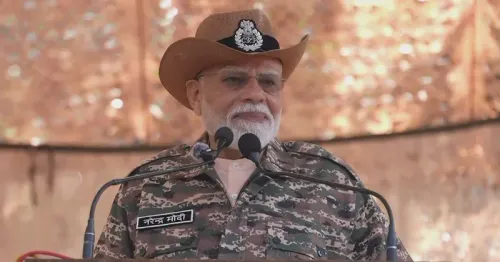
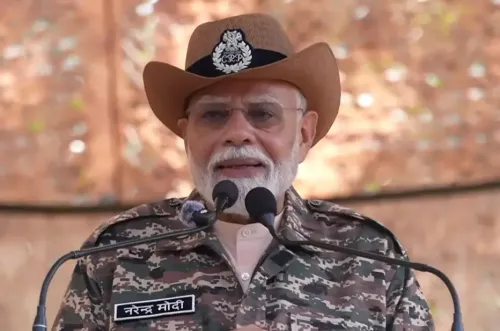
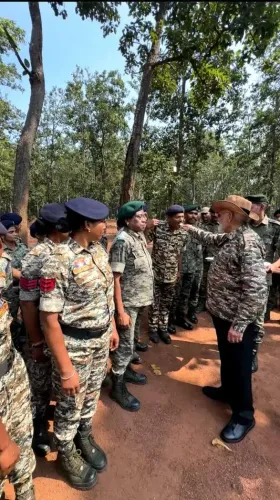
PM Modi addressed security forces in Bastar, Chhattisgarh on 8 November 2026 , crediting firm government policies for curbing Naxal violence.
For the first time in 47 years , no CRPF soldier has lost his life on duty in the region over the past year.
Counterfeit currency networks funding Naxalites were systematically dismantled, cutting off weapons supply and recruitment.
More than 1,000 security personnel were martyred in Chhattisgarh alone; data from 2004–2013 showed more security deaths than Naxalite deaths annually.
In 2010 , 76 CRPF personnel were killed in a single Dantewada encounter; attacks once reached 2,000 per year .
Modi said previous governments treated Naxalism as an incurable ailment and chose not to act decisively.
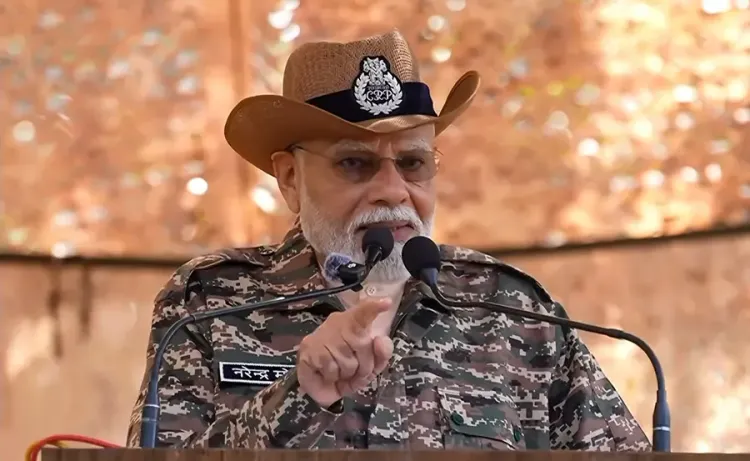
Prime Minister Narendra Modi on Sunday, 8 November 2026, addressed security forces in Bastar, Chhattisgarh, crediting decisive government policies for dismantling Naxal funding networks and dramatically reducing violence across the region. Speaking in Jagdalpur, Modi said lasting success against Naxalism (Maoism) was achievable only through the right intentions backed by firm, coordinated action — some of which, he noted, remains undisclosed to the public even today.
How Naxal Funding Networks Were Dismantled
Modi said a series of targeted measures dealt a major blow to the financial infrastructure supporting Naxalites and separatists. Networks circulating counterfeit currency were systematically dismantled, shattering the movement's financial strength and disrupting its entire supply chain. As a direct consequence, the flow of weapons was halted and the recruitment and movement efforts of Naxalites were effectively curtailed.
The Decades of Sacrifice by Security Forces
The Prime Minister recalled the heavy toll the conflict has taken on the country's security forces over decades. He said the soil of the region had been stained with the blood of brave soldiers, yet influential leaders living in comfort offered neither grief nor solidarity. Attacks occurred almost every day for years, and more than 1,000 security personnel were martyred in Chhattisgarh alone. Data from 2004 to 2013, he pointed out, showed more security personnel being killed each year than Naxalites — a grim inversion that underscored the previous policy vacuum.
He also recalled a devastating 2010 encounter in Dantewada in which 76 CRPF personnel were martyred, and a separate incident the same year that claimed 44 innocent civilian lives. At the peak of the conflict, the number of attacks reached 2,000 a year. Naxalites, he said, had even stripped people of their right to vote.
What Changed After 2014
Modi said the situation began to change after 2014, when he took charge as 'Pradhan Sevak'. Previous governments, he observed, had treated Naxalism as an incurable ailment and chose to leave it unaddressed. 'A nation cannot confront its enemies while operating under the assumption that the status quo is inevitable and must simply be accepted,' he said, addressing the assembled forces.
He described the present moment as a turning point: for the first time in 47 years, over the past year, not a single CRPF soldier has lost his life on duty in the region. This milestone, he said, is a victory of sound policies and firm resolve — and, above all, a testament to the valour, courage, and restraint of the security forces themselves.
Significance and What Comes Next
The address in Bastar carries both operational and political significance. This comes amid sustained anti-Naxal operations in Chhattisgarh, Jharkhand, and Odisha, where security forces have recorded notable gains over the past two years. Notably, the government's characterisation of a 47-year benchmark signals a formal claim that the decades-long insurgency is approaching a decisive turning point. The Centre is expected to continue coordinating state police, paramilitary, and intelligence assets to consolidate these gains across the remaining Naxal-affected districts.
Point of View
Yet the broader picture of civilian and state police casualties deserves equal weight. Modi's framing places the entire credit on post-2014 policy, which sidesteps the incremental groundwork laid by state governments and security doctrine built across administrations. The more critical question is whether the financial dismantling of Naxal networks is durable or whether the movement is simply dispersing into smaller, harder-to-track cells — a pattern seen in similar counter-insurgency cycles globally. The political optics of addressing troops in Bastar, however, signal that the Centre is prepared to formally declare a strategic victory, with significant implications for the status of Naxal-affected districts and the special funds tied to them.
NationPress
8 Nov 2026
Frequently Asked Questions
What did PM Modi say about Naxalism in his Bastar address?
PM Modi said lasting success against Naxalism was possible because of firm, right policies — including undisclosed measures that dismantled Naxal funding and counterfeit currency networks, halted weapons flow, and curtailed recruitment. He addressed security forces in Jagdalpur, Bastar, on 8 November 2026.
What is the 47-year milestone Modi referred to?
Modi stated that for the first time in 47 years, not a single CRPF soldier has lost his life on duty in the Naxal-affected region over the past year. He described this as a victory of sound national policy and the valour of the security forces.
How severe was Naxal violence before 2014, according to PM Modi?
Modi said more than 1,000 security personnel were martyred in Chhattisgarh alone, and attacks once reached 2,000 per year. Data from 2004 to 2013 showed more security personnel being killed each year than Naxalites. In 2010, 76 CRPF soldiers were killed in a single Dantewada encounter.
How did the government disrupt Naxal funding?
According to Modi, networks circulating counterfeit currency were systematically dismantled, shattering the financial strength of Naxalites and separatists. This disrupted their supply chain, halted weapons flow, and curtailed the movement and recruitment of Naxalites.
What did Modi say about previous governments and Naxalism?
Modi said previous governments treated Naxalism as an incurable ailment and chose to leave it unaddressed. He argued that a nation cannot confront its enemies while assuming the status quo is inevitable, and that decisive policy action — not resignation — was what ultimately turned the tide.