PM Modi Inaugurates Nitish Setu Linking North and South Bihar

Synopsis
Prime Minister Narendra Modi inaugurated Nitish Setu on 21 November 2026, a new bridge connecting northern and southern Bihar. Union Textiles Minister Giriraj Singh welcomed the move, saying it will accelerate trade, employment, and economic growth across the Ganga-divided state.
Key Takeaways
PM Narendra Modi inspected and inaugurated the newly constructed Nitish Setu on 21 November 2026 .
The bridge links northern and southern Bihar , addressing a long-standing geographical barrier created by the Ganga river.
The bridge is named after Bihar Chief Minister Nitish Kumar , reflecting Centre-state partnership on infrastructure.
Union Textiles Minister Giriraj Singh said the project will boost trade, employment, and economic development in the region.
Central government support for Bihar river-crossing projects has been a consistent policy priority since the mid-2010s.
Actual economic impact — traffic volumes, freight growth, district-level investment — remains to be measured post-inauguration.
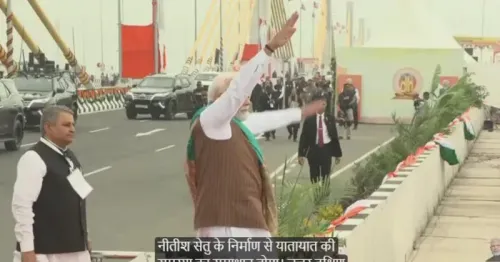
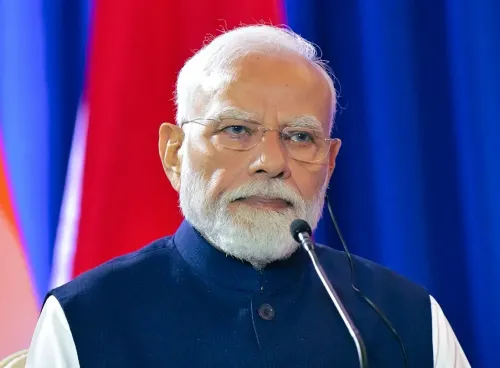
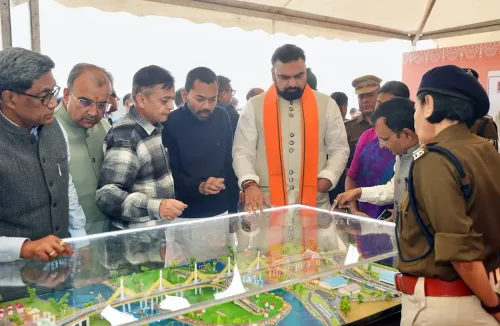
Bihar's Ganga divide — one of the most stubborn geographical barriers in eastern India — got a new answer on Saturday, 21 November 2026, as Prime Minister Narendra Modi inspected and inaugurated the newly constructed Nitish Setu, a modern bridge designed to stitch together the state's northern and southern halves. Union Textiles Minister Giriraj Singh, a senior BJP leader and Lok Sabha MP from Begusarai, Bihar, hailed the inauguration as a landmark moment for the state's infrastructure story.
Posting on X in Hindi, Singh wrote: 'माननीय प्रधानमंत्री श्री नरेंद्र मोदी जी द्वारा उत्तर और दक्षिण बिहार को जोड़ने वाले नवनिर्मित नीतीश सेतु का निरीक्षण एवं लोकार्पण किया गया।' — 'The newly constructed Nitish Setu, connecting northern and southern Bihar, has been inspected and inaugurated by the honourable Prime Minister Shri Narendra Modi.' He added that the bridge would strengthen Bihar's foundational infrastructure while giving fresh momentum to trade, employment, and economic growth in the region.
A River State's Oldest Problem
Bihar has long been split by the Ganga, a natural boundary that has historically made movement between its northern plains — home to districts such as Muzaffarpur and Darbhanga — and its southern belt around Patna slow, costly, and often seasonal. Ferries and a handful of older bridges have carried the load for decades, but the demand — from commuters, truckers, and traders — has consistently outpaced supply. Every new river crossing in Bihar is not just concrete and steel; it is a renegotiation of economic geography.
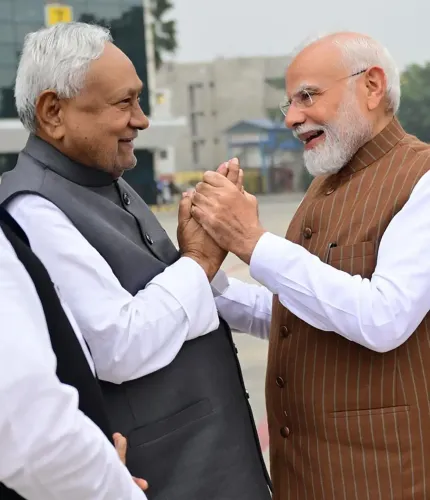
The bridge is named after Bihar Chief Minister Nitish Kumar, reflecting the political partnership between the state government and the Centre that has underpinned several large connectivity projects in the state since the mid-2010s. Central government support for river-crossing infrastructure in Bihar has been a consistent thread across successive budget cycles, with the logic that bridging the Ganga corridor unlocks supply chains and labour mobility across one of India's most populous states.
What Nitish Setu Is Expected to Unlock
Singh's post framed the bridge's impact in three concrete terms: trade, employment, and economic development. The logic is straightforward — shorter travel times between north and south Bihar reduce logistics costs for agricultural produce, manufactured goods, and raw materials moving between the two halves. Districts on either bank gain faster access to markets, hospitals, and administrative centres that were previously hours away.
Bihar's economy, heavily reliant on agriculture and remittances, stands to gain if improved connectivity draws investment into agro-processing, small manufacturing, and services in currently underserved districts. Whether those gains materialise at scale will depend on what traffic volumes, freight movement, and district-level economic data show in the months after the bridge opens — a figure worth watching as the project moves from ribbon-cutting to daily operation.
Modi's Bihar Infrastructure Push
The inauguration fits a visible pattern: Prime Minister Modi has presided over a string of infrastructure unveilings in Bihar that carry both developmental and political weight, particularly ahead of state election cycles. Bridge projects, expressways, and railway upgrades have been central to the BJP-led NDA's pitch that governance in Bihar has shifted from patronage politics to physical transformation. For Giriraj Singh, whose Begusarai constituency sits on the Ganga's southern bank, a new crossing is also a tangible deliverable for constituents who have lived the river's divide firsthand.
The bridge now stands as one of the more visible symbols of Centre-state coordination in Bihar — and the pressure will be on administrators and planners to ensure the economic dividends Singh promised are not just rhetoric at the inauguration podium.
Point of View
However, lies not in the ceremony but in measurable outcomes: whether freight costs fall, whether new investment follows the tarmac, and whether districts on both banks see tangible economic lift. Giriraj Singh's enthusiastic amplification of the event also reinforces his positioning as Bihar's most vocal central-government advocate — a role that carries weight in Begusarai and beyond.
NationPress
21 Nov 2026
Frequently Asked Questions
What is Nitish Setu and where is it located?
Nitish Setu is a newly constructed bridge in Bihar, India, designed to connect the state's northern and southern regions across the Ganga river. It is named after Bihar Chief Minister Nitish Kumar.
Who inaugurated Nitish Setu?
Prime Minister Narendra Modi inspected and inaugurated Nitish Setu on 21 November 2026.
Why is a bridge between North and South Bihar important?
The Ganga river has historically divided Bihar into two halves, making movement of people, goods, and services slow and costly. A new bridge shortens travel times, reduces logistics costs, and opens up markets on both banks.
What economic benefits are expected from Nitish Setu?
Union Minister Giriraj Singh stated the bridge will boost trade, employment, and economic development in the region by improving connectivity between northern and southern Bihar.
Why is the bridge named after Nitish Kumar?
The bridge is named after Bihar Chief Minister Nitish Kumar, reflecting the partnership between the Bihar state government and the central government in developing the project.