PM Modi inaugurates Nitish Setu over Ganga in Bihar
Synopsis
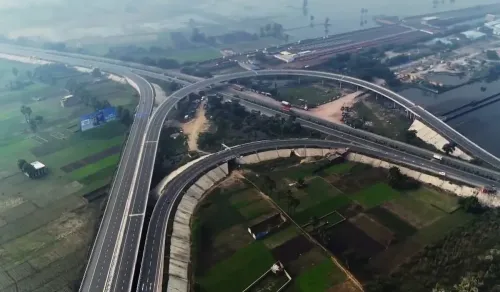
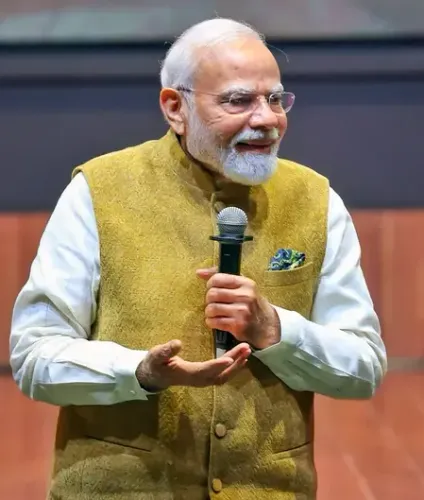
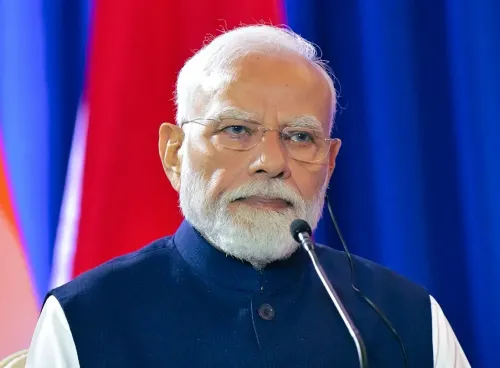
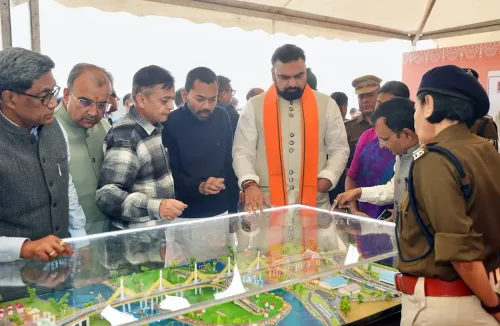
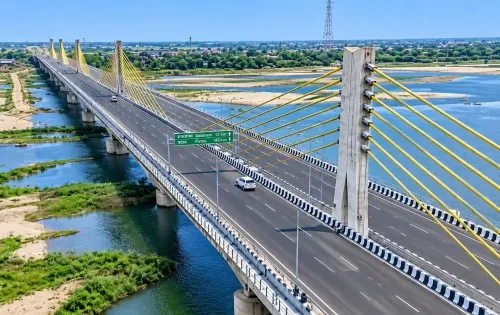
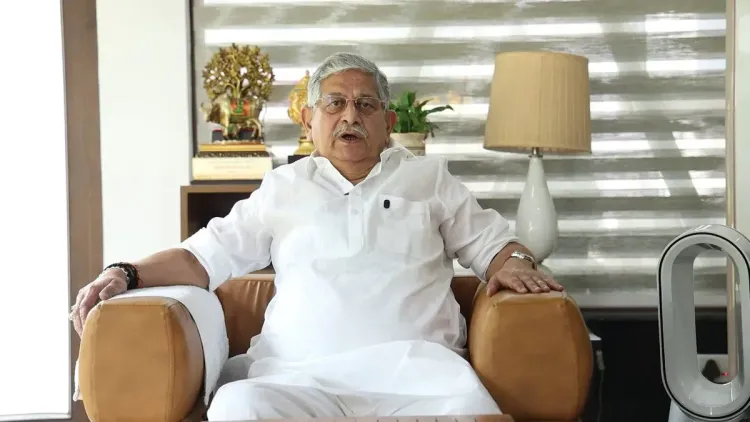
Prime Minister Narendra Modi inaugurated the 'Nitish Setu' over the Ganga on 21 November 2026, linking north and south Bihar. Union Minister Rajiv Ranjan Singh (Lalan Singh) called it a historic milestone set to boost trade, tourism, and employment across the river-divided state.
Key Takeaways
PM Narendra Modi inaugurated the Nitish Setu , a new bridge over the Ganga , on 21 November 2026 .
The bridge is named after Bihar Chief Minister Nitish Kumar , president of JD(U) .
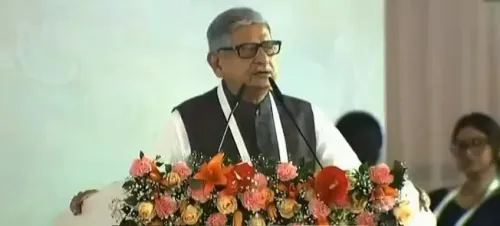
Union Minister Rajiv Ranjan Singh (Lalan Singh) described the inauguration as a 'historic chapter' in Bihar's development.
The bridge is expected to improve connectivity between north and south Bihar , reducing travel times across the Ganga.
Anticipated benefits include growth in trade, tourism, and employment in the region.
The project reflects ongoing NDA central-state coordination on Ganga bridge infrastructure in Bihar.
A new bridge over the Ganga is rewriting the geography of Bihar — and with it, the daily calculus of millions who live on either side of the river. Union Panchayati Raj and Fisheries Minister Rajiv Ranjan Singh hailed the inauguration of the 'Nitish Setu' by Prime Minister Narendra Modi on Saturday, 21 November 2026, calling it a historic chapter in the state's development and connectivity story.
A bridge named for Bihar's longest-serving Chief Minister
The structure carries the name of Nitish Kumar, Bihar's Chief Minister and president of the Janata Dal (United), the party that has anchored the state government through successive terms. Naming a major Ganga crossing after him is a pointed political and symbolic gesture — one that underlines the NDA alliance's shared stake in Bihar's infrastructure narrative ahead of future electoral cycles.
In his post, Singh wrote: 'Bihar ke vikas aur behtar connectivity ki disha mein aaj ek aitihasik adhyay jud gaya' — 'Today, a historic chapter has been added in the direction of Bihar's development and better connectivity.' He described the bridge as something that will not merely shorten distances but unlock new opportunities in trade, tourism, employment, and economic activity.
Why the Ganga divide has long haunted Bihar's economy
The Ganga cuts Bihar into two distinct halves — a northern belt of fertile but flood-prone plains, and a southern corridor that hosts the state capital Patna and most of its industrial and administrative infrastructure. For decades, inadequate crossings meant that goods, workers, and patients routinely faced hours-long detours or ferry crossings that turned manageable distances into punishing journeys.
Successive governments identified new Ganga bridges as a priority, and central-state coordination under the NDA alliance accelerated several such projects through the 2010s and early 2020s. The Nitish Setu is the latest and, by Singh's account, the most significant addition to that chain.
Trade, tourism, and jobs: the three promises riding on Nitish Setu
Better connectivity over the Ganga has a direct multiplier effect. Shorter freight routes reduce logistics costs for agricultural produce moving from north Bihar's farms to southern markets and railway heads. Tourism circuits linking sites in both halves of the state — from the Vaishali ruins in the north to Bodh Gaya in the south — become more viable when a bridge cuts hours off the journey. And construction activity around new road corridors consistently generates local employment, even before the bridge itself is open to traffic.
Singh's post flags all three vectors, positioning the Nitish Setu not as a standalone infrastructure project but as a catalyst for a broader economic shift in one of India's most populous and historically underserved states.
Modi-Kumar-Singh: the NDA triangle that built this moment
Prime Minister Modi's role as inaugurator, Chief Minister Nitish Kumar's name on the bridge, and Lalan Singh's amplification from the Union Cabinet form a neat tableau of the NDA's Bihar strategy — one where credit is shared visibly and the alliance's delivery record is front and centre. For JD(U), a party that has staked its identity on 'Sushasan' (good governance) and infrastructure delivery, a Ganga bridge inauguration is precisely the kind of milestone that reinforces its core pitch to voters.
The river that once divided Bihar now has one more reason to unite it. Whether the Nitish Setu delivers on its economic promise will be measured in freight volumes, travel times, and livelihoods — not in ribbon-cutting photographs alone.
Point of View
Nitish Kumar as the named beneficiary, and JD(U) leaders like Lalan Singh as amplifiers. For Bihar, a state where the Ganga's physical divide has historically translated into economic disparity, each new crossing carries outsized developmental weight. The bridge also signals that central-state co-funding of river infrastructure remains a live policy tool, not just an electoral promise. Whether the economic dividends materialise will test the credibility of the 'connectivity equals growth' argument that both NDA partners have built their Bihar narrative around.
NationPress
21 Nov 2026
Frequently Asked Questions
What is Nitish Setu and where is it located?
Nitish Setu is a newly inaugurated bridge over the Ganga river in Bihar, designed to improve connectivity between the state's northern and southern regions. It is named after Bihar Chief Minister Nitish Kumar.
Who inaugurated the Nitish Setu bridge?
Prime Minister Narendra Modi inaugurated the Nitish Setu on 21 November 2026.
Why is the Nitish Setu bridge important for Bihar?
The Ganga divides Bihar into two halves, and inadequate crossings have long hampered trade, travel, and economic activity. The Nitish Setu is expected to cut travel times and open new opportunities in trade, tourism, and employment.
Why is the bridge named after Nitish Kumar?
The bridge is named after Nitish Kumar, Bihar's Chief Minister and JD(U) president, recognising his role in advancing infrastructure development in the state.
What did Union Minister Lalan Singh say about Nitish Setu?
Union Minister Rajiv Ranjan Singh, popularly known as Lalan Singh, called the inauguration a 'historic chapter' in Bihar's development, saying the bridge would reduce distances and unlock new opportunities in trade, tourism, employment, and economic activity.